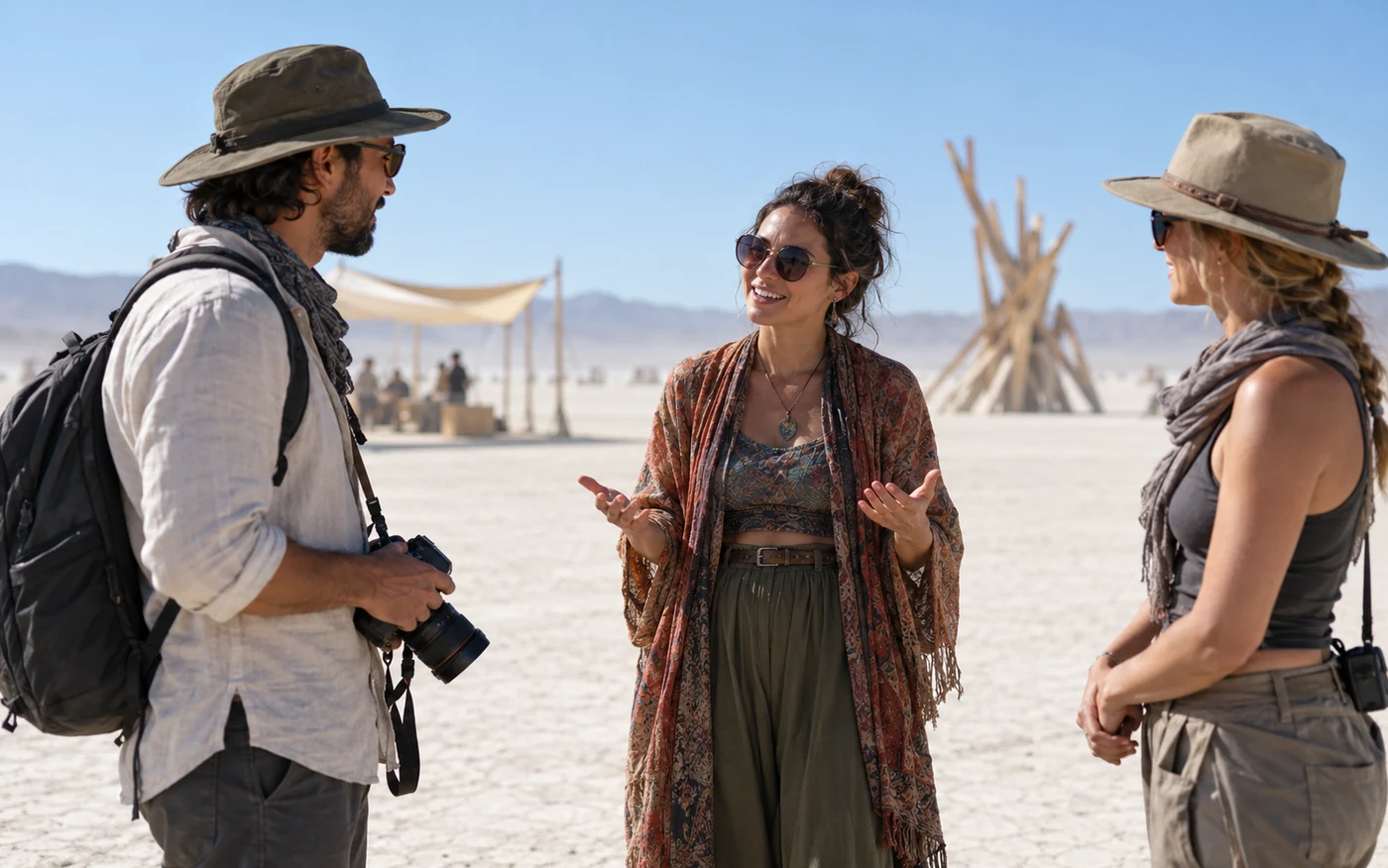
Vivid on-site photography is one of the most important publicity assets at a major festival or corporate event. Burning Man, the vast desert festival in the United States, set very strict standards for photography and distribution in its 2026 guidance. The central point is that permission to take a photograph does not mean permission to post it on social media or use it in advertising.
For practical planners, managing event photographs is not simply a matter of organizing folders. It is a rights Hand-over process as hundreds of images move from an outsourced photographer’s camera to the organiser’s publicity-team hard drive and then into public feeds. Without carefully separating and Tracking shooting and publication purposes, one well-taken photograph can bring the organiser a devastating legal dispute.
1. Separate Permissions: taking a photograph and using it are different
Burning Man requires even professionals holding the organiser’s official Media ID to obtain individual consent from the subject or participant before pointing a camera at them.
- The risk of Blanket Use: a visitor smiling at the camera or giving a small nod to permit a photograph does not also grant the right to use it in an advertising banner selling next year’s paid tickets.
- Break down the SOW by purpose: leave behind the practice of commissioning all event-coverage photographs as one undifferentiated package. Define intended uses in advance, such as press releases, internal archives, the organiser’s social media or sponsor provision, and apply different likeness-use consent rules for each purpose.
2. Bridge the Decoupling between shooting and distribution: tag the data
The people pressing the shutter on site and the publicity team opening folders to select images in the office are different. A gap in information between them leads directly to incidents.
- Metadata and file handover: when the photography team passes hundreds of originals to publicity, a folder named Day 1 is not enough. State in filenames or a separate handover Sheet the purpose for which the subject gave permission.
- Isolate Unverified Cuts: photographs with unclear consent must be completely segregated from the approved-use folder. Mixing in images of unclear provenance under the excuse of an urgent press release transfers on-site risk directly to the web.
3. A Back-tracking system for Claims
However carefully consent is obtained, requests to take down a photograph can arise.
- Unify Media IDs and the complaints channel: Burning Man’s requirement for photographers to attach a unique Media ID to their cameras is an excellent Back-tracking system, enabling participants who feel uncomfortable to report the photographer precisely to the organiser. At Korean events too, print an identifiable unique number or complaints-channel QR code on official photography-team badges and establish an online/offline Clearance route to identify and delete the image in question immediately.
4. A four-stage protocol for event Photo/Video management
For safe management from on-site shooting to release of the finished files, the planning team should follow these four-stage criteria.
| Stage | Work criteria |
|---|---|
| [Stage 1: Specify distribution channels in the SOW] | In the photography-services contract, specify uses such as social media, paid advertising and provision to third parties, and assign the duty to obtain the corresponding verbal/written consent on site. |
| [Stage 2: On-site notices and Media IDs] | Place notices about photography consent and use of people’s likenesses at entrance gates and on zone banners, and require official photographers to wear identifiable unique badges. |
| [Stage 3: Hand over approved and unapproved files separately] | After on-site work ends, receive physically separate folders of release-ready files approved for each purpose and held files needing reconfirmation. |
| [Stage 4: Activate a post-correction Takedown manual] | Establish a response manual using distributed-file identifiers to hide images on the organiser’s social media and partner outlets within 24 hours after a deletion request arrives. |
A planner’s note: complete publicity begins with respect for the people in the photographs
Even as impressive lenses and drones fly above the venue, the most important subject for those cameras is ultimately people.
Behind the happy moments we casually use in publicity materials is an individual’s privacy. Before asking for a great angle, an excellent planner designs a system that clearly explains to the people within that frame where the photograph will go and how it will be used. Publicity in its true sense begins with building a firm protective boundary around the audience in front of the camera, as much as with sharing the event’s excitement widely.
Conditions for applying this elsewhere
Confirm conditions from the crew, organiser, subjects and artwork rights holders; Korean use needs separate rights review.
Information not established
Actual Burning Man approvals, disputes, internal file procedures and rights in individual images were not verified.
Reference material
- Burning Man · Survival Guide 2026 / Cameras in BRC: prior permission, media registration and unique Media ID
- Burning Man · Media Rights and Responsibilities: personal/non-personal use and approval for changed purposes
- Burning Man · Survival Guide 2026 / Consent: shooting permission versus social, blog and commercial use
Have a correction or additional evidence? Request a correction