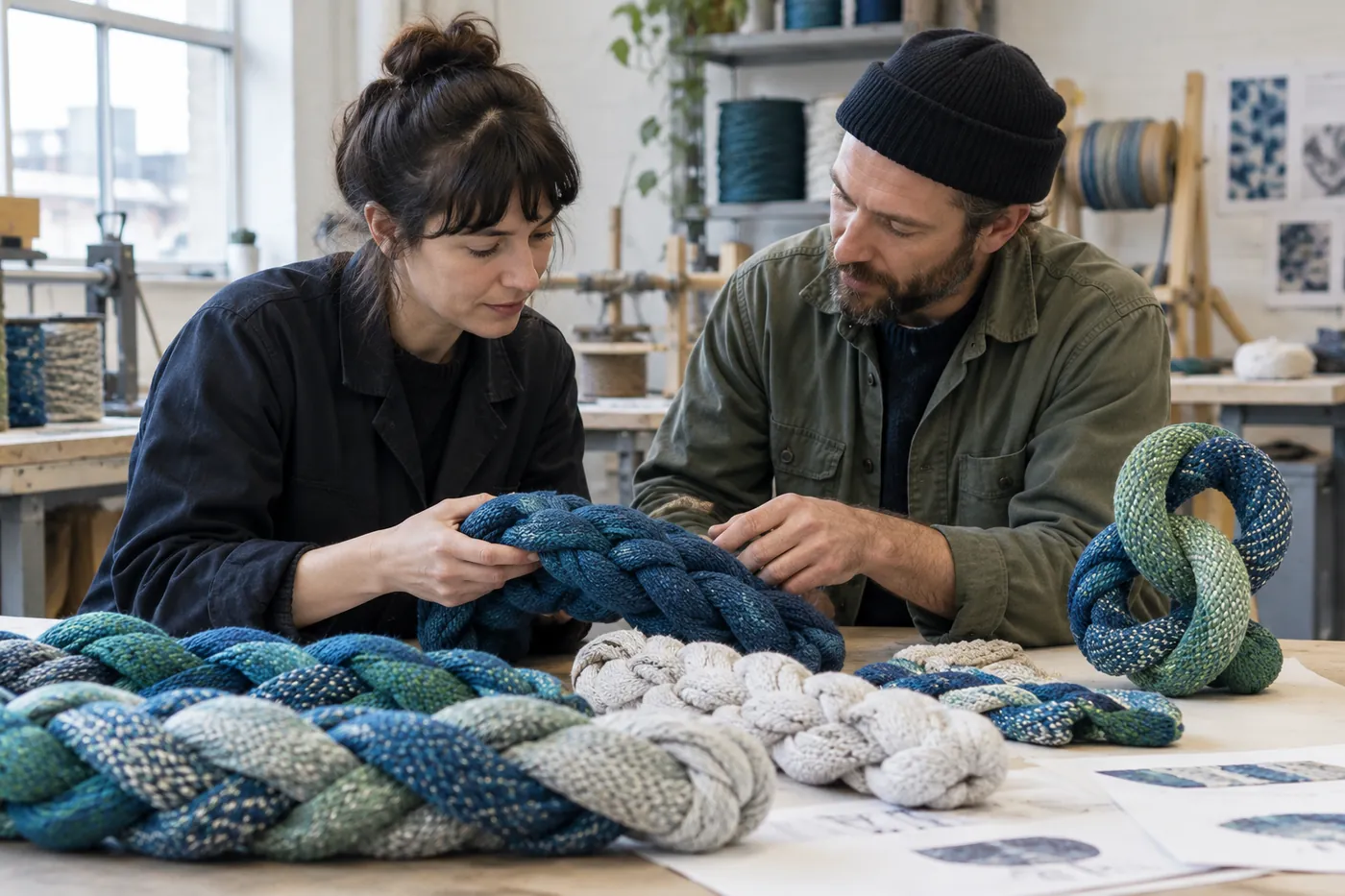
Passionswege at Vienna Design Week brings designers and craftspeople together to explore materials and making. For 2026, the organisers listed 〈SEILE〉, a collaboration between artist Anna Paul and rope maker Haanl, in the festival headquarters lobby from 25 September to 4 October.
The programme describes short, oversized rope sculptures intended to invite visitors to sit, linger and play. The public information does not establish an accident or safety defect in this work.
The announcement describes the work and intended use, but does not establish the production contract, test results or the actual installation and approval process. The following are EVENTODIT's suggestions for other projects.
Agree the question and the intended outcome. Showing an existing product and testing a new material or form together require different conversations. A planner can document the shared question, the maker's and artist's roles, interim reviews and what will be shown.
Check conditions for visitor use separately. When people are expected to touch or use an installation, material specifications alone do not describe the completed object's installation and use. Review these with the maker and venue lead; the relevant specialists should check load, stability and evacuation routes against the actual setting and applicable requirements. This does not claim that 〈SEILE〉 used a particular approval process.
Check circulation at the actual venue. The general Passionswege introduction describes work being shown in craft workshops, while the individual 〈SEILE〉 listing identifies the festival headquarters lobby. Planners can use the actual layout to check whether places where visitors sit or linger overlap circulation routes.
The table below suggests points to consider for another collaboration. It does not reproduce Vienna Design Week's actual contract or safety approvals.
| Step | What to check |
|---|---|
| 1. Shared question and roles | Agree the artist's question and the materials and processes the maker will contribute. |
| 2. Public outcome | Decide whether to show a prototype, the making process or an object for visitors to use. |
| 3. Installation and use | If people will use the finished object, check its stability and permitted use with the responsible specialists. |
| 4. Venue and circulation | Mark the installation and visitor area on the actual plan and compare them with circulation and evacuation routes. |
Planner’s note
A collaboration can show a familiar material in a different way. When applying the idea elsewhere, start by agreeing what the partners will explore and how visitors may use the result.
The organisers' public notice describes the venue and intended interaction. Actual production contracts, test results, safety approvals and visitor responses were not verified.
Conditions for applying this elsewhere
Use for exhibitions commissioning a maker and artist to develop a new outcome together. Check installation and use separately for interactive objects; industrial uses of a material do not establish the finished installation’s suitability.
Information not established
Actual delivery, attendance, visitor use, production fees, contracts, rights, tests and safety approvals were not verified. Dates and intended uses come from the official listing; the later commissioning and safety checks are editorial suggestions.
Reference material
Have a correction or additional evidence? Request a correction