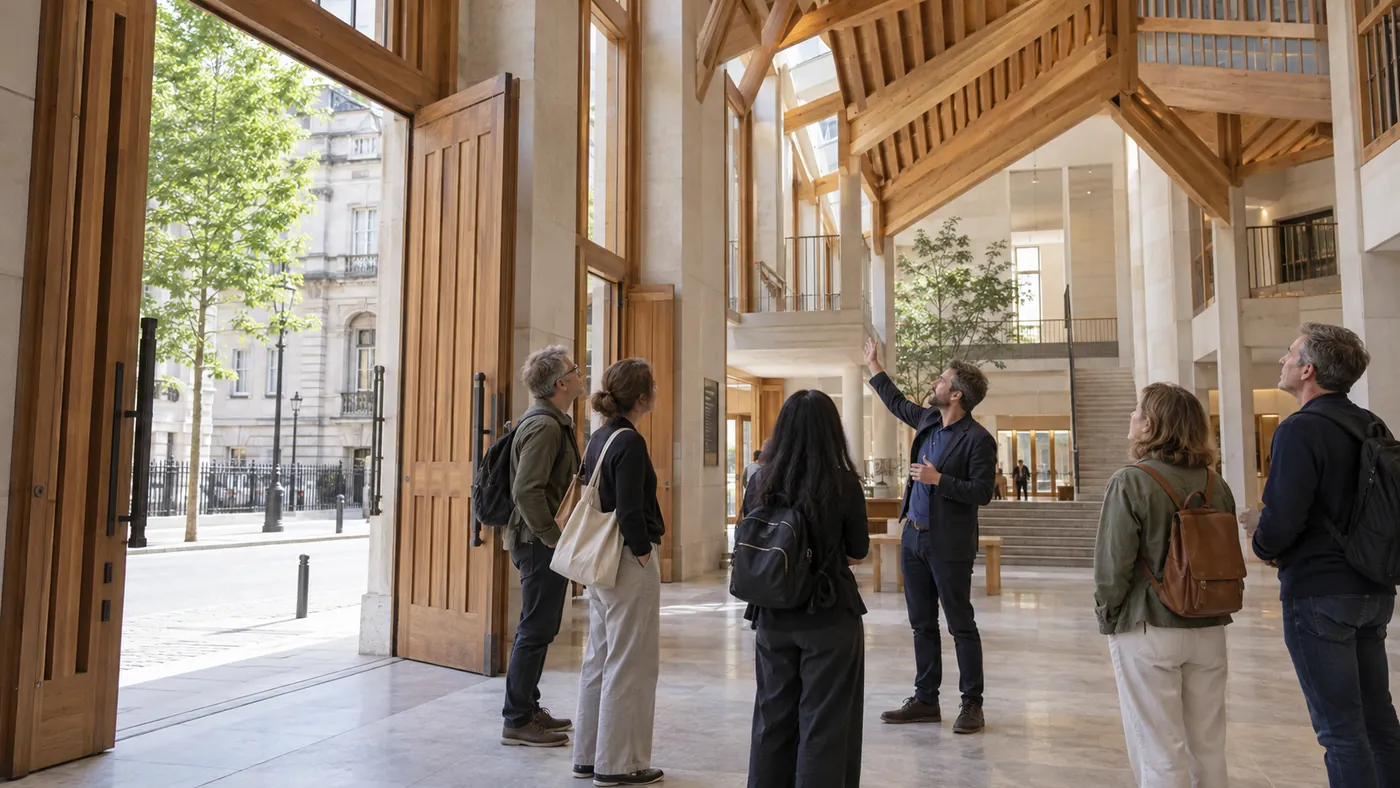
1. It began with the distance between architecture and citizens
According to the official introductions from Open House Worldwide and Open House New York, this format began in London in 1992 and centres on experiencing buildings in person. It provides free access for everyone and creates opportunities for professionals and residents to learn and discuss together.
The important point is that it addresses a specific problem, rather than a vague aim of providing more architecture programmes: even people who use the city every day rarely have an opportunity to enter its buildings or ask questions of the people who designed them.
Editorial commentary: Even when the purpose is the same, the experience required will differ depending on the intended participants.
2. What changes during the festival?
Open City states that the 2026 festival took place on 12–20 September. The festival opens buildings and places across London free of charge and enables the people who operate those spaces to share their stories and activities with the public.
In this format, the venue is part of the experience, rather than a backdrop for gathering people. Visitors can walk through interiors they would not normally be able to enter, listen to the operators’ explanations and ask questions on the spot.
Photographs and presentation materials can also convey architectural information. However, they cannot provide the same experience of using an actual space and having a conversation there.
Editorial commentary: This comparison is the editorial team’s interpretation connecting the official purpose with the event format. The organiser did not conduct a comparative evaluation of other media.
3. Opening a space that is normally open is not enough on its own
Open City’s published selection criteria, checked on 31 October 2026, award different scores according to the existing situation. The original wording is summarised below.
| Existing status of the space | Access score | Note |
|---|---|---|
| Opening a building or area that is normally closed to the public | 3 points | Scoring item in the published criteria |
| A space that anyone can enter free of charge throughout the year | 0 points | No points for opening alone |
Scroll sideways to read every column.
To be included in the programme, an entry must meet the basic requirements and receive a total of at least 3 points. A place that is normally open can still be assessed separately if it adds new interpretation or participatory activities, such as workshops, talks or guided tours.
Caution: This table reflects the criteria currently published. It must not be used as evidence that the same criteria have applied since the festival’s founding. Check the latest notice again before applying them.
4. An encounter that serves the purpose matters more than a famous place
The planning principle to take from this case is to identify the boundaries that participants cannot normally cross, rather than securing as many famous places as possible.
- At an event introducing production technology, viewing equipment from a distance and asking a worker directly why a particular process was chosen are different experiences.
- At an event introducing a local space, exhibiting architectural photographs and hearing about the daily lives of the people who use it serve different purposes.
Editorial suggestion: Choose the format according to the purpose. If the aim is to convey information, video may be more efficient. If the core experience is visiting a place in person or exchanging questions with people who are normally difficult to meet, the role of an in-person event becomes clear.
5. Defining the purpose changes what must be prepared
If opening a space that was previously closed is the core experience, the budget should first support making that experience possible. The following items should be resolved first in practice.
- Access permission and operating hours
- The person who will actually provide explanations and their preparation time
- Travel and access conditions
- Conflicts between everyday work and visitor routes
Open City’s published criteria also require a drop-in or booking arrangement appropriate to the scale and format of the activity, and a clear explanation of the significance of the building or event. Rather than copying those requirements directly, it is more practical to estimate the people, space and time needed for the promised experience first.
Caution: Staffing and costs vary with the conditions of the venue and the scope of permission. This article does not provide specific cost or staffing standards.
6. Questions to answer before planning
Answer the following questions before holding an event.
- What access or conversation can participants not normally obtain?
- Can that experience be provided only in person, or could video, ongoing visitor information or an online conversation also provide it?
- How much staffing, space, permission and time does the experience require?
- Is the venue operator ready to welcome visitors?
- What will be used to verify that the experience actually took place?
Conclusion
The lesson from Open House’s starting point is the connection between an event and the access and conversations it makes possible, rather than the outward form of an architecture festival. Priorities for the format and budget can be determined only after identifying the opportunities participants lack.
Conditions for applying this to another event
- Apply this approach when the purpose is to experience a place or converse with people who are normally difficult to meet.
- When opening a building, separately confirm permission from the owner and managing body, along with safety conditions under the applicable domestic standards. Do not transfer London’s criteria directly.
- Consider whether an in-person gathering is needed or whether ongoing visitor information, video or an online conversation would be sufficient.
Information not verified
- The organiser’s mission and the published selection criteria as of 31 October 2026 have been checked.
- Changes in participants’ learning or policy participation have not been verified.
- Actual staffing and costs for individual buildings have not been checked.
- Comparisons with alternative event formats and budget priorities are the editorial team’s commentary.
- The 1992 start in London was checked against Open House New York’s official account on 31 October 2026 after publication.
Sources
- Open House New York · Open House Worldwide: the 1992 start in London and the format of direct architectural experience, free access and conversation https://ohny.org/open-house-worldwide
- Open House Worldwide · Mission: the purpose of providing experiences and opportunities for dialogue to people excluded from discussions about spaces and cities https://www.openhouseworldwide.org/mission
- Open City · Open House Festival Curatorial Criteria: published selection criteria distinguishing regular access from new experiences during the festival https://open-city.org.uk/curatorial-criteria
- Open City · Open House Festival: London’s free architecture access event and the 2026 dates https://open-city.org.uk/open-house-festival
Practical application checklist
| Check | Responsible role | Confirmed |
|---|---|---|
| Define the opportunity that participants do not normally have | Planning | |
| Compare the in-person experience with alternatives such as video, ongoing visitor information and online formats | Planning | |
| Confirm permission to enter the space and operating hours | Venue operations | |
| Secure the person who will provide explanations and their preparation time | Event director | |
| Check access conditions and movement routes | Event director · Venue operations | |
| Recheck the latest published selection criteria | Editorial · Planning |
Scroll sideways to read every column.
Next tasks and related resources
Related practical guides
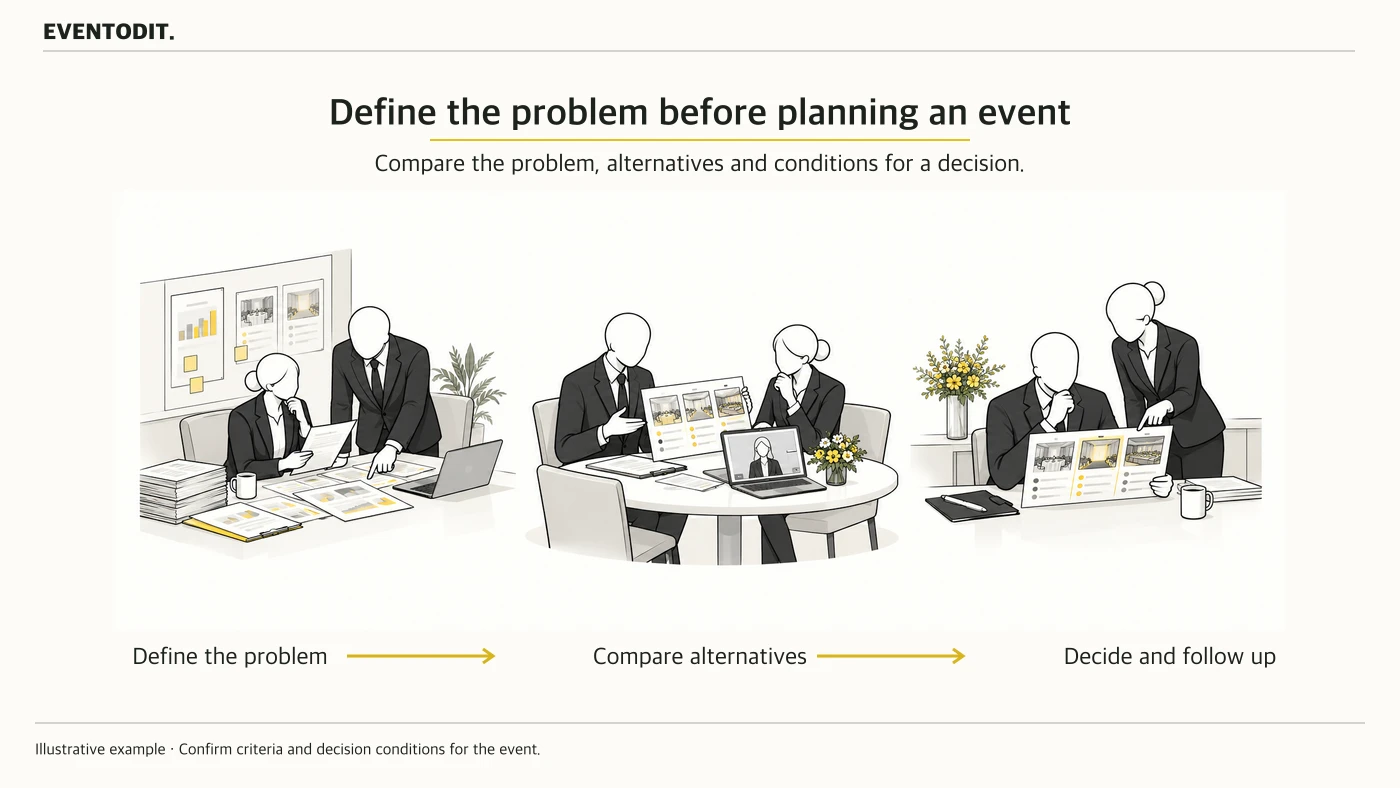
Defining the problem and assessing options before event planning
Clarify the request and underlying problem, then compare business as usual with feasible alternatives.
Read guideHave a correction or additional evidence? Request a correction