Part 1. Overseas Exhibition Project Lead
"Issuing a carnet does not guarantee duty-free treatment for every shipment. Confirm intended use and each item's post-event route first."
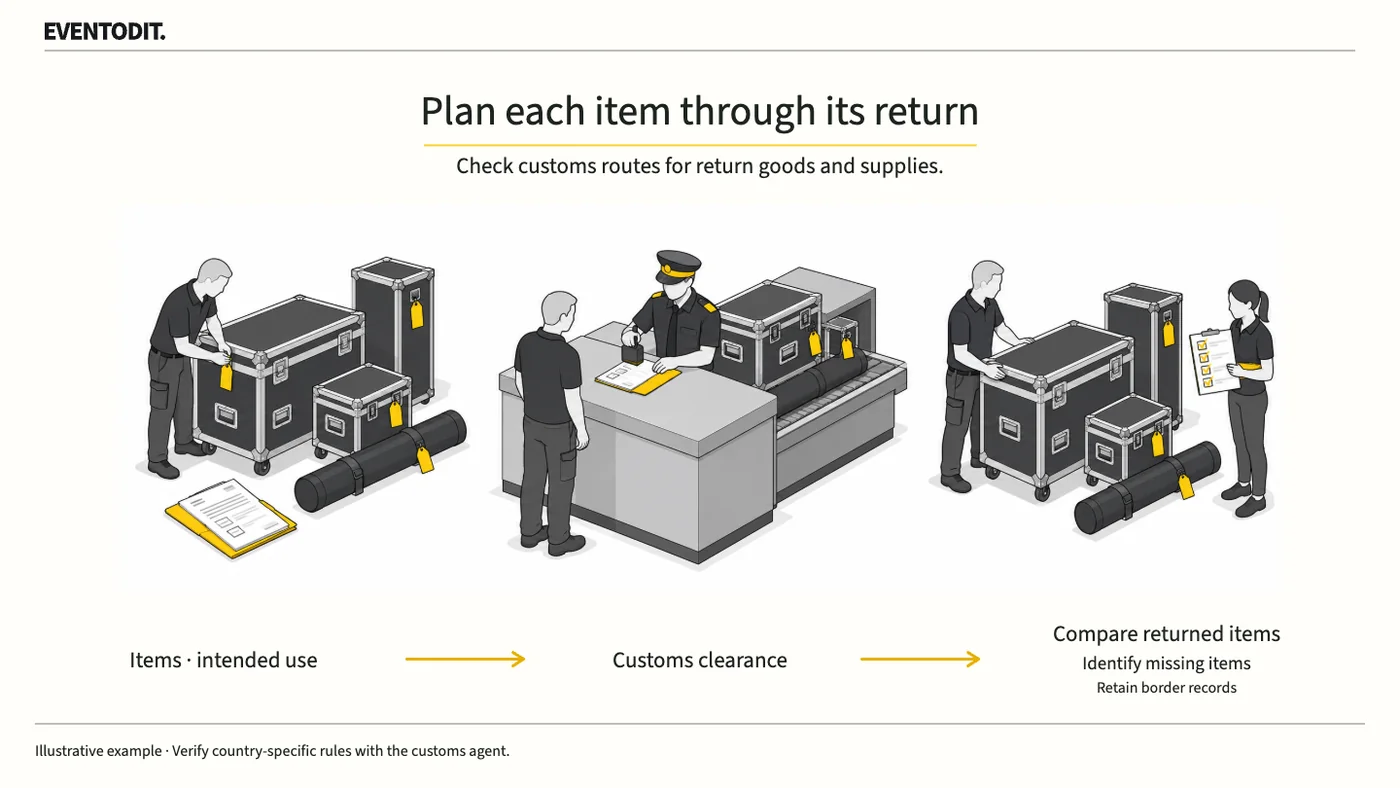
- Decide post-event treatment and customs routes: Before requesting a freight quotation, determine for each item whether it will return after display, be distributed as a sample, sold locally or discarded. ICC describes the carnet as a guarantee for duties and taxes on temporary imports, but issuance alone does not mean every shipment or use is permitted. Ask the issuer and customs representative whether destination and transit customs accept each item and purpose.
- Finalise the General List against the actual goods: Use specific descriptions and quantities that customs can use to identify the goods, with applicable model and serial numbers, rather than internal nicknames. HMRC warns that unclear descriptions can lead to rejection or delays. FICCI states that goods cannot be added to the list after issue, so reconcile the actual outbound inventory before applying.
- Check backup equipment changes and substitutions: If equipment or parts change immediately before dispatch, do not add items to an existing document yourself. Ask the issuer whether a new carnet or another formal procedure is required, and review the consequences for freight and customs.
- Notify customs when goods will remain or be sold: If equipment will be sold, donated or left locally, do not close the matter simply by reducing the return count. HMRC advises contacting the relevant country's customs as soon as it is known that goods will remain and not waiting for expiry. Confirm any required import process, taxes and country-specific conditions with the customs representative.
- Mark post-event dispositionExhibitor: classify return, distribution, sale or disposal for each item
Giveaway, sale, consumption or undecided
Return planned
- Check carnet scopeCustoms lead: compare destination and transit countries, use, identification and return schedule
- Hand over list and packingFreight lead: link item and package numbers; accept border-validation responsibilities
- Reconcile return evidenceExhibitor and customs lead: check actual returns and outstanding procedures
A return plan alone does not confirm carnet eligibility; check each country's permitted uses and customs conditions separately.
Part 2. Logistics and Packing Team
"Distinguish returning equipment from giveaway goods, and record how item and package numbers relate."
- Separate customs routes and check packing rules: The Hong Kong General Chamber of Commerce excludes consumable or disposable goods such as brochures from its carnet scheme. The ICEC 30 / ICMC 2026 shipping guidelines for import into Korea required returning goods and consumables to be packed separately and shown as separate packages on the air waybill. Those were conditions for that exhibition; before applying them elsewhere, confirm each item's customs route, packing and transport-document requirements with the customs representative.
- Link item and package numbers: Record how General List item numbers map to actual case or package numbers. One case can contain several items, so record each item's quantity and location clearly enough to reconcile the goods during customs inspection.
- Coordinate transit and split-shipment schedules: Include transit borders, onward movement to another exhibition, early returns and split re-imports, not just arrival at the venue. HMRC's UK guidance explains that each split re-import using a paper carnet must match the relevant documents and General List item numbers. Follow the requirements of the actual departure and destination countries.
- Reconcile returned goods and package condition: Load-out and freight settlement do not themselves close customs procedures. On return, compare the original outbound list with actual quantities, identifiers and package condition; report missing or damaged items to the exhibition lead and customs representative.
| Exhibit category | Check before dispatch | Information to hand over |
|---|---|---|
| Equipment returning after the show | Carnet eligibility for the destination and purpose | Item number, identifiers and return route |
| Goods to distribute or consume | Separate customs treatment; do not assume carnet eligibility | Giveaway or consumption quantity and packing separation |
| Goods changed to sale, donation or local retention | Required change procedure with local customs | Items, quantities, reason for change and response records |
Scroll sideways if needed to read every column.
Part 3. Customs Representative and On-site Lead
"A freight arrival update does not mean customs clearance is complete. Verify border checks and evidence."
- Assign responsibility for border validation: A freight tracking arrival and customs validation of the carnet are separate. HMRC's UK guidance makes the user responsible for ensuring customs scans a digital carnet or stamps a paper carnet at each entry and exit. Confirm which method is accepted at the actual borders and identify the owner and evidence location for export, import, re-export and re-import on the handover sheet.
- Distinguish carnet validity from the re-export deadline: Track the carnet's expiry separately from the deadline imposed by local customs and build both into the freight schedule. Missing a deadline can lead to duties, taxes or guarantee consequences depending on the country and guarantee terms; confirm deadlines and remedies with the issuer and local customs representative.
- Hand over when site staff depart early: If event staff leave before the cargo, name the person who will take custody of the remaining goods and the necessary original paper or digital carnet and arrange re-export clearance. Also identify who receives reports of missing customs validation or other problems.
- Resolve unreturned goods and missing evidence: Collect each border's stamps or electronic validation records after return and separate unreturned goods from missing-evidence cases. Provide the issuer with required follow-up documents and responses, and confirm discharge and any guarantee release under the relevant country procedures and guarantee conditions.
Use the form for the next handover
Use the [Carnet goods and border handover](/en/templates/carnet-goods-custody.html) for the records described here. The XLSX contains Blank, Example and Instructions sheets. Write your event in Blank; the fictional example is a guide to what to enter.
Map each general-list item to goods identifiers and packages. Record each border procedure and deadline from customs advice with evidence.
The exhibition team hands goods and required carnet records to customs staff. After return, the owner links the issuer’s closure response.
Final check before use: Before dispatching exhibits overseas, cross-check the customs routes and packing conditions for returning equipment and giveaways or consumables, and the person responsible for customs validation at each border.
Conditions for applying this elsewhere
Before shipping and returning exhibits overseas, confirm permitted uses and procedures with the issuer, destination and transit customs, and customs representative.
Information not established
This article does not determine carnet eligibility for a particular shipment from Korea, permitted uses, submission deadlines, guarantee conditions, customs charges or acceptance of digital carnets at each destination.
Reference material
- ICC — ATA Carnet temporary-import and guarantee scope. Checked 2026.10.24.
- Hong Kong General Chamber of Commerce — Eligible goods, exclusion of consumables and giveaways, and country exceptions. Checked 2026.10.24.
- HMRC — Applying for an ATA Carnet: goods identification, transit countries and number of return shipments. Updated 2026.6.1.
- HMRC — How to use your ATA Carnet: border validation, split re-imports and goods remaining abroad. Updated 2026.10.15.
- ICEC 30 / ICMC 2026 — Official exhibition shipping guidelines, page 2: returnable, sale and consumable goods, and separate packing.
- FICCI — ATA Carnet FAQ: model and serial numbers on the General List, and restrictions on adding items after issue. Checked 2026.10.24.
After reading, complete the next task
A reconciliation record of item number, model, serial number, package number, post-event disposition, border-validation owner and evidence location
This article’s template
Carnet goods and border handover
Goods, packages and border confirmations remain linked.
Instructions, examples & downloadsRelated practical guides
Event Equipment Procurement and Handover
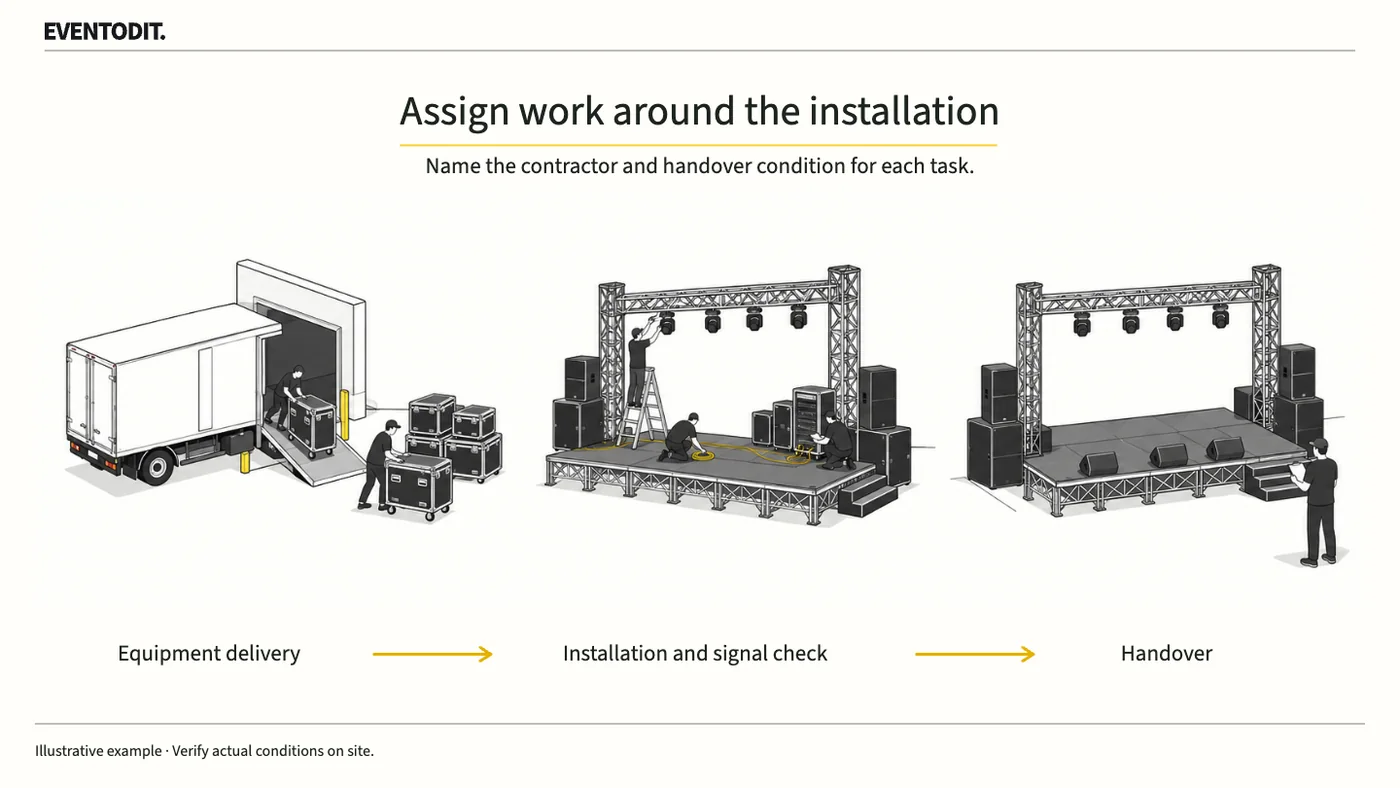
“Equipment installation included” does not assign unloading, power connections, operation or removal. Name the contractor for each task and what they must hand to the next team to expose gaps and duplicate orders.
Read guideHave a correction or additional evidence? Request a correction