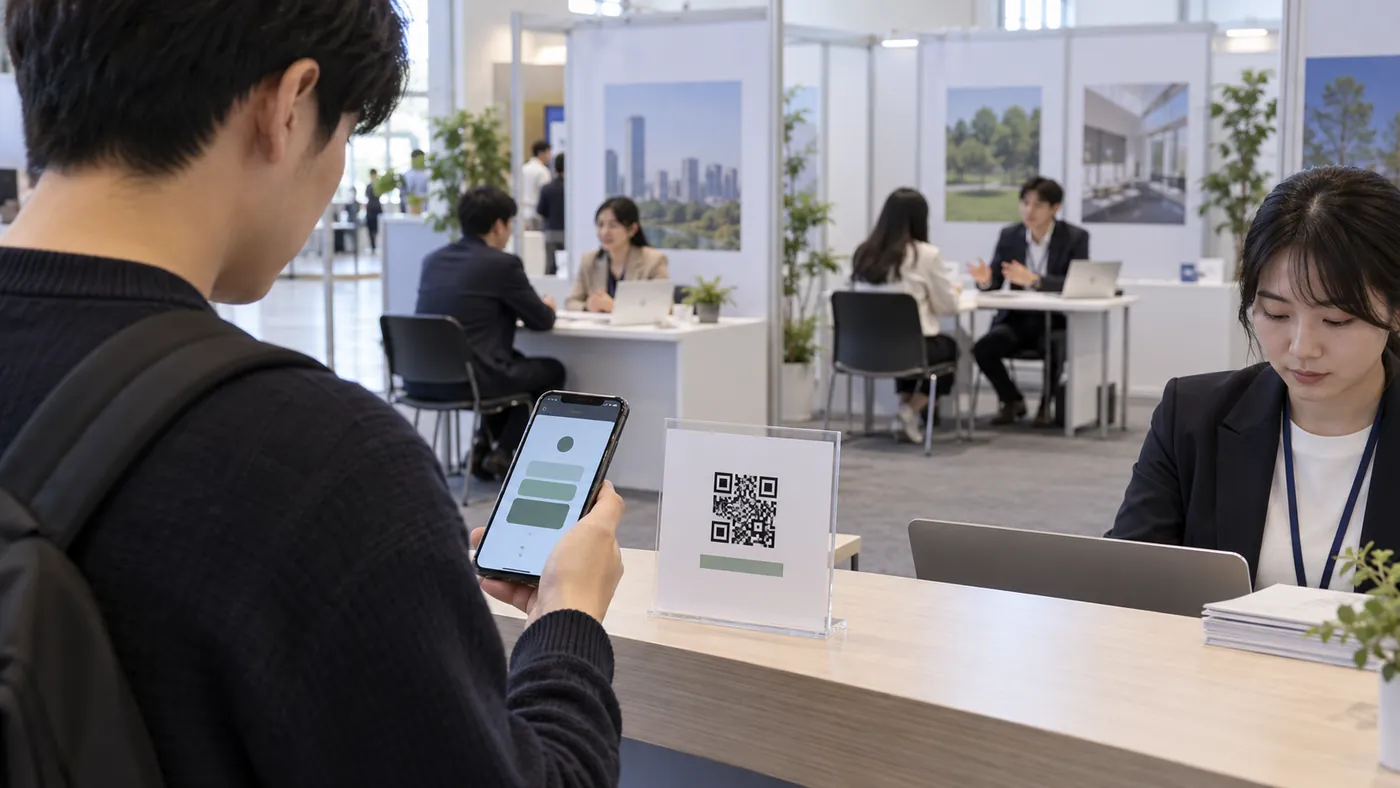
The organisers of the 2026 Financial Sector Joint Recruitment Fair announced QR queue registration for walk-in consultations on the second day, 20 August. They recommended returning to the booth within five minutes of a call and said missed-call rules differed by company.
The notice raises two questions for other event planners: can a participant return in time, and what will happen if they arrive late? The operational suggestions below are EVENTODIT's proposals, not reported results from the fair.
Check how far participants can travel and return
The organisers told participants to register using the QR code at a company booth and check their place on the website. A KakaoTalk notification would be sent when their turn came. Some companies could use an on-site physical queue instead of QR registration.
Five minutes was a recommended return time, not a universal cancellation deadline for all booths. When suggesting that people explore the venue, check each booth's operating rules and the time needed to return.
- Walk the route: The planning team should time the actual route from other booths and amenities back to the consultation booth and consider congestion or lift waits.
- Test notifications: Check delivery using the devices and network conditions planned for the event. The public notice used for this article does not establish notification delay times or their frequency.
- A separate event example: Nagoya Festival published information about discounts at some attractions for guidebook holders. That is a visitor offer, not evidence that the festival and the financial fair shared a QR queue system.
Align missed-call guidance between booths and the information desk
The fair organisers said missed-call criteria varied by company and advised participants to check notifications near their booth. The public sources do not establish each company's detailed handling rules or actual waiting and return records.
For another event, the organiser and booth leads can agree on return deadlines, whether to call again and how to handle a lost queue place, then give participants consistent information. Check what the system supports and what staff can operate on site.
Four steps for planners to consider
These are EVENTODIT's suggestions based on the public notice, not procedures confirmed to have been used at the fair or universal rules.
| Stage | What to check |
|---|---|
| 1. Registration support | Decide where and how to assist participants who cannot use the QR system. The fair notice directed them to the operations office for guidance. |
| 2. Notification test | Agree call timing with booth staff and test delivery on the devices intended for use. |
| 3. Missed-call handling | Decide the return deadline and whether to recall, cancel or adjust queue position; explain the chosen policy to participants and staff. |
| 4. On-site adjustment | If actual waiting, notification and return records are available, review routes and call intervals and agree any changes with the responsible staff. |
Conclusion
A QR queue lets participants wait away from a physical line, but planners must also consider the time needed to return and explain how missed calls are handled. Test routes and notification delivery and make each booth's rules clear to participants.
This article reviewed the organisers' advance notice. Actual notification delays, detailed booth-level missed-call handling and participants' return outcomes were not established by the public sources.
Conditions for applying this elsewhere
A queue that lets visitors leave the line must validate where they can realistically go, allowing for notification delays and changes in queue progression.
Information not established
Five minutes was a recommendation. Detailed booth-level handling, actual notification delays and waiting or return records were not established by the public sources.
Reference material
Have a correction or additional evidence? Request a correction