
From insect calls on outdoor ecology walks to sound art resonating among pipes inside an exhibition space, more programmes place sound itself at the centre of the content. Seoul Forest's night-time insect ecology programme and The Art of Sound at London's Wapping Hydraulic Power Station, part of London Design Festival, are representative examples.
The two events differ in location and format, but present on-site planners with the same fundamental challenge: first define "which sounds the audience must be able to distinguish", then work backwards to plan the space, time of day, group size and audio system around that objective. Once a sound programme starts by fixing an equipment hire list and taking it to the venue, it is headed for failure.
1. Outdoors: separate the 'commentary route' from the 'listening points'
A programme that listens to the natural outdoor environment, as in the Seoul Forest example, takes audiences directly into an ecological habitat. A common operational mistake is interference between commentary on the move and listening to the surroundings.
- Group size and distance limits: measure in advance the width of the moving group and the listening radius that one guide can manage.
- Rehearse separate sections: clearly distinguish and rehearse the 'moving section', where the guide speaks directly or through a wireless system, and the 'stationary listening section', where the audience listens to environmental sounds in silence. Pre-event checks must identify interference in which the guide's microphone level or wireless feedback masks the subtle insect calls the audience is meant to hear.
- Check the external noise timeline: outdoor programmes must check whether their times overlap with nearby stage rehearsals, generator operation or music from food and beverage (F&B) stalls.
2. Indoor playback: compare 'room reverberation' and 'file format' before positioning speakers
An exhibition that brings field recordings collected and edited elsewhere into an indoor space, such as London's former hydraulic power station, needs a different approach. Recordings spanning diverse frequency ranges—including birds' wingbeats, freight trains, friction at bridge joints and waves—must be conveyed without distortion inside the structure.
- Prioritise the space over equipment specifications: hiring and bringing in high-output speakers first can blur the intended audio detail because exposed concrete and steel structures have long reverberation. Review wall reflections, noise spilling in from adjacent areas and audio file formats, including lossless compression, before deciding speaker coverage angles and positions.
- Match audience routes to listening positions: even with free timed reservations, account for changes in sound absorption caused by crowding at particular times and for noise from audience movement.
3. A four-stage workflow for sound programmes
Planners and audio directors must work through the following four stages, from the kick-off meeting to the on-site acceptance test.
| Stage and main task | Detailed tasks |
|---|---|
| [Stage 1] Define the Listening Objective | Identify the frequencies and characteristics of the sounds the audience must clearly distinguish · Confirm the appropriate capacity per session and the session timetable |
| [Stage 2] Compare environmental noise and audio specifications | Measure background noise (dB), room reflections and interference from adjacent programmes · Check the original audio file specifications, copyright and playback permissions |
| [Stage 3] Confirm system procurement and the Scope of Work | Confirm schedules and routes for equipment delivery, installation, tuning (EQ and coverage-angle adjustment) and removal · Check power-supply stability and distribution capacity |
| [Stage 4] Conduct Acceptance Testing under event conditions | Test at the same time of day as the event, from actual audience listening positions, including the Sweet Spot and edge seats · Make "whether the intended sounds are clearly audible" the final acceptance criterion, rather than simply "whether sound comes out of the speakers" |
Five items for the acceptance record
| Record | What to enter |
|---|---|
| Listening objective | The environmental sound or final-file passage to distinguish, and its priority |
| Expected noise sources | Location, operating time, responsible team and whether the source can be adjusted |
| Listening positions and routes | Entrance, centre and edge check points; movement, waiting areas and access conditions |
| Group size and sessions | Planned attendance, test occupancy and dwell pattern, and session conditions to adjust |
| Final acceptance conditions | Listening results by position, unresolved issues, owner, deadline and retest result |
Planner's note: change the Acceptance Criteria
On-site acceptance of a sound programme does not end when the speakers power up and someone presses play. Unloading and installation are complete only when the intended sounds have been verified as distinguishable from where the audience stands.
Before writing equipment model names into the plan or procurement specification, prepare a checklist stating the 'listening objective, expected noise sources, listening positions along audience routes, capacity and final acceptance conditions'. This is how planners can prevent wasted budgets and disrupted rehearsals.
Conditions for applying this elsewhere
Separate outdoor commentary and listening, checking noise at the operating time. Indoors, review audience-position reflections and playback specifications separately. Obtain specialist review documents for power and distribution.
Information not established
Sources cover Seoul Forest booking information, the London programme, reporting and a manufacturer guide. Actual session attendance, listening evaluations, measured noise or reverberation, system layouts, tuning and internal acceptance results were not established. The four-stage method and record fields are editorial proposals for other events, not reconstructions of either event's procedures.
Reference material
- Seoul Metropolitan Government · Seoul Forest autumn programmes
- London Design Festival · The Art of Sound
- Seoul public service reservations · Autumn Night, an Orchestra of Insects
- Wallpaper · Reporting on Chris Watson’s London installation
- Yamaha · Get the Room Right First — Understanding Acoustics · guide for worship spaces
Next tasks and related resources
Listening objectives, noise sources, audience positions and routes, group size, sessions and final acceptance conditions for the brief and order
Related practical guides
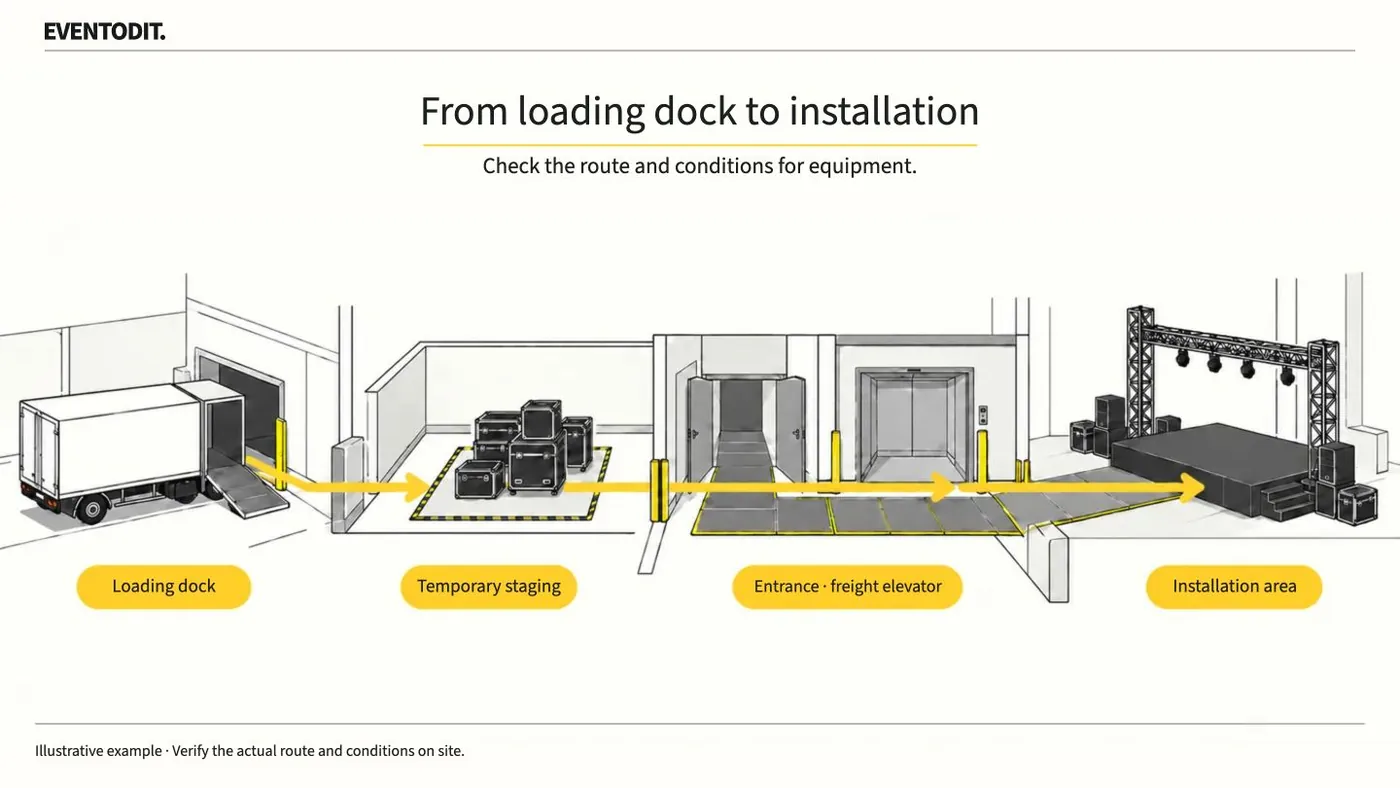
Venue Survey and Load-in
Check the route equipment will actually travel and the routes visitors will use. Mark questions for the facilities and technical teams on the plan and assign a person and deadline to resolve each one.
Read guideHave a correction or additional evidence? Request a correction