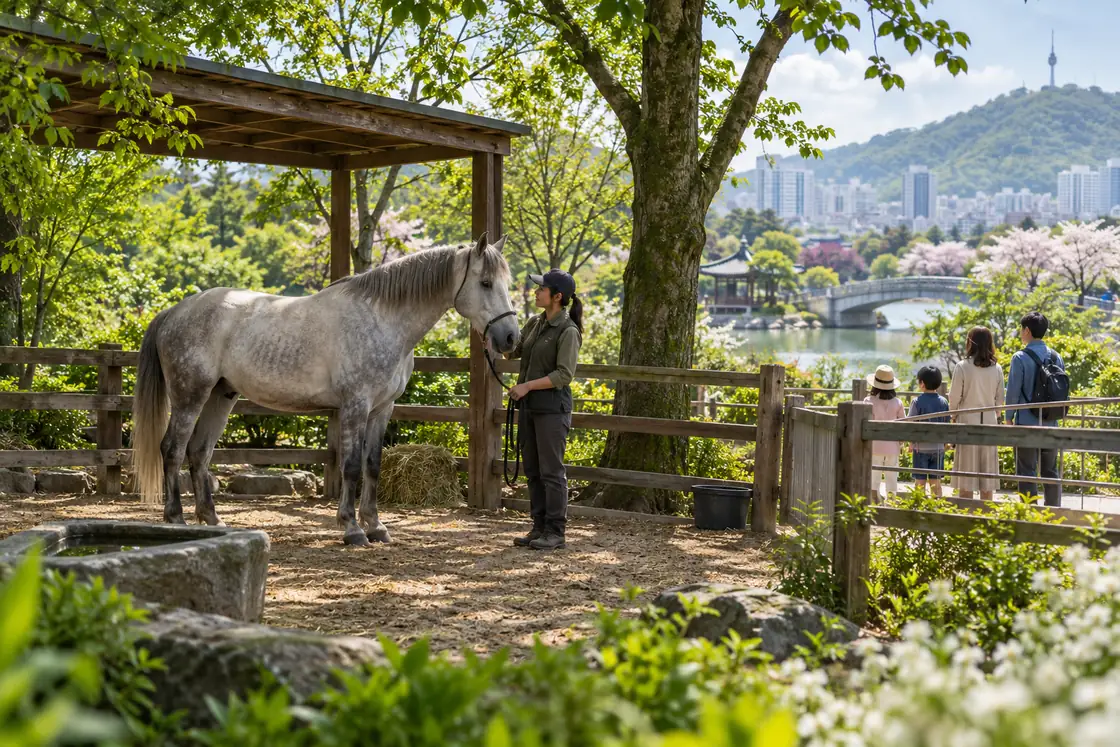
An experience involving animals needs a schedule for rest as well as for welcoming visitors. In its April 2026 notice for an urban riding programme, Suncheon displayed six daily sessions on the poster, with 45 minutes of operation and a 15-minute break each hour. The notice identified the Korea Racing Authority as the event’s organiser and operator.
For an event planner, communicating operating and rest periods together is a starting point for managing queues and animal care. Following the reference standard "Case Article Review", this column distinguishes the confirmed timetable from operating suggestions for other events.
1. Separate operation and rest: the attraction’s timetable and each animal’s condition
Suncheon advertised the experience for 11, 12, 18 and 19 April, from 10 am to 5 pm, beside Dongcheon Stream beneath the Space Bridge at Suncheon Bay National Garden. The poster listed 45 minutes of operation and a 15-minute break each hour, plus a lunch break from noon to 1 pm.
- Understand what the announced break covers: The 15 minutes is a break shown on the programme timetable. That figure alone does not establish individual horses’ workloads, rotations or rest records, or how the programme operated on site. It should not be treated as a universal standard for other events.
- Include rest in the operating plan: When planning another event, include animal rest and condition checks agreed with a specialist alongside visitor registration and riding times. Prepare registration cut-off and next-session guidance so an increase in the queue does not arbitrarily shorten the agreed breaks.
- 45 minutesAttraction operatesThe operating period advertised on the poster
- 15 minutesBreakA rest interval before the next operating period
Suncheon’s 2026 published timetable; not individual horse workload or rotation records, or a universal rest standard.
2. Assign condition checks and suspension decisions to qualified personnel
Animal condition, weather, ground conditions and the activity itself vary from event to event. The planning team should agree operating and rest arrangements with a veterinarian, riding instructor or qualified handler familiar with the animals and site. In its 30 April 2026 announcement about the nationwide programme, the Ministry of Agriculture, Food and Rural Affairs also described plans for sufficient horse rest and on-site management by qualified professionals. That announcement followed the April Suncheon dates and does not establish what happened at that site.
- Agree suspension authority and communication routes: For another event, responsibilities can be arranged so that if the specialist decides additional rest or suspension is needed, the site lead immediately stops registration and riding and communicates the decision to the operations centre and visitor-information staff. The specialist and site lead should also check conditions before deciding whether to resume. Do not assume that one temperature threshold or rest length suits every animal.
3. Align queues and visitor information with rest periods
Suncheon’s notice said the free riding experience would accept on-site registrations on a first-come basis on the day. Riders needed to be at least 105 cm tall and weigh no more than 75 kg. The notice also warned that rain could lead to cancellation.
- Explain the current status and next options: The operations team can show riding times, breaks and registration availability together on signs and registration notices. Tell people waiting the expected start of the next session and the current registration status, while avoiding a guaranteed ride when weather or animal condition may change.
- Keep alternative activities separate from rest: For visitors who do not meet the riding conditions or cannot wait, consider information materials or a quiz that places no additional demand on animals. Before offering a photo area or viewing zone involving animals, check with the specialist that it will not disturb their rest.
4. A four-stage protocol for animal-involved programmes
These suggestions can help teams prepare an animal-involved programme. They are not a reconstruction of suspension authority or individual animal rest records at the Suncheon event.
| Stage | Operating standard |
|---|---|
| Stage 1: Agree operation and rest with a specialist | Establish an operating and rest plan with a qualified person familiar with the animals, climate, ground and activity. Confirm the conditions for extra rest or suspension. |
| Stage 2: Publish the timetable and possible changes | Tell visitors the operating and rest times, riding conditions and possibility of changes due to weather or animal condition on booking pages and on-site notices. |
| Stage 3: Hand over suspension authority and contacts | Define responsibilities for the specialist, site lead and visitor-information staff. If a suspension is decided, stop registration and riding and promptly inform those waiting. |
| Stage 4: Prepare alternatives and record results | Provide alternative activities that do not disturb the animals’ rest. Record changes to operation or breaks and the times visitors were informed, then review them for future planning. |
Planner’s memo: rest is part of the service visitors can understand
The wish to offer visitors a special experience can be planned alongside attention to the animals’ condition. Explaining a pause as part of the programme helps visitors prepare for their next choice.
Planners should uphold the rest and suspension conditions agreed with specialists and assign someone to communicate changes on site. Taking care that both animals and people can participate safely is an important part of running the experience.
Conditions for applying this elsewhere
For activities involving live animals. A professional familiar with the animals and site determines suitable conditions; Suncheon’s 15-minute interval is not universal. Alternatives must not disturb rest.
Information not established
Actual delivery, waiting numbers, horse numbers and rotation, individual rest, animal health, suspension authority and safety outcomes were not verified. The 15 minutes is the advertised programme break, not an individual animal workload record.
Reference material
Have a correction or additional evidence? Request a correction