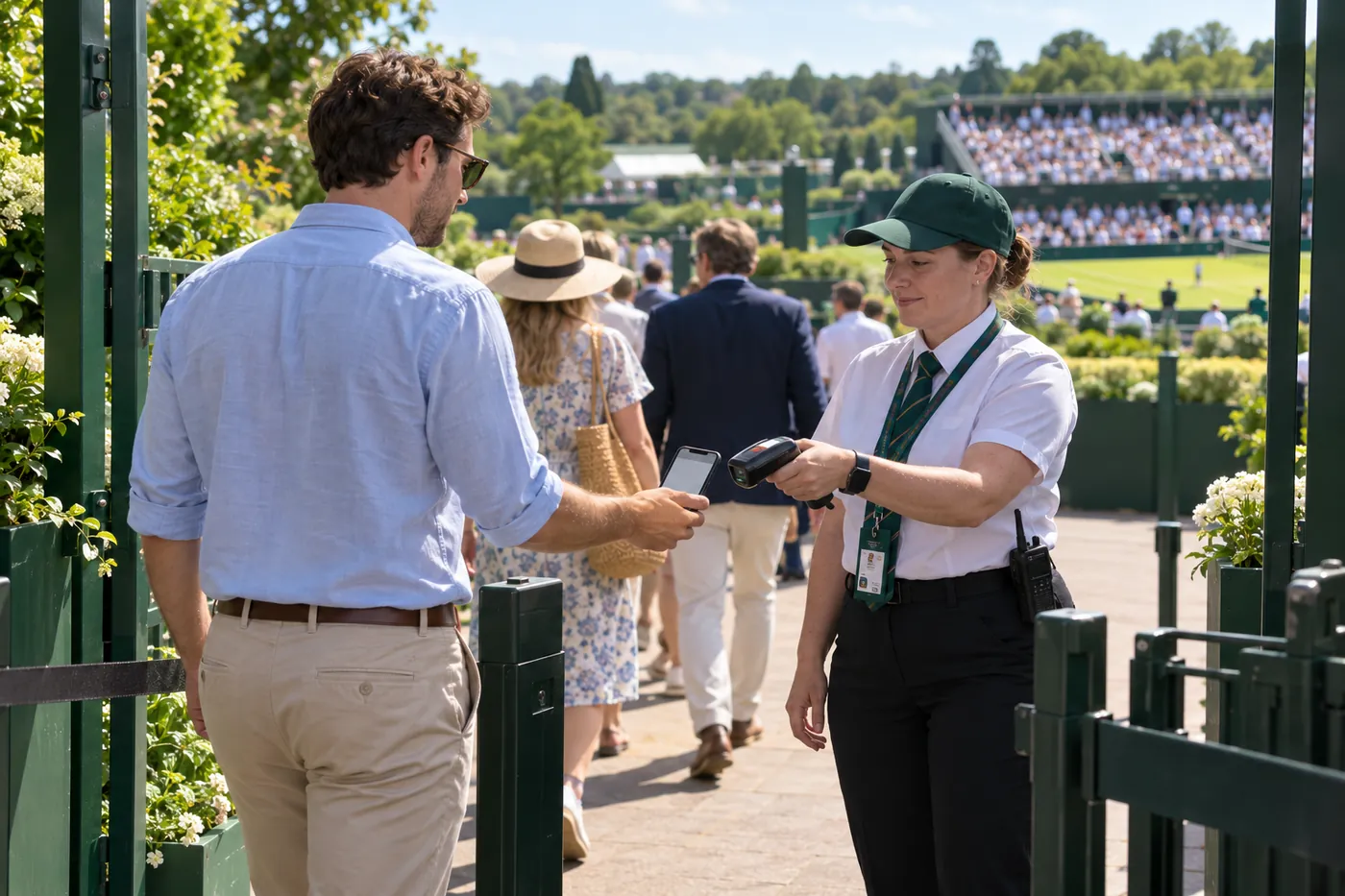
At a tournament with matches throughout the day, some spectators leave early while others hope to watch the remaining play. Wimbledon’s 2025 ticket-holder handbook asked court-ticket holders leaving the Grounds before play ended to scan their tickets at the exit so they could be donated to official resale.
For event planners, an important distinction is between observing an empty seat and confirming that its ticket has been officially returned. Following the reference standard "Case Article Review", this column separates the confirmed guidance from operating suggestions for other events.
1. Distinguish temporary absence from an official return
Spectators may leave their seats briefly for food or a break. An empty seat alone should not be treated as proof that the original holder’s right to use it has ended, or as a reason to sell it again. Wimbledon’s 2025 guidance said that spectators leaving the Grounds early could scan their tickets at the exit to donate them for resale.
- Make confirmation of return the starting point for resale: At another event, organisers can establish a process to confirm the holder’s intention to return the ticket and its status, then determine whether the seat may be resold under the terms and ticketing system. Keep tickets out of sale while a temporary absence or unclear status is being checked.
- Explain use and re-entry conditions in advance: Organisers should check the event’s terms and system and explain how a return affects the original ticket and re-entry. Wimbledon’s public guidance does not establish how a ticket is technically invalidated immediately after scanning.
- Check the return and ticket statusAn apparently empty seat alone is not a ticket available for sale.
Unconfirmed
Confirmed
- Confirm the ticket may be soldUse only returns and resale permitted by the organiser and ticket terms.
- Seat the new ticket holderConfirm completed purchase and the seat shown on the new ticket.
Editorial application. Decide the original ticket’s validity and re-entry conditions for the particular event.
2. Joining the queue and buying inside the Grounds are separate steps
Wimbledon’s 2025 queue guide said returned Show Court tickets were sold, subject to availability, after 3 pm at the official Parkside kiosk inside the Grounds. The advertised prices were £15 for Centre Court and £10 for No.1 and No.2 Courts, with proceeds net of VAT donated to the Wimbledon Foundation. These were the terms advertised for 2025.
- Explain queue and purchase entitlements separately: The guidance directed spectators to join a virtual queue through the Wimbledon App; registration was also available in the Queue Village before entering the Grounds. The purchase itself took place at the kiosk inside the Grounds. Joining the queue did not itself grant admission, and purchasing a ticket depended on returns being available.
3. Hand over ticket status and seating information
Before applying official resale at another event, organisers should confirm their authority to sell and the ticket terms. The task is to design a return and resale process permitted by the organiser, rather than an unauthorised private transfer.
- Confirm whether a ticket can be sold: Ticketing staff check the confirmed return, treatment of the original entitlement and resale eligibility against the event’s system. Once a new purchase is confirmed, they pass the ticket and seat information to the seating team. The published 2025 materials do not specify how quickly Wimbledon’s internal seat map was updated or transmitted.
- Prepare a path for resolving discrepancies: If the original holder’s and new purchaser’s ticket statuses appear inconsistent, an usher can refer the issue to the ticketing lead rather than decide the allocation independently. The seat should remain on hold until its status is confirmed.
4. A four-stage protocol for returned-seat resale
The following is a suggested approach for official returns and resale at a long sporting event or performance. It is not a reconstruction of Wimbledon’s internal ticketing system.
| Stage | Operating standard |
|---|---|
| Stage 1: Agree return and resale conditions | The organiser and ticketing provider define and explain the return method, original ticket’s use and re-entry conditions, purchaser eligibility and treatment of sale proceeds. |
| Stage 2: Confirm the intention to return and ticket status | Exit staff explain the distinction between a temporary departure and an official return. Ticketing staff review resale eligibility only for confirmed returns. |
| Stage 3: Separate queue and sale information | Explain where and who may join the queue, and separately state where and when purchases take place. Tell spectators that availability depends on the number of tickets returned. |
| Stage 4: Hand over ticketing and seating details | Ticketing and seating teams confirm the new purchaser’s ticket, seat information and guidance. If ticket statuses conflict, hold the sale and allocation and refer the issue to the responsible lead. |
Planner’s memo: confirm the return before using an empty seat again
A ticket returned by a spectator leaving early can create an opportunity for someone else who wants to see the remaining matches. To pass on that opportunity clearly and safely, organisers should explain what the original spectator is returning and when the new purchaser’s booking is confirmed.
Connecting queue registration, return confirmation, resale and seating guidance with the person responsible for each stage respects spectators’ time. Start by establishing the rights and checks that fit the event’s published terms.
Conditions for applying this elsewhere
Only for events where the organiser and ticket terms permit official returns and resale. Agree the original ticket’s use and re-entry conditions and responsibility for conflicting states in advance.
Information not established
Actual return and resale quantities, sales rates, completed donation totals, internal invalidation and re-entry processes, and seat information transmission speed were not verified. This describes 2025 conditions, not current prices.
Reference material
Have a correction or additional evidence? Request a correction