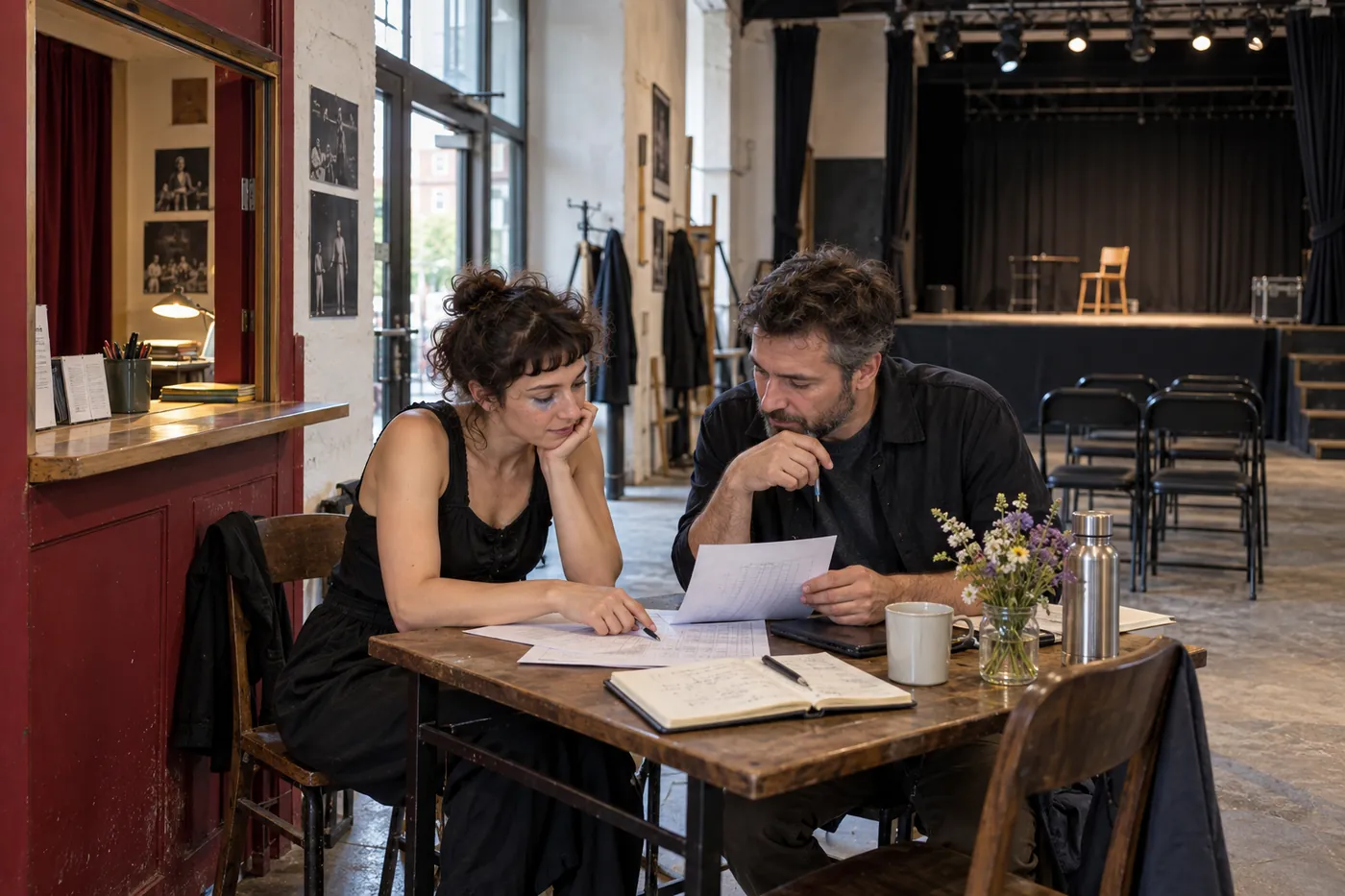
In the performing arts and at small and medium-sized festivals, artists are sometimes booked on a revenue-share arrangement, also known as a running guarantee, rather than a fixed fee. Italy’s Torino Fringe Festival 2026 also advertised a striking offer in its call: indoor performance companies would receive 70% of box-office income.
At first glance, this looks highly favourable and democratic for the performing company. From an event planner’s perspective, however, the key to the contract is not the promise of 70%. What really matters is what has been left out of the remaining 30%. As the budgeting and procurement principles in the “Case Article Review” file also warn, focusing only on the headline figure and overlooking hidden on-site operating costs can leave the final profit-and-loss statement (P&L) in deficit even with a 70% revenue share.
1. The trap before the percentage: decoupling gross revenue and net revenue
The basis for Torino Fringe’s promised 70% is not the gross ticket revenue paid by audiences.
- Clarify the deductions: The organiser specified that VAT and fees payable to Italy’s copyright-management organisation, SIAE, would first be deducted from total income, with 70% then allocated from the remaining net revenue. Before emphasising an attractive percentage when booking an outside company, the planner needs to list and sign off the advance deductions clearly in the contract: card fees, copyright charges, ticketing-platform fees, and the treatment of complimentary and discounted tickets. This helps prevent settlement disputes.
2. Separate the provision of hardware from the operator’s roles and responsibilities
The most frequent on-site conflicts arise when the responsibilities for equipment and staffing are confused.
- Passing on labour costs: Torino Fringe provides basic sound and lighting equipment and a technical coordinator to assist with setup. However, its rules require the performing company to cover all the labour costs of the technical director who will actually operate the six-day consecutive performance run, as well as accommodation and transport costs. “Equipment is provided” must not be misread as “operation is provided too.” Behind the high 70% share are substantial back-end staffing and accommodation costs that the performing company must bear itself for six days.
3. Cross-check the settlement in a dry run: use the calculators together before signing
The organiser’s rosy presentation of “how much you can earn if all the tickets sell” carries no weight on site.
- Compare a hypothetical P&L: When the planning team books a company on a revenue-share basis, a simulation before signing is essential. Both sides need to use the same hypothetical sales data, for example, 70% seat occupancy with 20% discounted tickets, and calculate the expected payment themselves. A safe revenue-share contract is established only when my calculation and the other party’s calculation agree down to a single won.
4. A four-stage protocol for revenue-share (RS) contracts
When booking a performance or arranging venue hire on a share of ticket revenue rather than a fixed fee, the organiser’s planning team needs the following four stages.
| Stage | Working standard |
|---|---|
| [Stage 1: Define net revenue and confirm the deduction rules] | Specify in the contract the deductions from gross sales, such as ticketing fees, card fees and withholding taxes, and set separate settlement rules for complimentary and discounted tickets. |
| [Stage 2: Hand over responsibility for technical and incidental costs] | Confirm the list of hardware the organiser supplies free of charge, and draw a clear boundary around who pays the lighting and sound operators’ labour costs and staff accommodation and meals that arise in proportion to the number of performances. |
| [Stage 3: Establish a minimum-guarantee safeguard] | Prepare for the worst case, in which weak ticket sales leave the revenue share insufficient even to cover the stay on site, by establishing a minimum-guarantee clause, or basic payment, agreed by both sides. |
| [Stage 4: Cross-check the P&L] | Immediately before signing, set up a hypothetical scenario and sign off that the organiser and performing company reach the same final payment using their respective Excel sheets. |
Planner’s note: the safest contract makes its subtractions clear
When approaching artists to build an event’s profile, planners can unconsciously be tempted to emphasise addition: “We will share more of the revenue with you.” Yet the real business on site is determined by unsentimental subtraction.
Before packaging the offer as “We give you 70%,” a good planner needs to explain the subtractions coolly and transparently: “These fees are taken out within the 30%, and you will need to pay staff meals and transport yourself from the money that remains.” Paradoxically, that cool, exacting explanation becomes the firmest bottom line on which the performing company can continue to trust the event through to the end.
Conditions for applying this elsewhere
Use when comparing fees with box-office shares or booking a multi-show run.
Information not established
Actual sales, payments, payment dates and minimum guarantees were not verified. Conflicting application deadlines were excluded.
Reference material
Have a correction or additional evidence? Request a correction