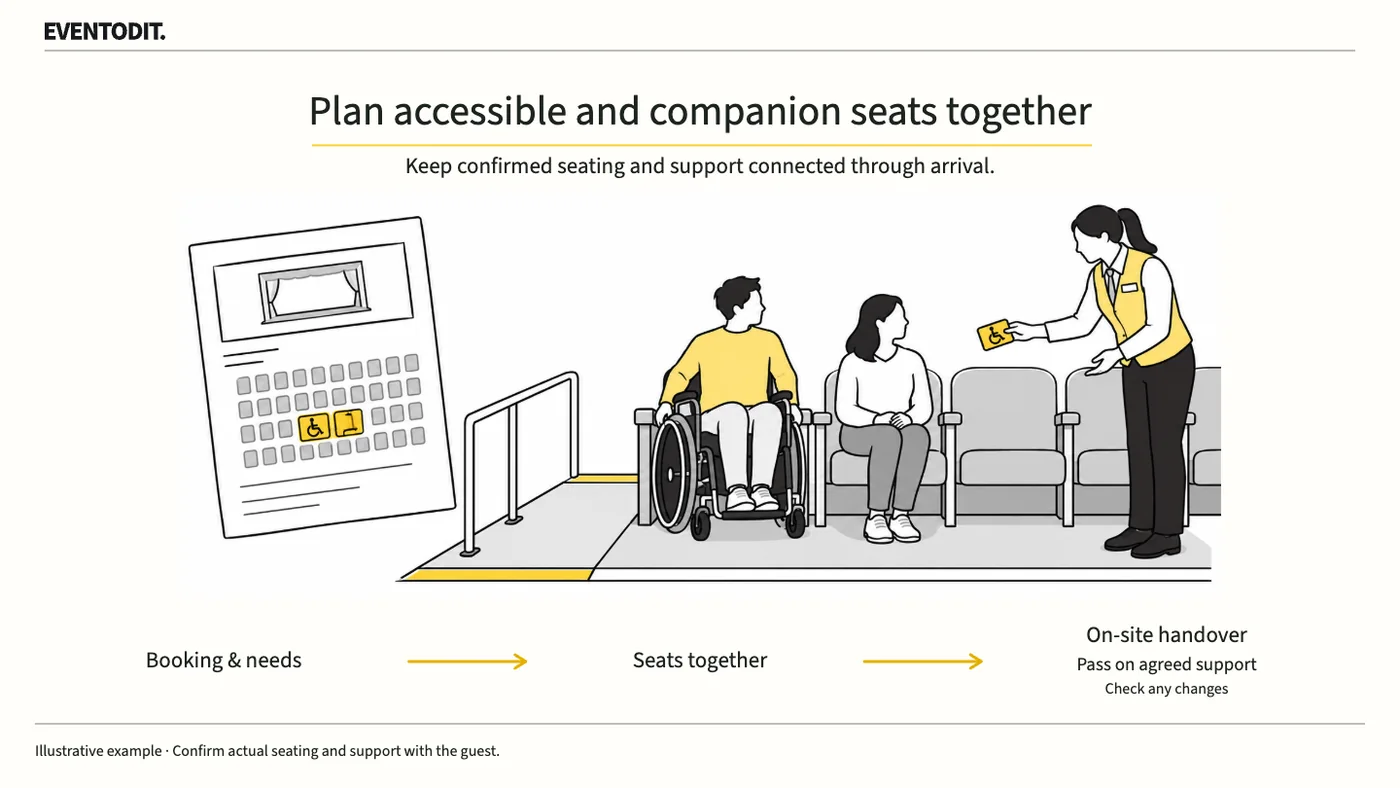
Part 1. Planning and Ticketing Lead
"Do not group all accessible seating under wheelchair spaces. Define the available support and booking status clearly."
- Distinguish seating types and disclose limitations: Do not treat accessible seating as a single wheelchair-only area. Identify mobility-accessible seats, seats supporting visual or hearing access, companion seats and other relevant types. If support cannot be provided on site, state the specific limits in advance instead of covering them with a general promise.
- Separate online booking steps from enquiries: A booking button does not mean every step is completed automatically online. Where a type of seat requires a separate enquiry or box-office confirmation, identify a direct contact route and a responsible responder. Distinguish an enquiry received from a seat actually secured.
- Establish a companion policy for the event: Decide in advance whether companion tickets are free and document eligibility, the number permitted and evidence requirements in line with the event's policy and applicable local conditions. Do not import overseas examples without review.
Ticketmaster UK distinguishes wheelchair access, mobility, visual and hearing support, and companion tickets; the available types and quantities depend on the event and venue. Some tickets not shown on the seating map may be sold through a venue box office or primary ticket seller. This is a UK booking example, not a statement of universal Korean obligations or actual service availability. Domestic policies should also consider applicable accessibility requirements and each attendee’s choices.
Part 2. Accessible Ticketing and Customer Service
"A booking is complete when the attendee's and companion's physical seating relationship is secured."
- Compare the seating plan with the actual viewing environment: Cross-check ticketing descriptions against the venue. Verify steps and entry routes, sightlines to caption monitors and sign-language interpreters, and the location of companion seats.
- Keep the attendee and companion seats linked and nearby: Allocate the companion seat in an adjacent area or as close as possible so the attendee can receive appropriate support. Maintain the relationship between the seats when either the seats or companion details change.
- Test the booking process in an authorised environment: Agree on a formal test environment and permissions before testing, rather than creating arbitrary payments or false applications. Check the full process from seat selection and adding a companion through the final confirmation.
The Royal Ballet and Opera Access Scheme describes issuing companion tickets together and placing them adjacent or nearby. Determine the actual allocation with the attendee's choice and request, available venue seating and support conditions in mind. If adjacent seating is unavailable, discuss and confirm available alternatives with the attendee; do not require them to bring a companion. Do not apply overseas prices or evidence conditions as a general domestic standard.
Scroll sideways if needed to compare the branches.
- Visitor's access needsMobility, sightlines, hearing, information and other requirements
- Available seats and supportConfirm venue layout and services actually provided
- Confirm the attendee’s seat and supportIf a companion is requested, link the seats and support relationship
- Hand over to visitor servicesPass necessary support information and the route for changes
Share personal information only with the people who need it and only to the necessary extent.
Part 3. Audience Operations and On-site Assistance
"Filter sensitive personal information and hand over only the agreed support and seat details needed on site."
- Minimise personal data and hand over essential support information: Do not copy medical certificates or complete sensitive records collected during eligibility checks into general on-site lists. Give admission and assistance staff only information required for their work, such as assigned seat numbers, agreed support and an on-site contact.
- Reconcile booking promises with the on-site handover: Check handover records against the support confirmed to the attendee at booking, so admission staff do not miss an agreed service and a gap does not arise on site.
- Establish a route for post-deadline changes: Set a contact for changes and a deadline for updating the on-site team in case an attendee's support request changes after booking closes or a need arises at the venue. Keep the latest information synchronised.
The Royal Ballet and Opera's published terms describe handling eligibility evidence for scheme administration. The overseas booking terms are a reference example and do not replace domestic accessibility duties or requirements for handling sensitive information.
Final check before use: Before the event opens, check that accessible and companion seat assignments and agreed on-site support have all been handed over to admission staff.
Conditions for applying this elsewhere
For accessible and companion booking operations. UK ticketing and venue conditions are not universal Korean obligations.
Information not established
Seat quantities, free-companion policies, support scope and visitor needs at a particular Korean event have not been verified.
Reference material
- Ticketmaster UK — Accessibility & Companion Tickets: seat types, booking channels and venue-specific companion conditions. Checked 2026.10.23.
- Royal Ballet and Opera — Access Scheme: registering access requirements, nearby companion seats and booking support. Checked 2026.10.23.
- Royal Ballet and Opera — Access Scheme terms, 2025.05 edition, marked for review in 2026.03: companion role and scope of evidence handling.
After reading, complete the next task
Seat-specific support conditions, booking status, companion links and site handover information
This article’s template
Accessible Booking, Seating and Arrival Record
A shared booking record showing agreed seats, support and outstanding checks for ticketing and front-of-house staff.
Instructions, examples & downloadsRelated practical guides
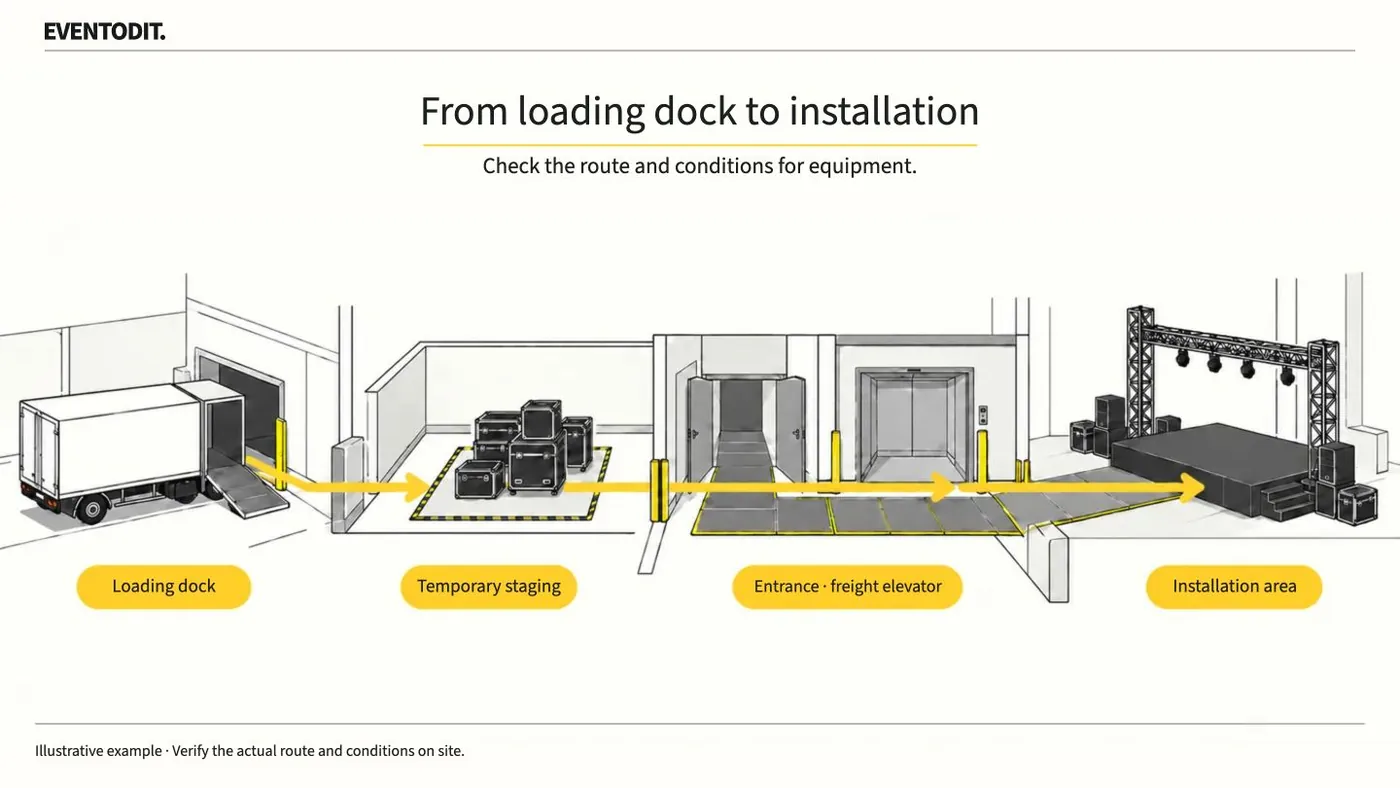
Venue Survey and Load-in
Check the route equipment will actually travel and the routes visitors will use. Mark questions for the facilities and technical teams on the plan and assign a person and deadline to resolve each one.
Read guideHave a correction or additional evidence? Request a correction