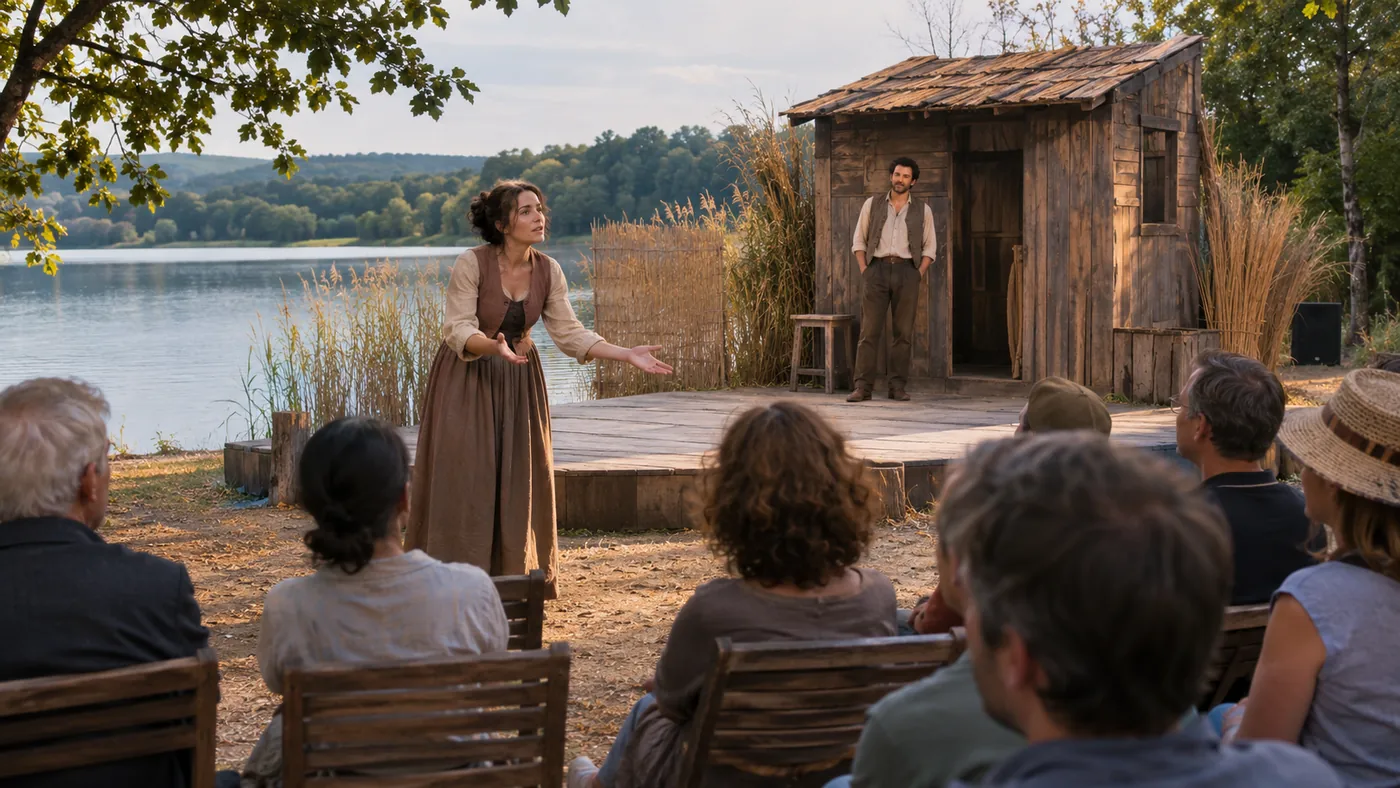
Give a visible character an audible point of origin
The Austrian Bregenz Festival's 2025 closing account confirms that Der Freischütz was performed on its lake stage in 2024 and 2025. The focus here is not the size of the scenery but how audiences were invited to follow the people within it.
The organiser describes matching speakers to the speaking position in a scene.
The editorial team reads this as sound directing attention. When a stage is broad or characters occupy different places, sound can suggest the relationship that matters now, rather than asking audiences to attend equally to every position. However, the production description is not a measurement of every listener's ability to locate a voice or become immersed.
Indoor music and outdoor voices need different facility conditions
Music came from an indoor orchestra and choir; onstage voices were amplified, the account says.
For other events, this suggests considering the conditions performers need separately from the scene audiences should hear. Must the musicians occupy the place where the story unfolds? If not, where must the two reconnect? The possibility of separating locations does not establish that the same performance can work in any space.
Facility review follows that relationship. The editorial team proposes examining the actual sound path, the listening positions from which live voices and music can be judged together, and the people who can adjust their relationship. Moving music into another room without examining those conditions can separate the achievement of finding space from the ability to deliver one coherent scene.
Turn a studio deliverable into a scene at the venue
The team says a bird sound’s movement, slow in the studio, worked on the wide lake stage. Effects were adjusted on site.
In the editorial team's interpretation, the important issue is the basis for revision, beyond the sophistication of an effect. A movement that impresses when heard alone might pass too quickly or obscure dialogue when combined with an actor's action. This is an illustration of why scene and technology need joint review, not a claim that those problems occurred in this production.
On-site adjustment can therefore be treated as time for adapting the creative work to its setting, rather than whatever time remains after installation. The director judges the sound's narrative role; technical staff establish whether it can be realised within permitted installation and operating conditions. Completing one side does not necessarily complete the other.
A changed scene changes the facility questions
The official performance archive separately credits direction and stage design, sound direction, and sound effects. The table does not reproduce that organisation. It sets out relationships the editorial team proposes comparing when another work changes.
| Changed creative choice | Facility and technical relationship to revisit | What remains unproven |
|---|---|---|
| Move the position from which a character speaks | The relationship between the visible and audible positions | Whether the previous sound settings can remain |
| Add a new effect to a scene | Overlap with dialogue and music; connections at its beginning and end | Whether delivering the file completes the scene |
| Extend the area occupied by the audience | Listening, sightlines and permitted installation in the new area | Whether it offers the same experience as the existing area |
Scroll sideways to read every column.
Updating only the equipment list after changing a scene leaves these relationships undocumented. Updating only the director's notes while retaining the previous space and technical conditions leaves feasibility uncertain. Bringing both documents into agreement about the same scene is the role the editorial team draws for facility and technical review.
The commitment includes revision time as well as equipment
Speaker quantities or rental charges alone offer an incomplete basis for comparing this approach. The editorial team proposes separating sound creation, on-site adjustment, show operation and reworking changes to scenes. Even with identical equipment, different obligations to adjust and recheck mean different scopes of work.
Rights also require more than receipt of a file. An event adapting this idea would need to check the actual agreement's scope for using, modifying and reusing commissioned audio. This does not mean the public sources disclose this production's rights allocation or fees.
When technology becomes part of the story, the people involved need time to judge it together. A supplier completing installation, a director confirming a scene and an operator responding during a show are different activities. Treating them as a single delivery can obscure who undertakes which revisions. Undisclosed costs or staffing cannot be estimated into a claim that this approach was inexpensive or efficient.
A small stage can make a smaller promise about sound
Imagine a small outdoor staged reading in Korea. A character tells a story in front of the audience while footsteps beyond an unseen door announce the next event. In this hypothetical example, the transferable principle is deciding what listeners should imagine from a direction, rather than installing a large system.
If one sound relationship is essential, it can first be compared at the intended venue. Technical staff and the venue operator can review installation, power, cabling, noise conditions and audience areas together. If it cannot work, changing the direction of the sound or the actor's movement is another option. This is the editorial team's proposal for a separate local review, not assurance that an overseas facility can be transferred unchanged.
If the same audible clue cannot be offered at every position, access support and information also need attention. Artistic and accessibility staff can discuss how an event conveyed only through sound might be communicated differently, and what would change in that alternative. A creative technical choice extends beyond adding equipment to explaining the experience's scope and limitations.
Conclusion
What transfers from Bregenz is not the scale of a particular sound system but the practice of composing stage action and audible location together. Facility and technical conditions are part of making that scene possible in a real place. Defining what should be heard alongside the scope for implementation and revision allows a technical commission to describe a specific audience experience.
Conditions for applying this elsewhere
Check actual installation, power, cabling, noise, access and safety conditions separately with the venue and relevant staff. An overseas production's scale or methods are not common standards for Korea. The hypothetical staged reading and comparison table are editorial application examples.
Information not established
Seat-by-seat acoustic measurements, audience responses, actual costs, contracts, rights allocation and detailed operating records have not been verified. The organiser's production account is not used as independent performance validation. No on-site reporting, direct equipment operation or external expert review was conducted.
Reference material
Next tasks and related resources
Essential sound relationships by scene, spaces and technical review scope, responsibility for revisions and rechecks, and outstanding conditions
Related practical guides
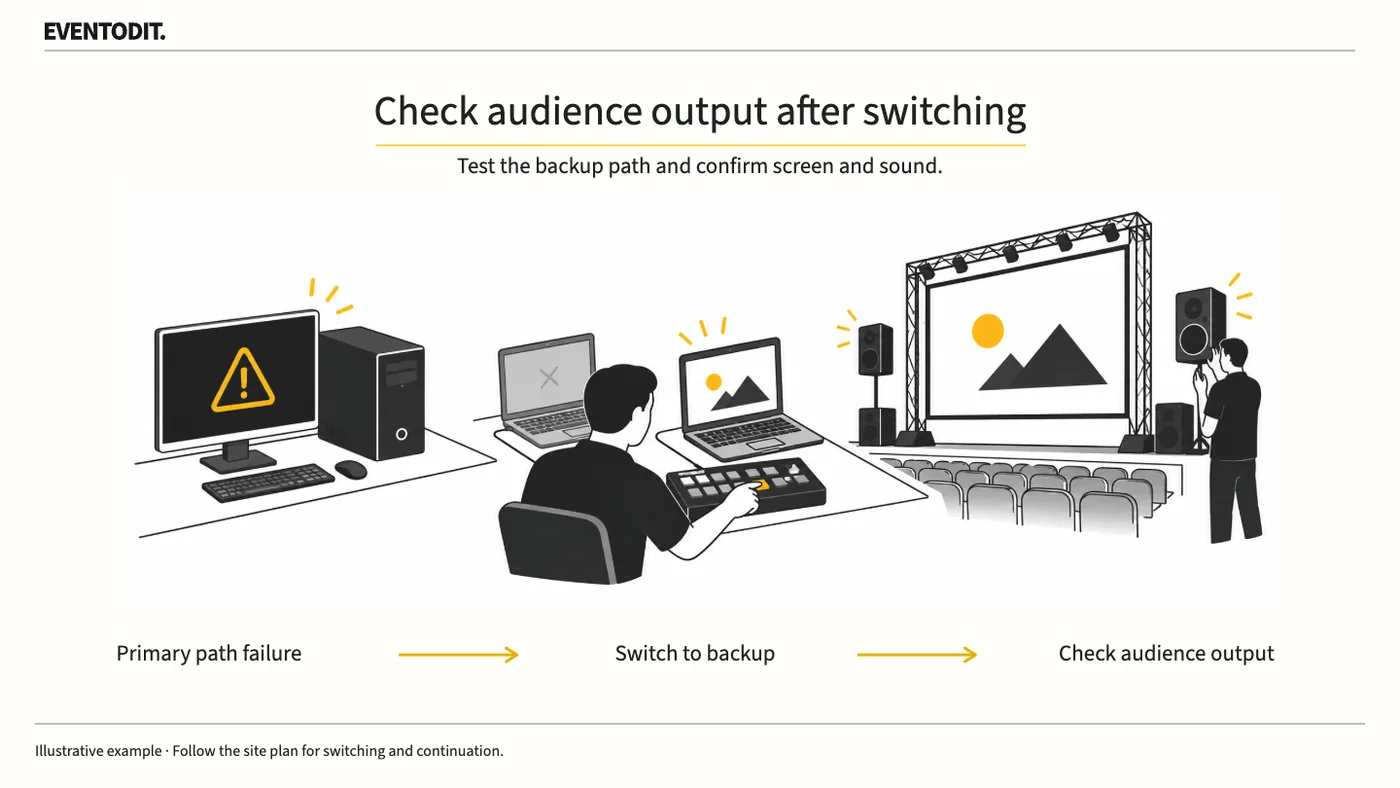
Event Technical Rehearsal and Failure Response
Separate picture, sound and lighting checks do not test the response to a fault during the show. Rehearse who calls the fault and who switches to backup equipment or holds the programme.
Read guide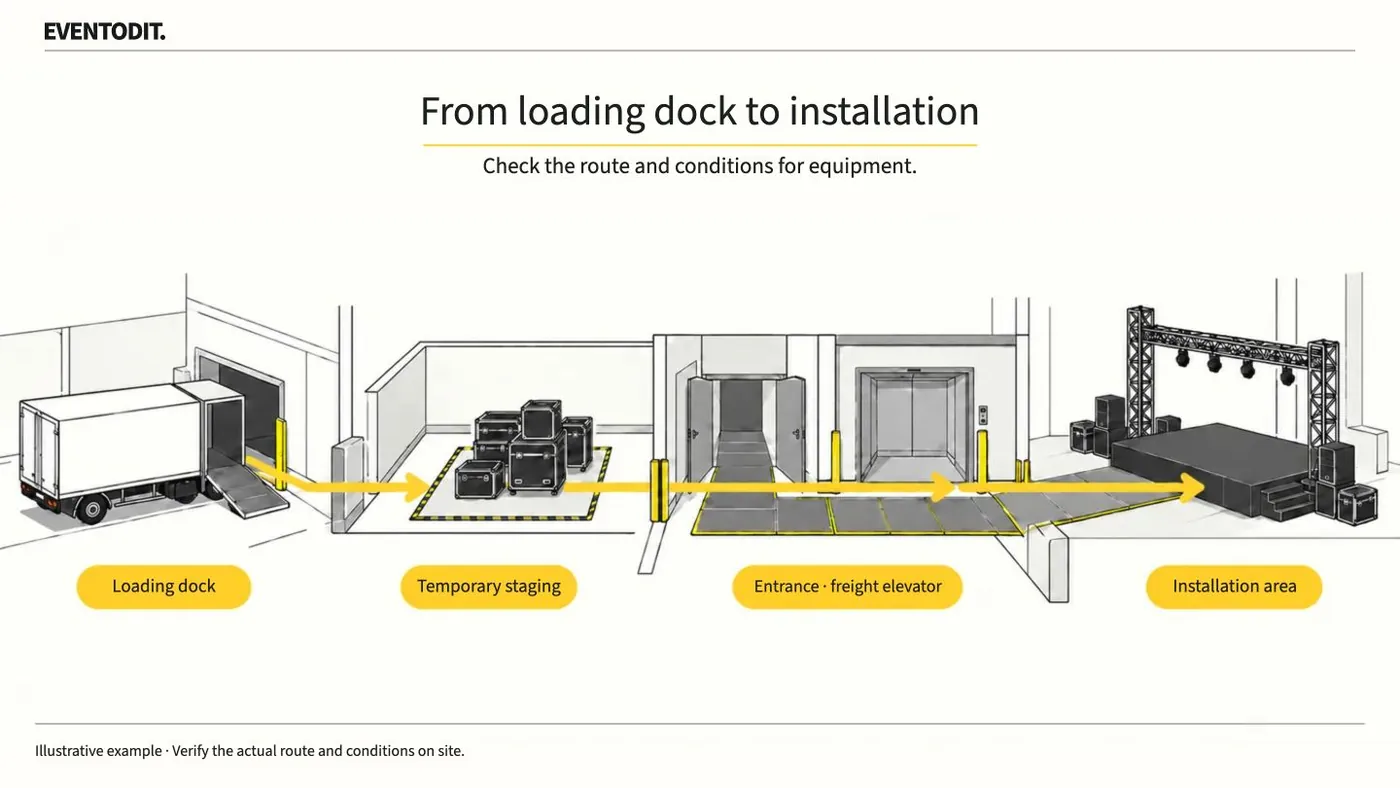
Venue Survey and Load-in
Check the route equipment will actually travel and the routes visitors will use. Mark questions for the facilities and technical teams on the plan and assign a person and deadline to resolve each one.
Read guideHave a correction or additional evidence? Request a correction