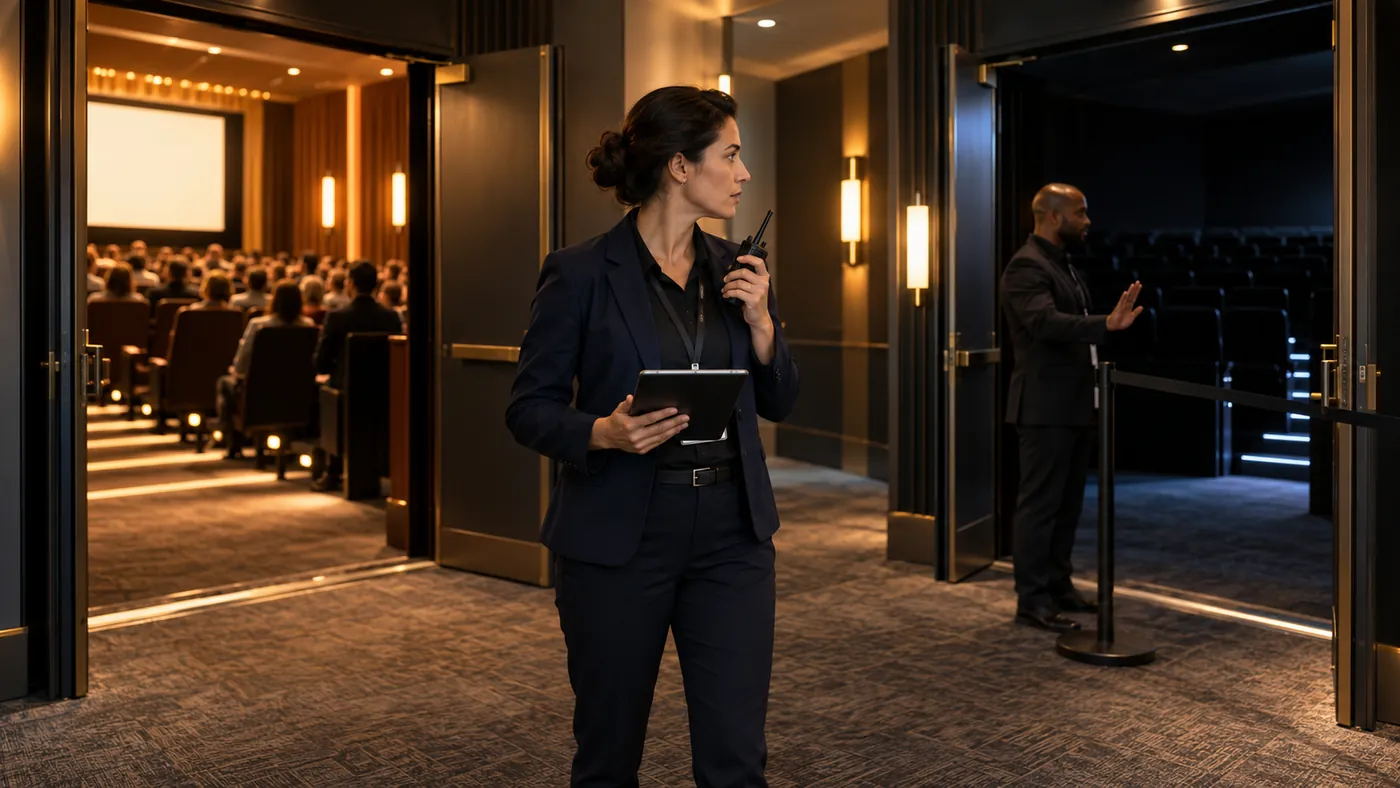
A blackout is among the worst emergencies imaginable at a major film festival or festival watched by the world. On the morning of 24 May 2025, the closing day of the 78th Cannes Film Festival, a power outage did indeed affect the Cannes area. The organiser’s official statement offers an instructive example of crisis management. It clearly distinguished the main venue, the Palais des Festivals, which immediately switched to an independent power supply and continued operating normally, from the outlying Cineum cinema, where screenings were paused until power was restored.
As the on-site safety and equipment-control principles in "Case Article Review" also explain, crisis response across physically separate venues should never be an all-or-nothing choice between cancelling everything and pressing ahead everywhere. A clear operational judgement that separates and controls each venue’s power infrastructure is what prevents widespread confusion.
1. Decouple operating status: one festival, two clocks
A projector running at the Palais does not justify telling the audience at Cineum that the festival has returned to normal.
- Infrastructure independence by venue: The organiser activated the backup generators installed at the Palais des Festivals, protecting the press conferences and evening closing ceremony. It did not use that success to group other screening rooms, where generator connections were taking longer, into a blanket announcement of normal operation. When an emergency occurs, the planning team should assess the recovery speed of each building and space individually rather than treat the entire festival as a single unit.
2. A hard stop: a working screen is not the same as a safe space
Even when a radio message confirms that electricity has returned and the screen is on again, the waiting audience should not immediately be ushered inside.
- Requirements for approval to resume: A working picture does not make a space fit for an audience if emergency exit lighting, visibility along evacuation routes, fire-alarm connections and HVAC have not all been fully restored. Readmission should depend on the final cross-check and sign-off of the person responsible for overall venue safety, rather than isolated reports from the lighting or video team.
3. Target audience messages precisely
One of the riskiest announcements is a vague request to “Please wait while power is being restored.”
- Specify the location and status: People already inside and those still outside need different information. For an audience currently waiting, communicate a clear cut-off: “We cannot guarantee when restoration will be complete, so we will arrange for you to leave or receive a refund.” For ticket holders who have not yet set off for the next session, send a precise notice such as “The 15:00 screening in Cineum Screen 2 has been cancelled.” Inventing an uncertain restoration time invites a second wave of complaints.
4. A four-stage protocol for crisis response across multiple venues
When a blackout or emergency affects a large event using several spaces simultaneously, the practical team should follow these four stages.
| Stage | Operating standard |
|---|---|
| Stage 1: Build a venue-by-venue failover map | Before the event, clearly distinguish on the floor plan between buildings that emergency generators, UPS systems and other backup supplies can cover when mains power fails, and buildings that will immediately shut down. |
| Stage 2: Authorise local suspension through defined responsibilities | Give each venue’s on-site manager authority to announce an immediate screening pause and manage the audience when an emergency occurs, without waiting for headquarters to confirm. |
| Stage 3: Activate the sign-off procedure for resuming | Issue the radio instruction permitting readmission only after headquarters has received approval from both the technical team, confirming normal video and audio operation, and the safety team, confirming evacuation routes and emergency lighting. |
| Stage 4: Record announcement timestamps | Log in a spreadsheet when screenings at a specific venue were suspended, when resumption was approved and when the public was informed. Use these records to inform subsequent refund calculations and improvements to the crisis-response manual. |
Planner’s memo: effective response means quickly deciding where to stop
When power fails at an event, a planner can feel an urgent need to keep everything going somehow. A capable operations lead, however, avoids jeopardising the whole event in an attempt to save every part. Within the infrastructure already prepared, they calmly distinguish what can continue from what must stop immediately.
Cannes protected the grand closing ceremony at the Palais while decisively suspending screenings at Cineum. That decision illustrates why the planner’s most important tool in a crisis is a clear separation and control of the situation, rather than unrealistic promises that prolong uncertainty.
Conditions for applying this elsewhere
The facility and qualified technical and safety leads must review reopening; a working picture alone is insufficient. Cannes’s electrical design and switchover timing are not design standards.
Information not established
Supply capacity, design and transfer time; actual Cineum restart time and interrupted-session arrangements; visitor loss, refunds and added costs were not established.
Reference material
- Official Cannes selection-announcement PDF: festival dates of 13–24 May 2025. An advance document, not evidence of the outage response
- Screen, Ben Dalton and Rebecca Leffler, 24 May 2025: on-site reporting and the organiser’s statement on Palais independent power, a press conference and Cineum suspension; original HTML directly read
- AP via Arab News, 24 May 2025: the closing ceremony actually began, with city power restored beforehand
Next tasks and related resources
Venue-specific interruption and reopening confirmations, actual admission and playback times, and information changes
Related practical guides
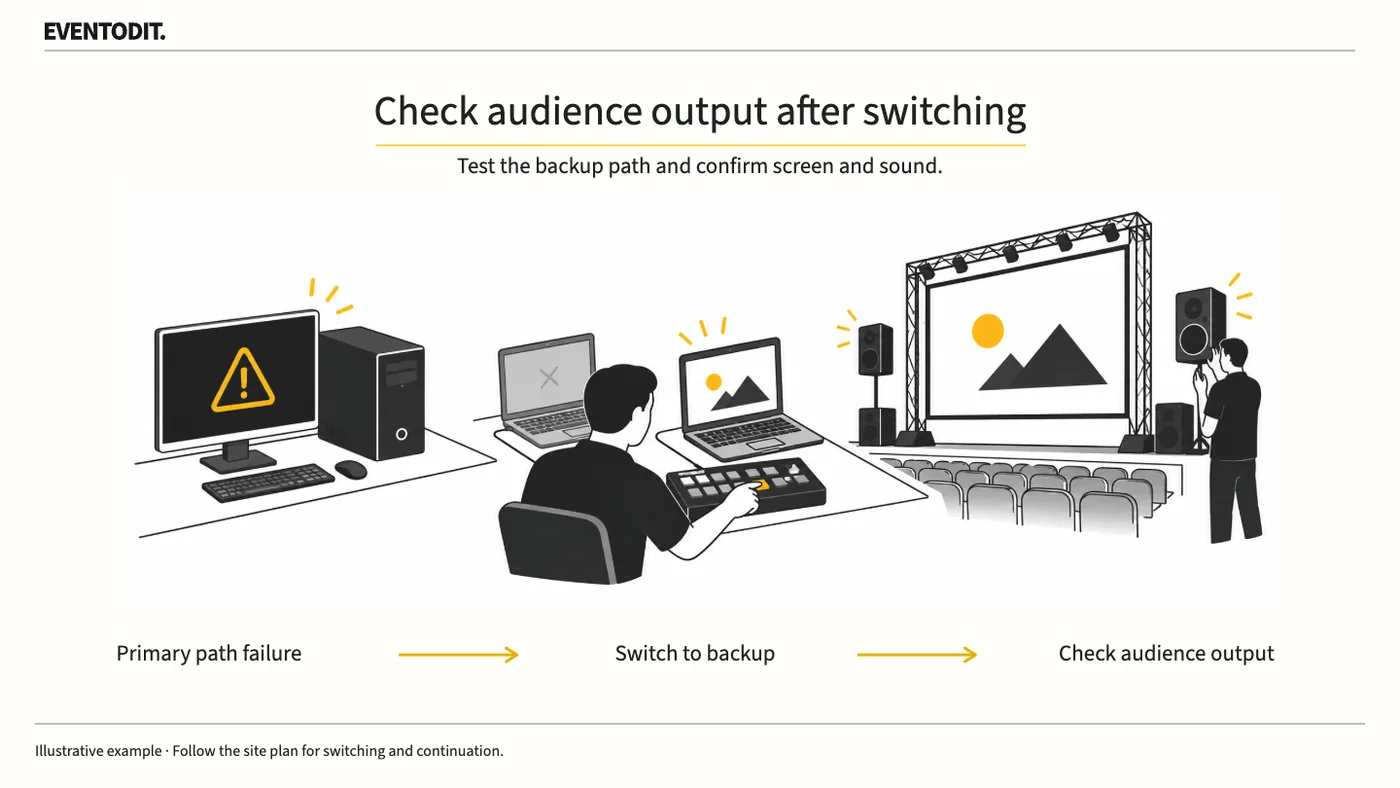
Event Technical Rehearsal and Failure Response
Separate picture, sound and lighting checks do not test the response to a fault during the show. Rehearse who calls the fault and who switches to backup equipment or holds the programme.
Read guideHave a correction or additional evidence? Request a correction