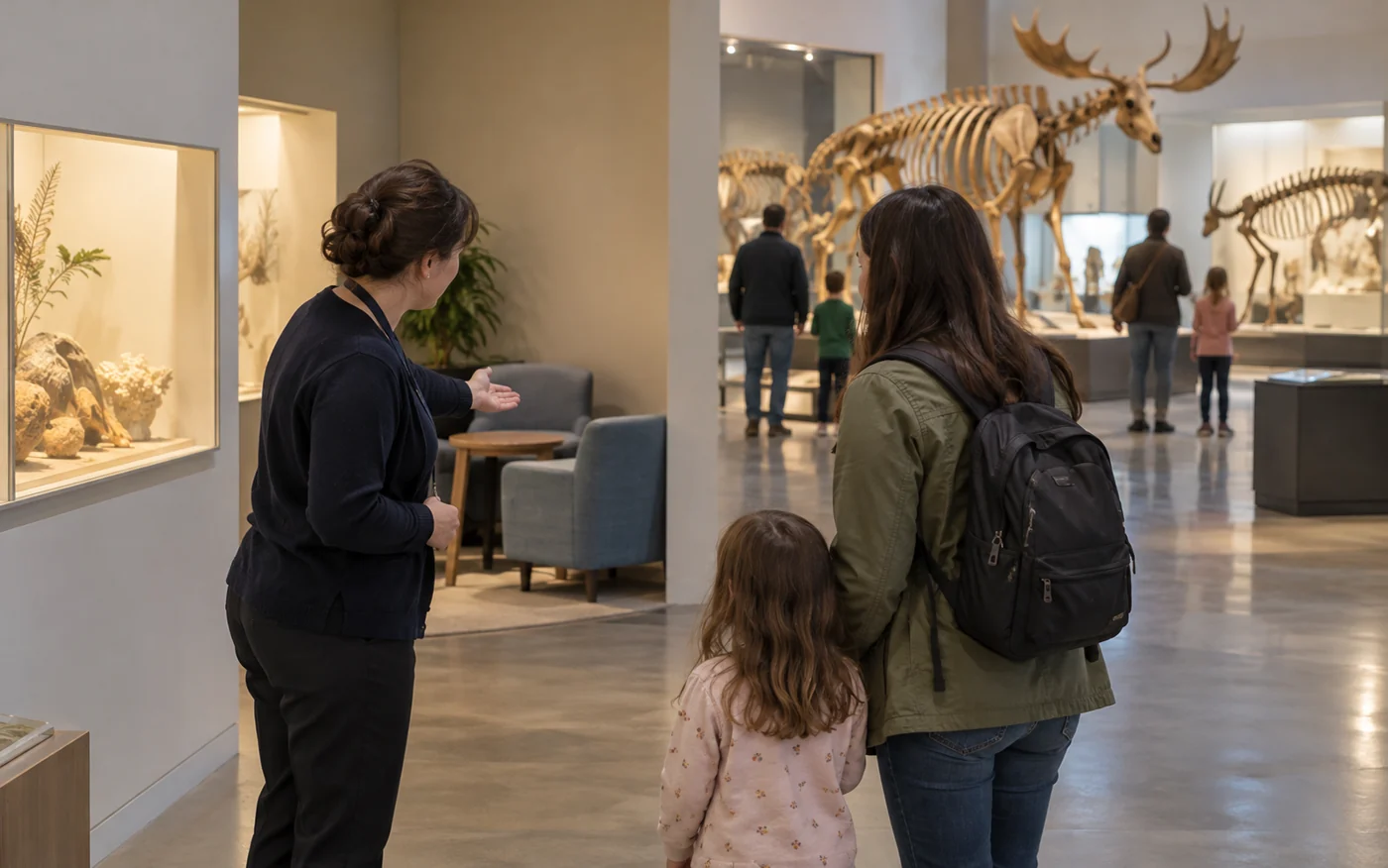
Exhibitions and performances in Korea and abroad are increasingly offering Low-sensory sessions with reduced noise and lighting for autistic or neurodivergent children and families. London’s Natural History Museum Dawnosaurs programme is likewise regarded as an excellent example of accessibility planning, offering free visits with adjusted sensory stimuli in the morning before general opening.
For practical planners, however, these special sessions involve more than lowering lights and switching off sound. True risk management lies in the instant of Transition when the Low-sensory session ends and general visiting begins. Barrier-free planning is completed by transparently explaining in advance the confusion visitors may experience when the physical environment changes sharply, helping them prepare.
1. Announce the Transition Cut-off: "Give advance notice of noise after 10am"
Dawnosaurs’ most outstanding feature is its clear explanation that families may remain in the museum after 10am, but general operations begin then and noise and crowding increase considerably.
- Separate dwell time from the environmental promise: a welcoming invitation to stay as long as desired may be misunderstood as a promise that the quiet environment will continue. Announce the environmental Cut-off in advance: at 10am, when general visitors enter, speaker volume returns to normal and lights are switched on. Giving visitors control to decide for themselves whether to stay or leave is the first step in safe operation.
2. Let go of the illusion of absolute silence: control Residual Noise
Promising a completely silent, stimulus-free space is close to impossible in on-site operations.
- Transparently disclose uncontrollable noise sources: Dawnosaurs’ visual guide gives advance notice of staff radios and cleaning-equipment noise as well as the sound of moving robotic dinosaurs. Exhibition effects can be switched off at the Console, but staff communications and HVAC white noise are difficult to eliminate completely. During rehearsal, planners must walk the audience routes, list uncontrollable residual stimuli and put them in the guide beforehand, making conditions more predictable for visitors.
3. Flexible participation and placement of Chill-out spaces
A space where visitors experiencing sensory overload can take refuge at any time is essential infrastructure for special-session planning.
- Avoid forced participation and offer optional routes: explaining how to return to the exhibition matters as much as providing the rest space itself. Equally central is avoiding pressure to see every exhibition or join every activity. Offering Open-ended routes that let visitors stop viewing and rest freely whenever they wish is helpful.
4. A four-stage operating protocol for Low-sensory visiting sessions
When alternating general opening and Low-sensory sessions, the planning team can refer to these four-stage criteria.
| Stage | Work criteria |
|---|---|
| [Stage 1: Confirm physical Setting Values] | Fix lighting levels, audio volume in dB and video-transition speeds for the Low-sensory session as Console Presets, and check them in rehearsal. |
| [Stage 2: Announce the Cut-off and environmental changes] | State when Low-sensory settings end on advance-booking pages and on-site information, using intuitive visuals to explain the increased noise and crowds after Transition. |
| [Stage 3: A Residual Noise management manual] | Require staff to use radio earpieces and tell visitors in advance where unavoidable on-site noise, such as cleaning carts, may occur. |
| [Stage 4: Hand over routes for voluntary rest] | Tell all staff stationed throughout the site where the Chill-out Zone is, and conduct Role-playing training so anyone asking for help can be directed there immediately. |
A planner’s note: true Barrier-free planning is completed through transparent information
Many practitioners responsible for Barrier-free planning feel compelled to provide an entirely perfect, harmless environment. Yet real venues inevitably have moments when complete control is impossible.
Excellent Barrier-free planning does not promise impossible silence. It transparently explains the space’s environmental limits and when ordinary noise will resume. That clear information and guidance is the strongest safety belt helping audiences move around the venue with peace of mind.
Conditions for applying this elsewhere
Apply where pre-opening staffing, effect-control authority, rest space and transition responsibility are available.
Information not established
Final areas for individual sessions, exact effect settings, satisfaction and capacity outcomes were not verified.
Reference material
Next tasks and related resources
Session-specific areas, adjusted effects, remaining noise sources, break space and general-opening transition record
Related practical guides
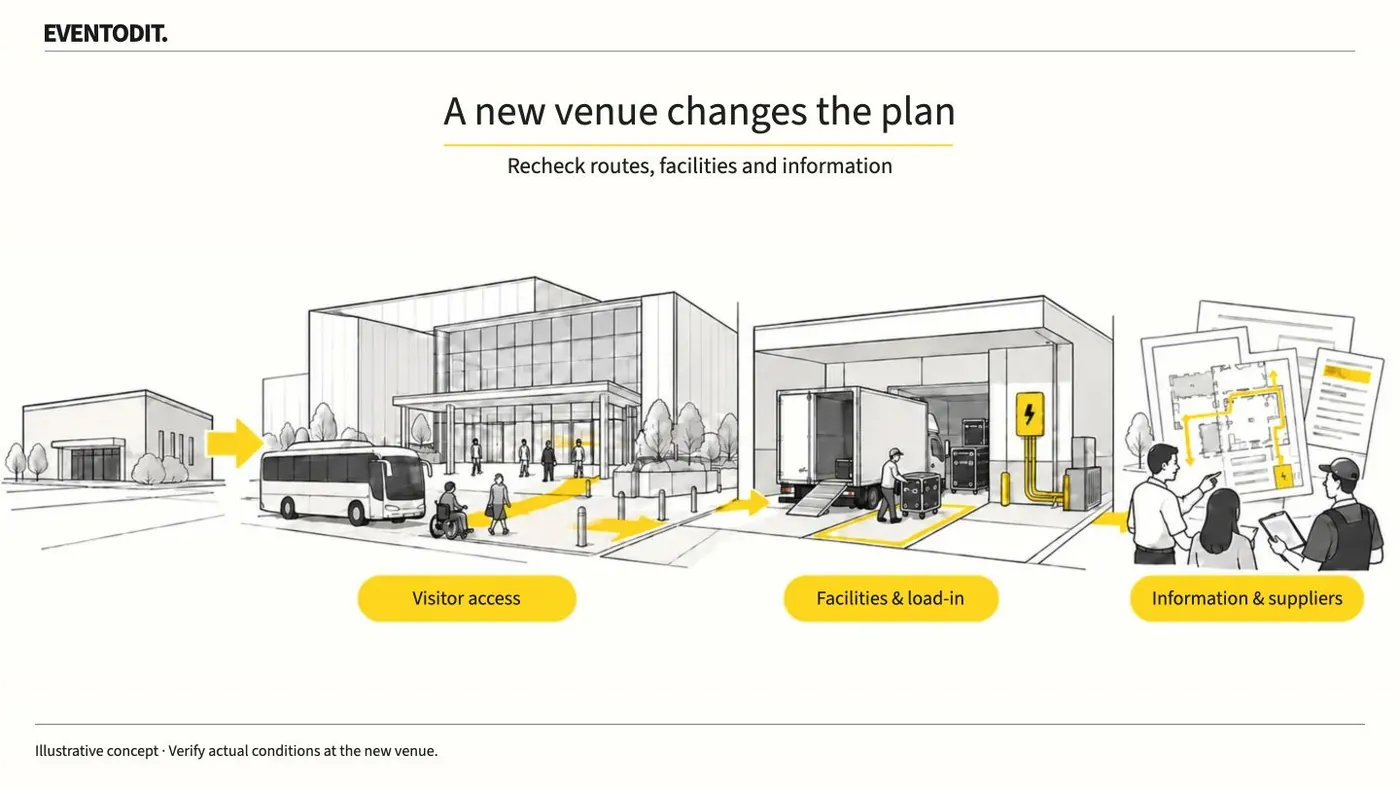
Venue Relocation
A venue move changes how visitors arrive, queue and travel between programmes. Check those conditions at the new site and update the plan, running order, visitor information and supplier orders together.
Read guideHave a correction or additional evidence? Request a correction