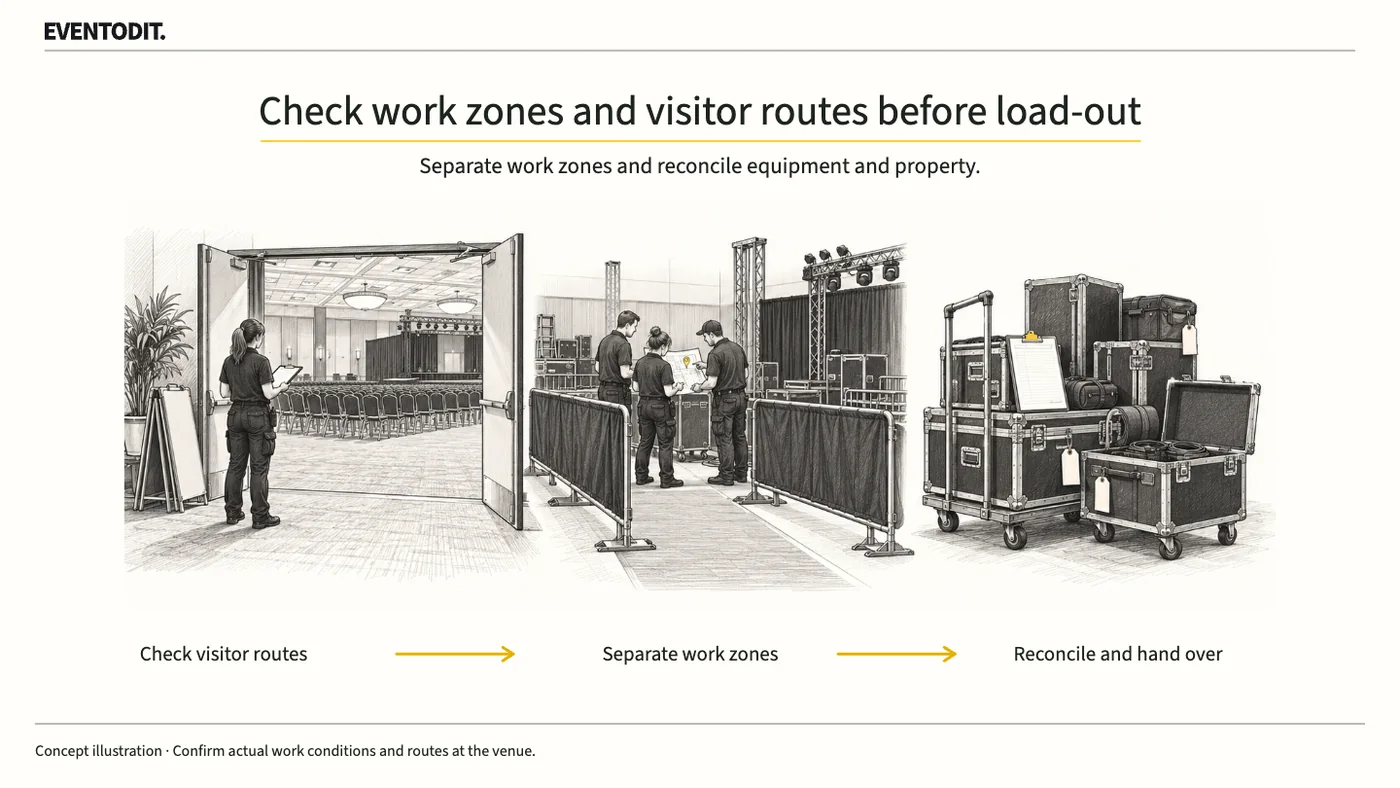
Confirm the start conditions for each zone
The operations lead checks the venue agreement, organiser’s instructions and each supplier’s dismantling plan for permitted work times, access, vehicle entry and outbound procedures. Even after the closing announcement, ask the on-site lead to confirm that visitors, participants requiring access support and exhibition personnel have left the relevant work zone.
Follow any zone handover and work-start procedures set by the venue and organiser. If visitor movement continues in an adjacent area, keep the relevant routes available and define the work area only after checking that it does not overlap with people’s movement. If the zone is not safely separated or the start conditions are unclear, hold that work and consult the relevant people again.
For example, the AW 2026 exhibitor manual states that exhibit removal and stand dismantling have separate scheduled start times after the exhibition closes. This is a condition for that show; it does not establish the same time or procedure for other events and venues.
Separate people, vehicles and work areas and brief the teams
The operations lead compares dismantling zones and times with the organiser, venue, staging, audio, video and logistics teams. Mark pedestrian routes for visitors and workers, temporary storage, vehicle waiting and loading areas, and emergency routes on the site plan. Share the owner and contact method for each zone.
Coex’s plaza and lobby guidance discusses separating installation work from customer routes. The UK HSE’s event transport guidance also advises separating pedestrians and vehicles on site. These are references for their respective venues and jurisdictions; the venue and those assessing the actual site risks must decide how separation will work.
While departure routes remain in use, keep them from being obstructed by goods or vehicles. Tell affected teams if the work plan changes.
Wait for responsible specialists to confirm power and structures
Stage, lighting, video, electrical and structural contractors may depend on one another’s work. The operations lead confirms which work must finish before another task can begin, identifies the responsible leads and shares the plan for coordinating work above and below other teams.
Do not determine electrical isolation, structural dismantling order, equipment use or restricted access from a generic timetable. Confirm them with the suitably qualified leads using the venue-approved work plan and actual site conditions; do not start the relevant work while those conditions remain unconfirmed. If danger develops on site, stop the affected work and take protective action under the established emergency procedures.
Reconcile items by owner and destination
The property lead compares the pre-event inventory with the items remaining on site. Separate the organiser’s assets, rented equipment, supplier property and items for disposal or reuse. Record the item, quantity, condition, recovery owner, next destination, and packing and dispatch status; record missing or damaged items separately.
For an exhibition, check when empty cases will return and coordinate packing and carrier handover. Exhibition services company Freeman’s exhibitor checklist advises taking inventory of equipment and booth assets, then labelling packed containers after empty cases return and completing outbound paperwork. Check the actual venue and carrier procedures for handling and handover.
Fictional example: a lobby event and supplier equipment
The following fictional situation illustrates the working method. After a lobby event ends, some participants are still moving towards the exit, so the operations lead checks separation between the planned dismantling area and the visitor route. Work in that zone is held until the venue manager and contractor lead confirm that the start conditions are met.
Once work begins, the property lead checks rented audio equipment and the organiser’s signs separately. For a missing item, they record who will look for it and when it will be checked. They mark items handed to the carrier separately from items still on site. Power and equipment handling follow the plans of the relevant specialist leads.
Hand over the venue and unfinished work
The operations lead reconciles the recovery list against each supplier’s outbound records and checks the venue condition with venue management. Keep before-and-after photographs and record dirt or damage, waste handling and the venue handover. Coex’s plaza and lobby guidance also calls for a pre-installation site photograph and a check for facility damage after dismantling and removal.
If equipment quantities do not match, or outbound evidence, cleaning or restoration remains unconfirmed, do not mark the work complete. Hand over the responsible person and next check time. Listing an item for recovery and actually handing it to a carrier are different statuses.
Scope
This is EVENTODIT’s practical proposal informed by Coex’s plaza and lobby instructions, the AW 2026 exhibitor manual, Freeman’s exhibitor checklist and UK HSE event transport guidance. Venue-, event- and country-specific conditions must not be applied unchanged elsewhere. Confirm work methods and applicable legal requirements with the venue, relevant authorities and suitably qualified specialists.
Use the form for the next handover
Use the [Load-out, equipment recovery and return log](/en/templates/loadout-equipment-recovery.html) for the records described here. The XLSX contains Blank, Example and Instructions sheets. Write your event in Blank; the fictional example is a guide to what to enter.
Verify audience-route separation and work release with the venue authority. Assign asset IDs and enter expected and recovered quantities separately.
The asset lead passes recovery and collection evidence and remaining items to operations. The venue-return owner separately receives condition, repair and cleaning issues.
Conditions for applying this elsewhere
Verify the event, venue and local requirements with the people responsible; overseas guidance is not Korean law.
Information not established
Specific site conditions, authorities and actual event outcomes have not been verified.
Reference material
Have a correction or additional evidence? Request a correction