Record the event conditions first
The event lead should record the organiser and venue operator, programme activities such as performances, exhibitions or workshops, indoor or outdoor location, dates and areas in use, expected audience size, build and dismantling dates, and major equipment. Include plans for road use, food sales or temporary structures when discussing the event with authorities. Mark any unconfirmed figures or operating arrangements as pending and set a date to check them.
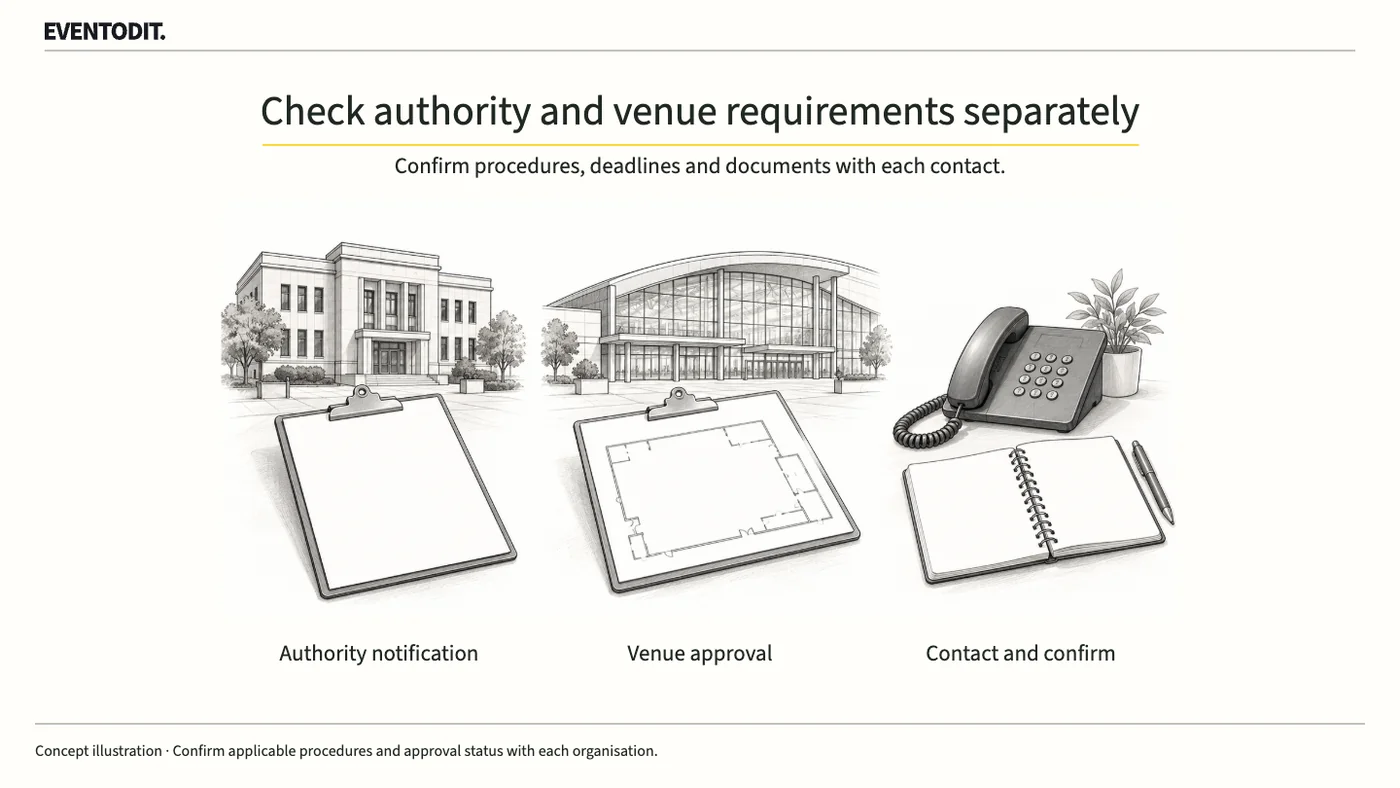
Separate statutory procedures from venue approvals
Ask the relevant local authority which permits, notifications and consultations apply to this event, who must submit them, what documents are needed and when. Ask whether fire, police, road or other authorities also need to be involved. Separately ask the venue operator about contractual conditions and its own advance approval process for drawings, contractors, electrical work, rigging and hazardous materials where relevant. Receipt or approval in one process does not establish that the other process is complete.
Check whether a performance outside a venue requires notification
Under Article 11 of Korea’s Performance Act and Article 9 of its Enforcement Decree as checked on 29 October 2026, a person staging a performance outside a performance venue where an audience of at least 1,000 is expected must jointly submit an emergency response plan with the facility or site operator to the relevant local authority at least 14 days before the performance starts. Changes to notified matters must be notified at least seven days before that performance. This example applies to performances meeting the stated conditions; it is not a rule for every event. Ask the responsible authority how audience estimates and the provisions apply to your circumstances.
Check the venue’s work approval separately
COEX describes an online work notification process in which registered service partners submit documents for their trade, the organiser or tenant approves them, and the hall manager performs the final check. Its venue guidance also states a work notification deadline of 14 days before the start of venue use. For rigging, it lists a load-marked drawing and structural calculations. This is COEX exhibition venue guidance: confirm the current documents, deadline and approval conditions at your own venue. Its 14-day deadline is separate from the statutory performance notification described above.
Check local rules again for overseas events
Southwark Council in London says that an event can require multiple permissions depending on its site and activities, including use of public space, road closures, alcohol and entertainment, and temporary structures. That is local Southwark guidance, not Korean law or a rule for every overseas city. Ask the authority with jurisdiction and the venue operator about applicable rules, the responsible applicant, language and documents, and the local timing requirements.
Distinguish submission from completion
For each process, record the authority or venue contact, whether it applies, the person responsible for filing, the document and version, deadline, acknowledgement or approval result, any conditions and the next check date. An acknowledgement records receipt; an approval document records approval and its conditions. Distinguish submitted, received, further information requested, conditionally approved and completed, and mark unconfirmed items as pending. Pass confirmed conditions to the installation contractor and on-site lead.
Recheck after changes
If the venue, audience estimate, event date, structures or equipment change, ask the relevant authority and venue operator whether the existing notification, approval or drawings are affected. Record whether an amended notification or renewed approval is needed, who will submit what and by when. Agree not to carry out work beyond the existing approval while the outcome remains unconfirmed. This guide explains a checking process and the scope of its sources; it is not an exhaustive list of procedures for every event.
Use the form for the next handover
Use the [Permission, venue approval and change register](/en/templates/permit-approval-register.html) for the records described here. The XLSX contains Blank, Example and Instructions sheets. Write your event in Blank; the fictional example is a guide to what to enter.
Give authority and venue procedures separate IDs and check applicability first. Record the actual submitter, document version, deadline starting point and evidence.
The event lead sends approval documents, applicable drawings and conditions to site and construction leads. Hand unresolved procedures to named owners with deadlines.
Conditions for applying this elsewhere
Verify the event, venue and local requirements with the people responsible; overseas guidance is not Korean law.
Information not established
Specific site conditions, authorities and actual event outcomes have not been verified.
Reference material
Have a correction or additional evidence? Request a correction