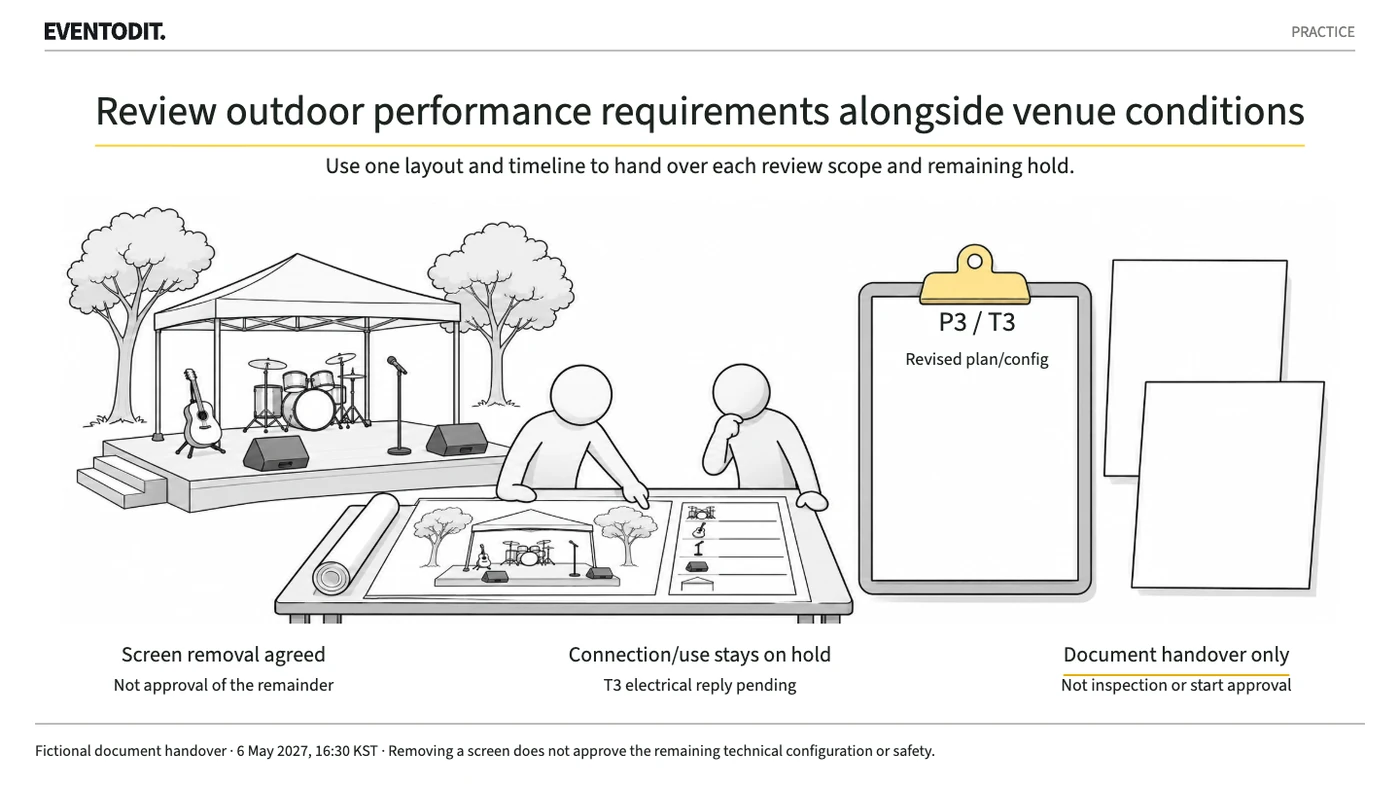
Fix one performance layout and set of operating times first
Do not confirm installation orders from a band’s equipment list and permission to use a park alone. The producer should name a technical coordinator and connect artist requirements, venue records and supplier proposals to one layout and timeline. This person assembles specialist reviews; they do not replace structural or electrical assessments.
Start with the experience: where people hear the music, what the screen does and how visitors receive announcements. Separate essential functions from optional presentation, then distinguish the equipment operating together during installation, rehearsal, performance and removal. A decorative screen and a captioning screen permit different alternatives.
The Performance Safety Support Center’s August 2026 outside-venue disaster-planning guide has a defined scope. This memo does not determine reporting eligibility or replace submissions. Check actual procedures with the venue manager and responsible authority.
Separate venue evidence from supplier evidence
Britain’s HSE includes ground support and anchoring, buried services and weather in site review, with plans updated as information changes. Do not import these as a Korean park’s permitted values. Request applicable original records and restrictions from the venue manager, noting their date, author and location.
HSE’s electrical guidance connects operating times, supply locations, emergency power and cable conditions/interference. Planners must not approve connections by simply adding equipment consumption figures. Send the actual configuration and venue records to the electrical reviewer; have ratings, circuits, protection and connection methods checked within that review.
For sound, state what reaches the audience and neighbours; for video, the content and viewing positions. Separate production communication, visitor announcements and online transmission. Available Wi-Fi does not confirm every communication use. Where evidence is missing, assign a person, question and deadline rather than inventing a value.
Ask exactly what each discipline has reviewed
IStructE’s public guidance emphasises competent design, erection and inspection of temporary structures, sufficient resources, and suppliers’ design limits and exceedance plans. It centres on British practice, not Korean obligations. Ask specialists whether added screens, lights and speakers are included in the structural review.
Find interfaces on the shared plan. If a screen’s suspension position moves, which structural and power reviews reopen? If production communication fails, who needs an alternative contact route? Do not calculate answers for specialists: ask each reviewer to identify the inputs they require from another discipline.
Do not close a reply at “possible”. Obtain the reviewed drawing, configuration, times, scope, remaining conditions and valid version. A supplier’s ability to install its equipment does not confirm another supplier’s connections or the whole show. Assign the owner, cost and response date for missing reviews too.
Connect holds to the next real task in a fictional show
The following editorial example assumes a park band show on 15 May 2027. It is not an actual event, quotation or safety assessment. Layout P2 and configuration T2 were compared as of 14:00 on 5 May; every reply below is due at 12:00 on 6 May. All times are Korean Standard Time.
| Review item | Evidence and unresolved point | Owner and next task | Work held now |
|---|---|---|---|
| S1 Suspended screen for optional presentation | Screen proposed; inclusion of its fixings/equipment in structural review unconfirmed | Structural reviewer and stage supplier compare P2/T2 scope and reply | Screen suspension order and installation |
| E1 Band and screen operating together | Venue supply records and equipment list received; concurrent T2 use not reviewed | Electrical reviewer identifies missing evidence and connection scope | Connecting or starting use of this configuration |
| A1 Music and visitor announcements | Venue hours confirmed; sound/announcement operating scope unresolved | Sound lead and operations lead compare roles and follow-up checks | Visitor information claiming a confirmed operating scope |
| C1 Production communication | Draft contacts only; on-site communication not tested | Technical coordinator assigns communication owner and test timing | Handover claiming communication is established |
Scroll sideways if needed to read every column.
Receiving evidence is different from completing its review. Installation scheduling and evidence requests may continue, while the listed work stays held. Neither an equipment reservation nor an expired reply deadline releases a hold. Tell the producer how delayed review affects delivery and staffing reservations.
Change function and cost boundaries together when choosing alternatives
In the fictional record, assume the content owner agrees at 15:00 on 6 May to remove the optional screen. The coordinator records this in P3/T3 and requests structural and electrical rechecks of the change. Agreement to remove a screen does not confirm remaining structures or authorise the remaining electrical configuration.
Compare removed functions, retained functions, renewed reviews and working time. Do not discard a required visitor service such as captions as though it were decoration. Content, access and technical staff should compare ways to retain the function before the authorised decision-maker selects an alternative.
The buyer should check whether review fees, site visits, extra cabling, labour and change charges are included. Do not turn unknown costs into zero: retain quotation conditions and reply deadlines. The producer must consider reduced preparation time and contract changes alongside cost before approving or holding an option.
Reopen affected replies when the layout changes
Mark changed positions, equipment, functions and times against the previous version. Ask each discipline whether its reply remains valid, retaining the reason even for unaffected items. Do not paste an old “possible” email into the new drawing’s confirmation record.
Assume the electrical reviewer has not replied on T3 by 16:00 on 6 May. The coordinator retains the connection/use hold independently of the screen-removal decision. The producer sets the next review point. Give suppliers and site leads identical wording about which work must not start.
Separate pre-installation document review, installed-condition checks and site tests for communication, sound and video. Do not mark an unperformed test complete: hand over its location, timing, owner and recipient. For actual danger or malfunction, follow agreed stop/report procedures; planners should not improvise repairs.
Hand over evidence that installers can compare and decisions still needed
Bundle P3/T3, original discipline replies, changes, continuing holds, review/test dates and contacts into the handover memo. Venue, stage, electrical, sound, video and communication teams must find the version and conditions applying to their work. An equipment list alone does not complete technical handover.
The Performance Safety Support Center guide separates installation/removal work by its risks and procedures. Likewise, do not close removal planning because installation review is complete. Leave removal tasks, contacts and prerequisites for the responsible teams to confirm separately.
Assume the site lead compares P3/T3 and the connection hold and replies at 16:30 on 6 May. That confirms document handover, not installation inspection or operating authorisation. If evidence is missing or versions differ, the coordinator corrects the record, identifies affected recipients and hands it over again. No separate download or automated assessment template is supplied.
Close with the reviewed scope and the next check clearly distinguished
Close this handover stage when the memo shows what was confirmed, whose evidence supports it, what remains held, and who decides next and when. Continue installation, inspection, testing and event-day use decisions through the assigned procedures. Give the next person an accurate boundary for starting work, rather than filling every box as complete.
Conditions for applying this elsewhere
Use after collecting essential/optional functions, original venue records, supplier configurations and review owners. Specialist structural/electrical decisions, installation, inspection and testing follow separate responsible procedures.
Information not established
The procedure and the fictional 2027 show’s dates, times, configuration, replies and decisions are editorial proposals for explanation. No actual site performance, safety, approval or cost was verified. Foreign guidance is not Korean law; the Korean reference also has a defined scope. No separate download, automatic calculation or safety assessment is supplied.
Reference material
After reading, complete the next task
Version-linked technical memo, original discipline replies and applicable scope, holds/reviews/tests and receiving staff’s comparison records
Related practical guides
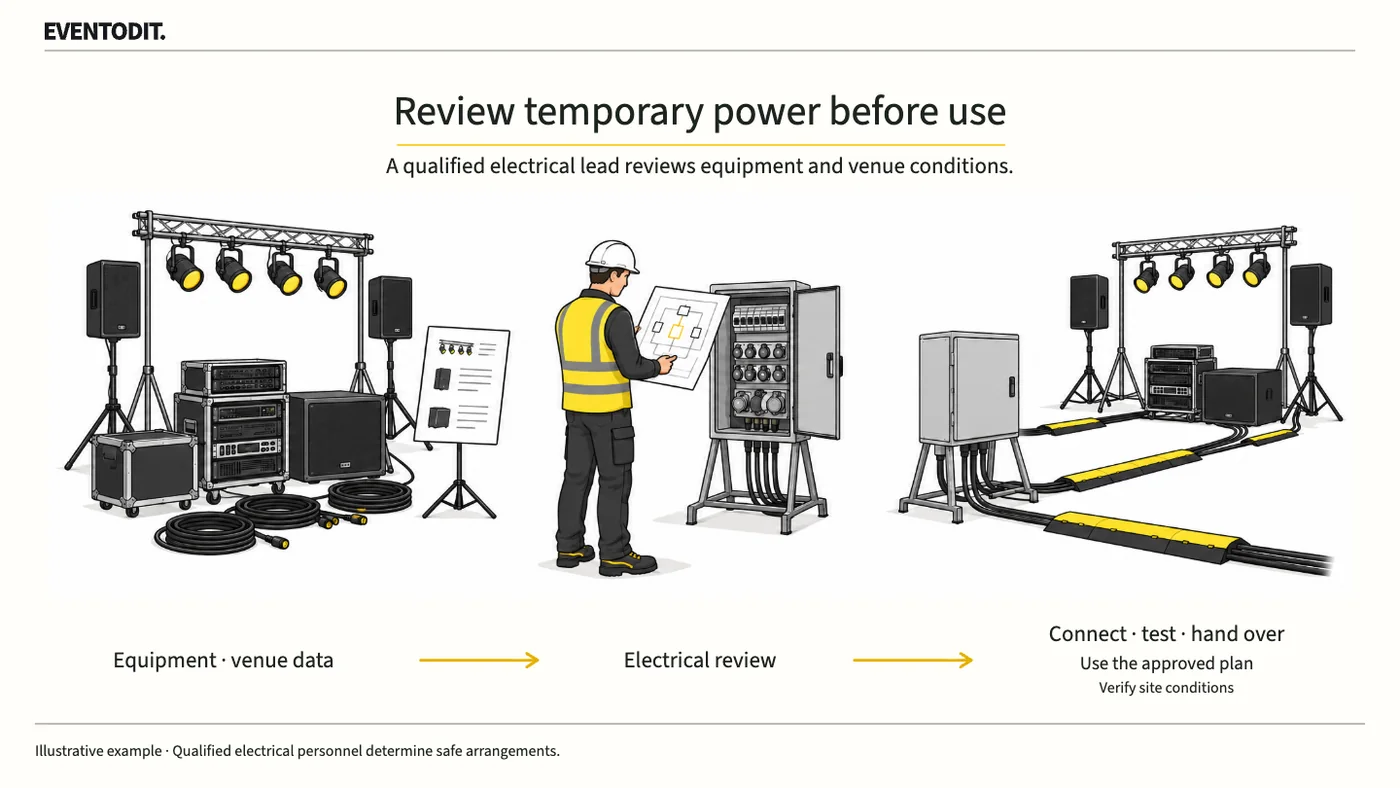
Event Temporary Power Review and Handover: A Practical Guide by Role
Adding rated power does not establish which equipment a circuit can safely serve. Give the electrical lead the supplier lists and venue supply conditions, then confirm what may be connected and used.
Read guide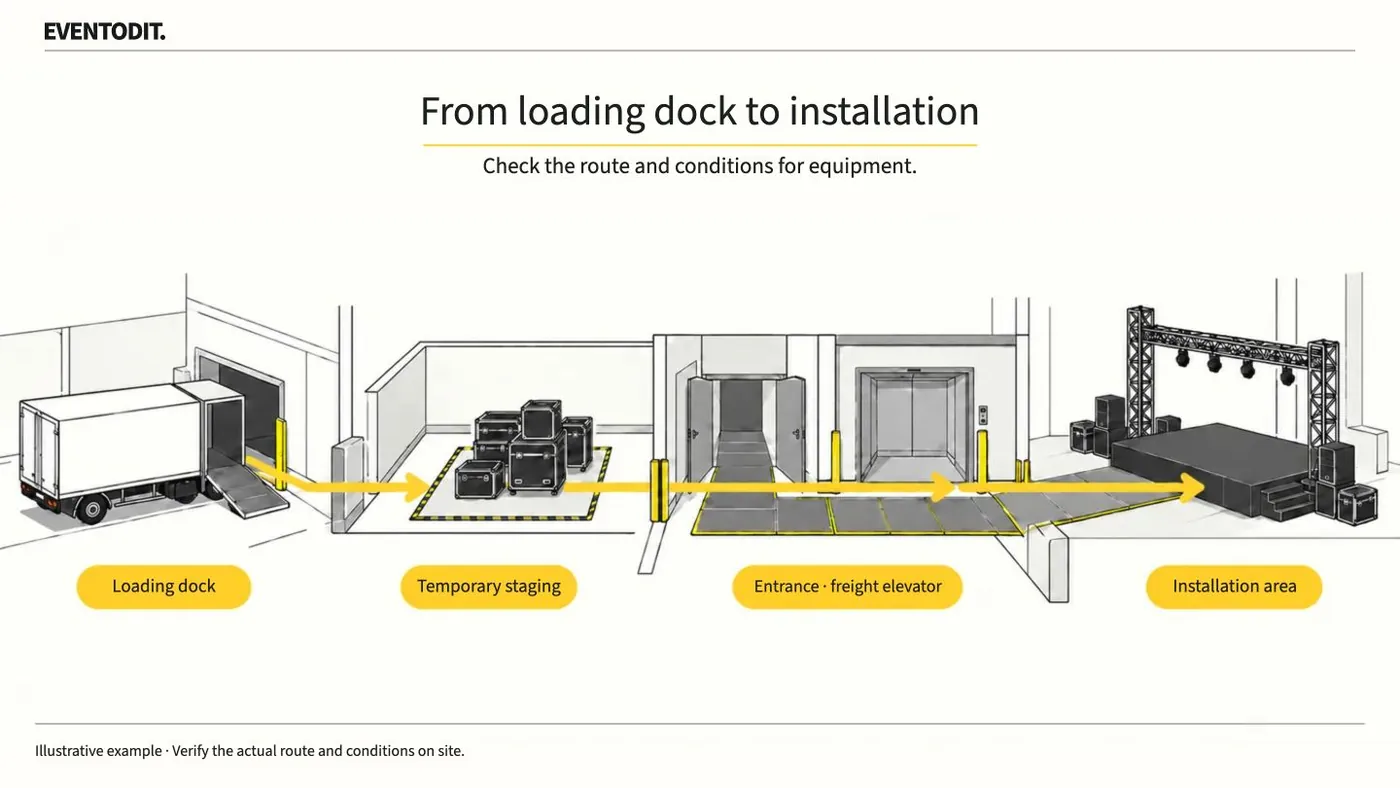
Venue Survey and Load-in
Check the route equipment will actually travel and the routes visitors will use. Mark questions for the facilities and technical teams on the plan and assign a person and deadline to resolve each one.
Read guideHave a correction or additional evidence? Request a correction