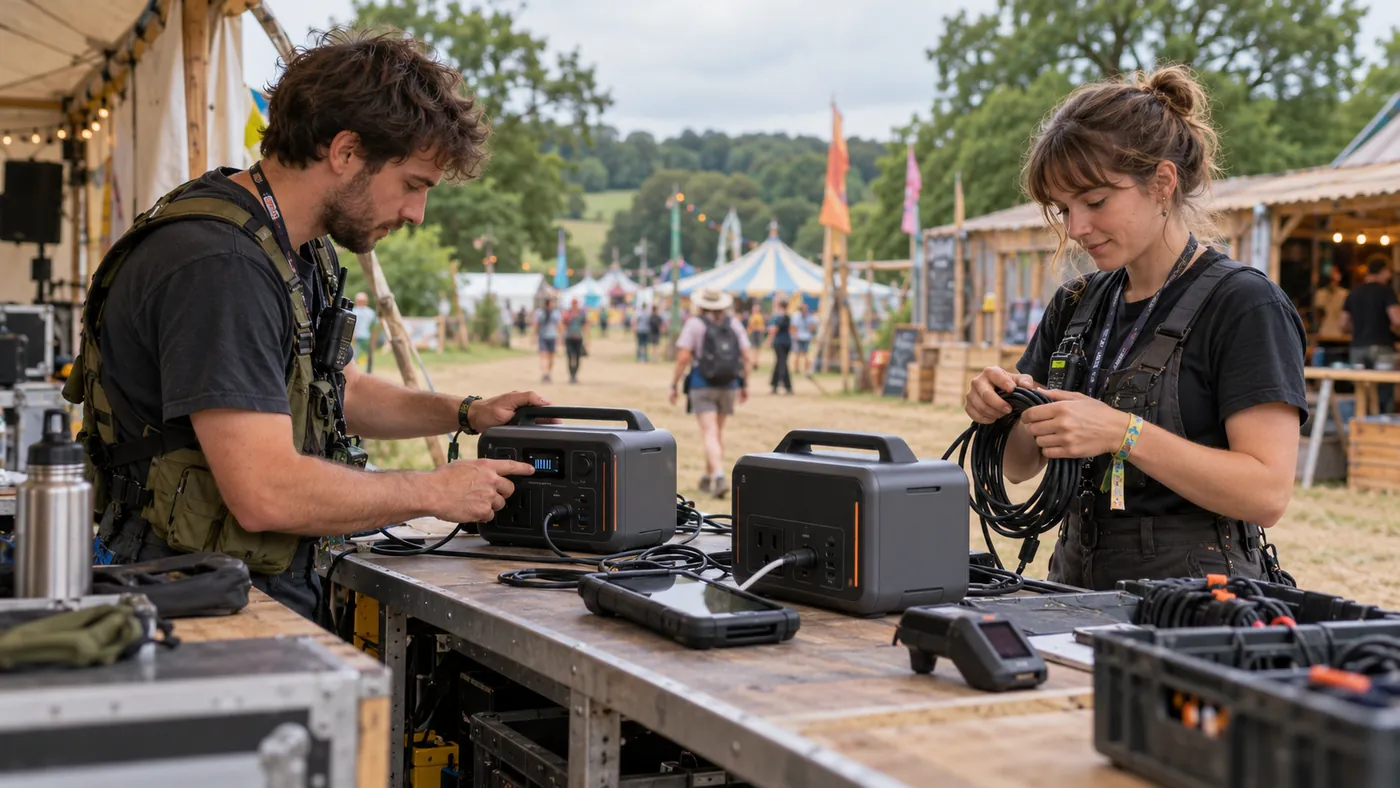
The UK’s Shambala Festival, known for its environmental approach, attracted attention in 2025 by rotating just five portable power units for roughly a month, from event preparation through breakdown. These batteries were deployed strategically to scanners at outlying ticket gates beyond the easy reach of large generators, and to small dance-workshop spaces in remote locations.
From an event planner’s perspective, however, an emotional approach that simply treats batteries as an environmentally friendly alternative to generators cannot meet the extensive power demands on site. As the equipment and output guidelines in the “Case Article Review” file also emphasise, sharing a limited number of battery units efficiently between several teams requires back-end logistics that precisely control charging time as well as operating time.
1. Decoupling fixed allocations and ad-hoc requests
Permanently assigning one of five batteries to each of five teams drastically reduces equipment efficiency.
- Manage resources as a pool: Shambala’s power supplier clearly separated locations needing continuous power, allocated in advance, from locations needing power temporarily, served through ad-hoc requests. Instead of leaving equipment scattered around the site, a rule set needs to require users to borrow it only when needed and return it immediately afterwards. This allows limited resources to cover the festival’s smaller demands without bottlenecks.
2. The illusion of availability: “units owned ≠ units ready to use now”
A common planning mistake is the simple calculation, “We have five batteries, so we can cover five programme locations at the same time.”
- Calculate charging lead time: A battery cannot be handed straight to the next team simply because it has been returned to the office after use. Physically recharging it fully from the site office’s mains supply takes time. Alongside the operating periods on the cue sheet, the planner needs to include transport time and time waiting for charging in the timeline, and estimate the number of genuinely available units very conservatively.
3. Removing cables opens up safe routes and circulation
Running hundreds of metres of power cable for a ticket-scanning booth or a small workshop wastes money and introduces serious on-site risk.
- Cut off physical constraints: Thick electrical cables laid across visitor routes create a trip hazard that can cause serious safety incidents. Placing independent portable batteries in outlying spaces instead of extension-cable reels goes beyond saving fuel: it is a smart way to protect pedestrian safety and substantially increase freedom in planning the space. (This case must not, however, be stretched into the claim that batteries can replace the entire sound and lighting system of a large main stage.)
4. A four-stage protocol for operating a shared power pool
When operating a shared battery pool for areas beyond the reach of large generators, the practical team needs the following four stages.
| Stage | Working standard |
|---|---|
| [Stage 1: Gather demand and power-consumption requirements in advance] | Collect the power consumption in watts (W) and essential operating hours of the equipment to be connected in each area, such as ticket gates and small booths, and obtain a written review from the electrical lead. |
| [Stage 2: Schedule turnaround on a timeline] | Calculate battery discharge curves and charging durations, identify conflicts where equipment-use periods overlap, and adjust the checkout and return schedule. |
| [Stage 3: Centralise handover control] | Require every ad-hoc request to receive sign-off through the central operations desk, and assign roles and responsibilities so that used units are returned immediately to the charging station instead of being left on site. |
| [Stage 4: Log waits for charging] | After the event, record which periods saw work delayed while teams waited for batteries to charge. Use those records as quantitative evidence when deciding how many additional units to rent in the following year’s budget. |
Planner’s note: real environmental performance comes from turnover, rather than an equipment name
Introducing the latest batteries instead of diesel generators does not automatically make an event environmentally friendly and efficient. Good planning goes beyond bringing in expensive hardware. It is completed by coolly and precisely calculating charging time and loan schedules so that the equipment keeps the site running without stopping.
The real strength that prevents an urgent radio call from staff saying “We are short of batteries” comes from the exacting return and charging manual the planner has prepared in Excel, rather than a grand environmental slogan.
Conditions for applying this elsewhere
An electrical lead must review ratings, operating hours and site conditions. The case does not establish that all sound and lighting can use batteries.
Information not established
Unit-level metering, complete fuel-comparison records, rental costs, failures and the actual allocation schedule were not established. About 1,000 litres is a supplier estimate, not evidence of an overall festival carbon reduction.
Reference material
- Instagrid · Post-event Shambala 2025 case study: deployment period, charging, advance allocation, ad-hoc requests, applications and estimated fuel savings
- Shambala · Official Essential Guide 2025, page 4: event dates of 21–24 August; advance visitor information
- Shambala · 2025 Impact Report, 19 December 2025: organiser’s annual post-event review
Next tasks and related resources
Connected equipment and requested hours by location; actual loans, returns and charging delays
Related practical guides
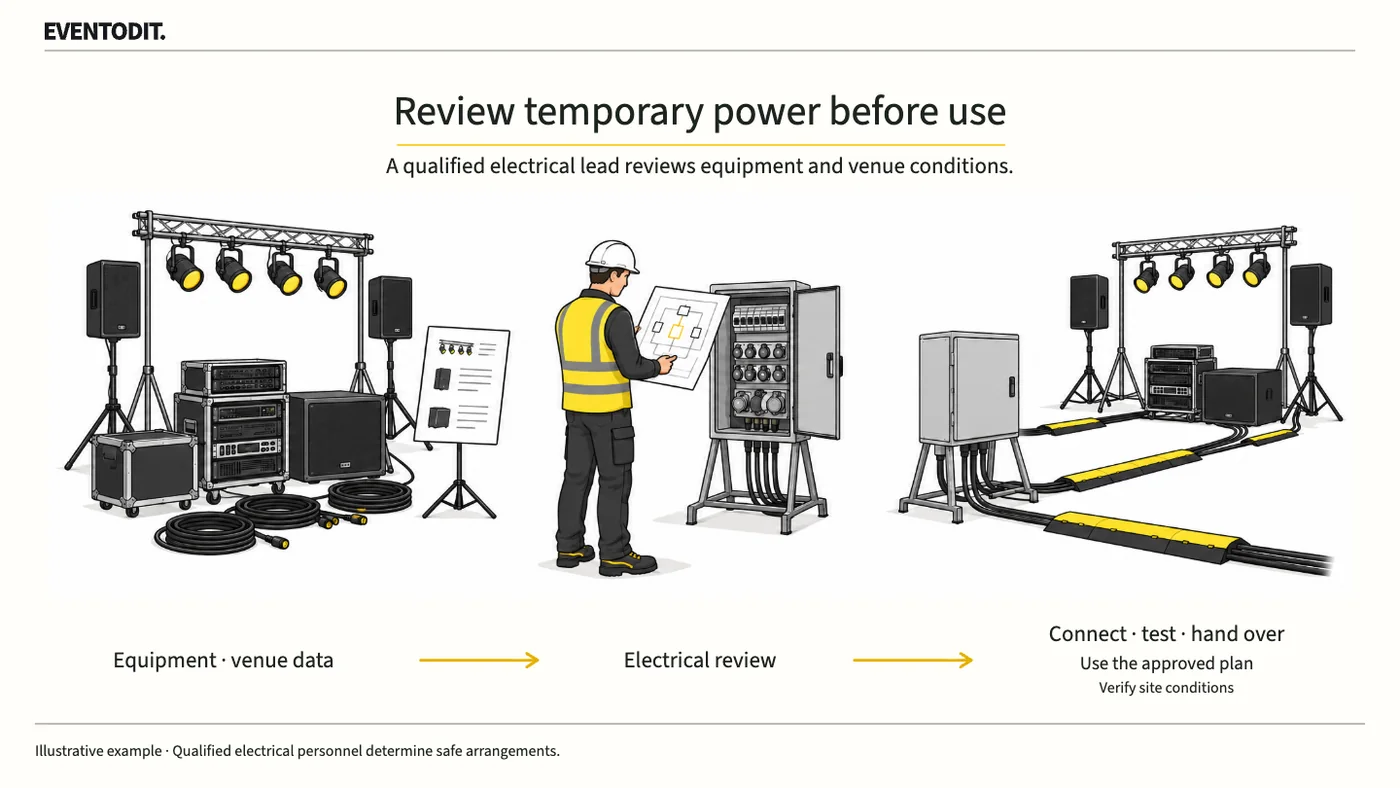
Event Temporary Power Review and Handover: A Practical Guide by Role
Adding rated power does not establish which equipment a circuit can safely serve. Give the electrical lead the supplier lists and venue supply conditions, then confirm what may be connected and used.
Read guideHave a correction or additional evidence? Request a correction