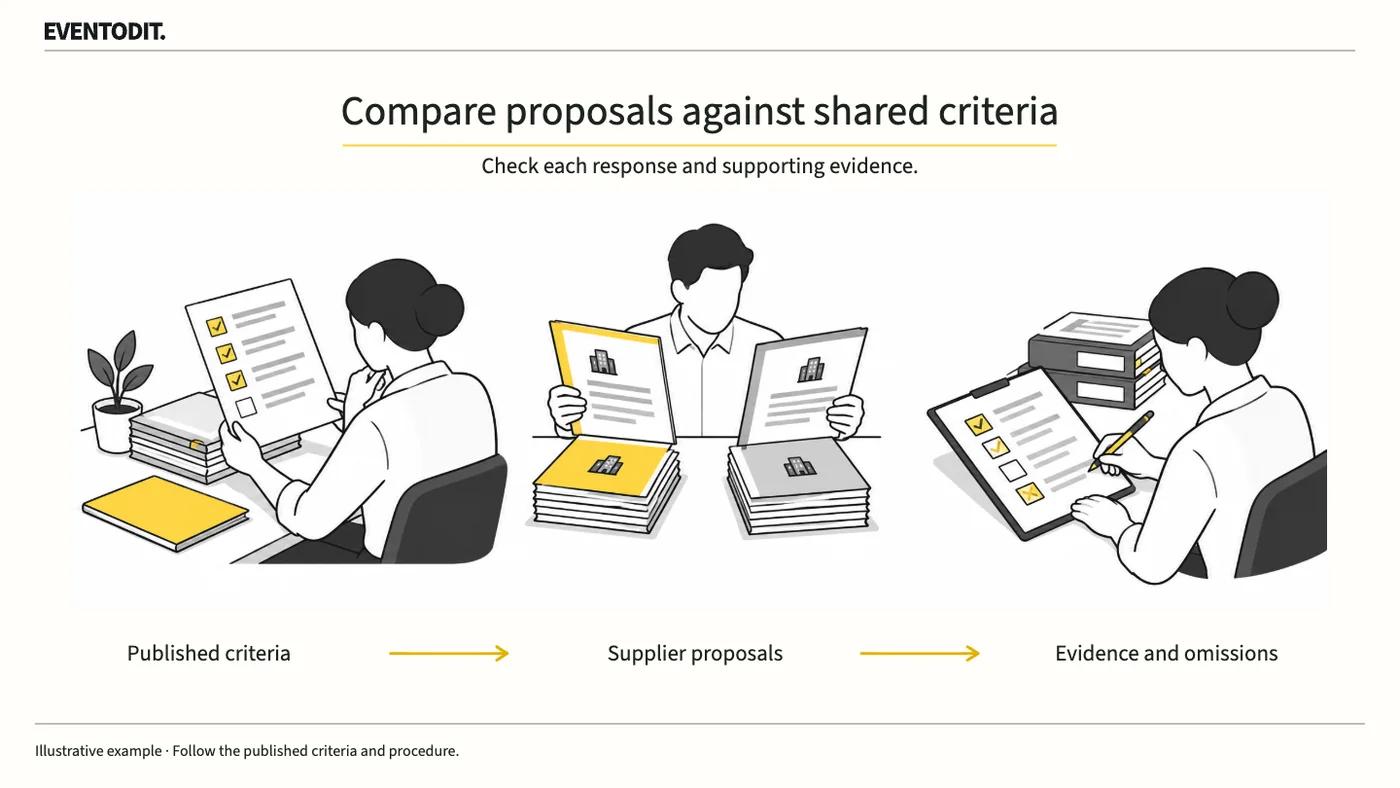
Part 1. Contracting Authority and Planning PM
"Start with the published evaluation criteria, not a proposal's polished design or reputation."
- Establish clear criteria from the notice: Before opening the proposals, use the published criteria, such as operating scope, team structure, risk response and price, as the framework. Reading proposals before establishing the criteria can allow impressions or design to sway the ranking.
- Build a side-by-side comparison against the same criteria: For each supplier, record the proposal page containing its answer to the same question or evaluation item. Arrange the entries side by side so they can be compared directly.
- Apply additional questions fairly: If you ask follow-up questions to clarify proposals, apply the same scope and standards to all suppliers concerned. Record the original responses and when they were received, and document the reason if a response changes the evaluation.
First check the applicable notice and rules to determine whether follow-up questions are permitted and whom and how to ask. The UK DCMS event management buyer guide is a comparative example and does not replace domestic procurement rules.
Part 2. Proposal Evaluation Support and Panel
"Do not infer unstated commitments between the lines in a supplier's favour."
- Cross-check concrete evidence of delivery: Do not award points merely because a proposal says a task is possible. Check the supporting materials for evidence of feasibility, such as the person responsible, the experience of assigned staff and a specific alternative plan.
- Handle missing information consistently: If a proposal contains no concrete material or explanation for an evaluation item, do not fill the gap with a favourable assumption that the supplier can probably deliver. Record it as not provided to preserve objectivity.
- Preserve transparent reasons for judgments: Record more than scores. Explain why a supplier's proposal is strong or falls short, based on the questions, responses and missing information. This record is essential evidence if the fairness of the assessment is later questioned.
Scroll sideways if needed to compare the branches.
- Proposal textOperating method, staffing and schedule
- Supporting attachmentsExperience, equipment and supplier scope
- Price breakdownUnits, quantities and exclusions
- Map to evaluation itemsRecord evidence locations for each notice criterion
- Preserve the reasoningRecord questions, replies, omissions and evaluation results
Part 3. Event Delivery and Acceptance
"Do not put the proposal away once evaluation and contracting are complete."
- Check proposed commitments against actual delivery: After a preferred bidder is selected and a contract signed, the proposal remains relevant. Track the key content and delivery commitments that received high scores through the kickoff meeting and on-site work, and record the results on the acceptance checklist.
- Turn selection grounds into on-site checks: Compare the staffing levels, equipment specifications and subcontractor scope proposed during evaluation with the contract, then turn them into checks that can be verified on site.
Determine the contractual effect of proposal commitments and the final scope of obligations from the executed contract documents and applicable conditions. The procurement literature discussion of supplier selection and assessment during contract delivery is referenced only within the scope of the abstract and bibliographic information reviewed.
Final check before use: After evaluating the proposals and before selecting a supplier, cross-check that all items were compared against the published criteria and that missing information was not interpreted arbitrarily.
Conditions for applying this elsewhere
For public tenders or internal competitive proposals, prioritising the specific notice and organisation's evaluation rules.
Information not established
This article does not set Korean tender-specific weights, evaluation methods or legal procedures.
Reference material
After reading, complete the next task
Record of proposal evidence, clarification questions and reasoning by evaluation item
This article’s template
Bid Proposal Evaluation Evidence Log
A supporting record of the questions, answers and evidence behind each evaluation judgement.
Instructions, examples & downloadsRelated practical guides
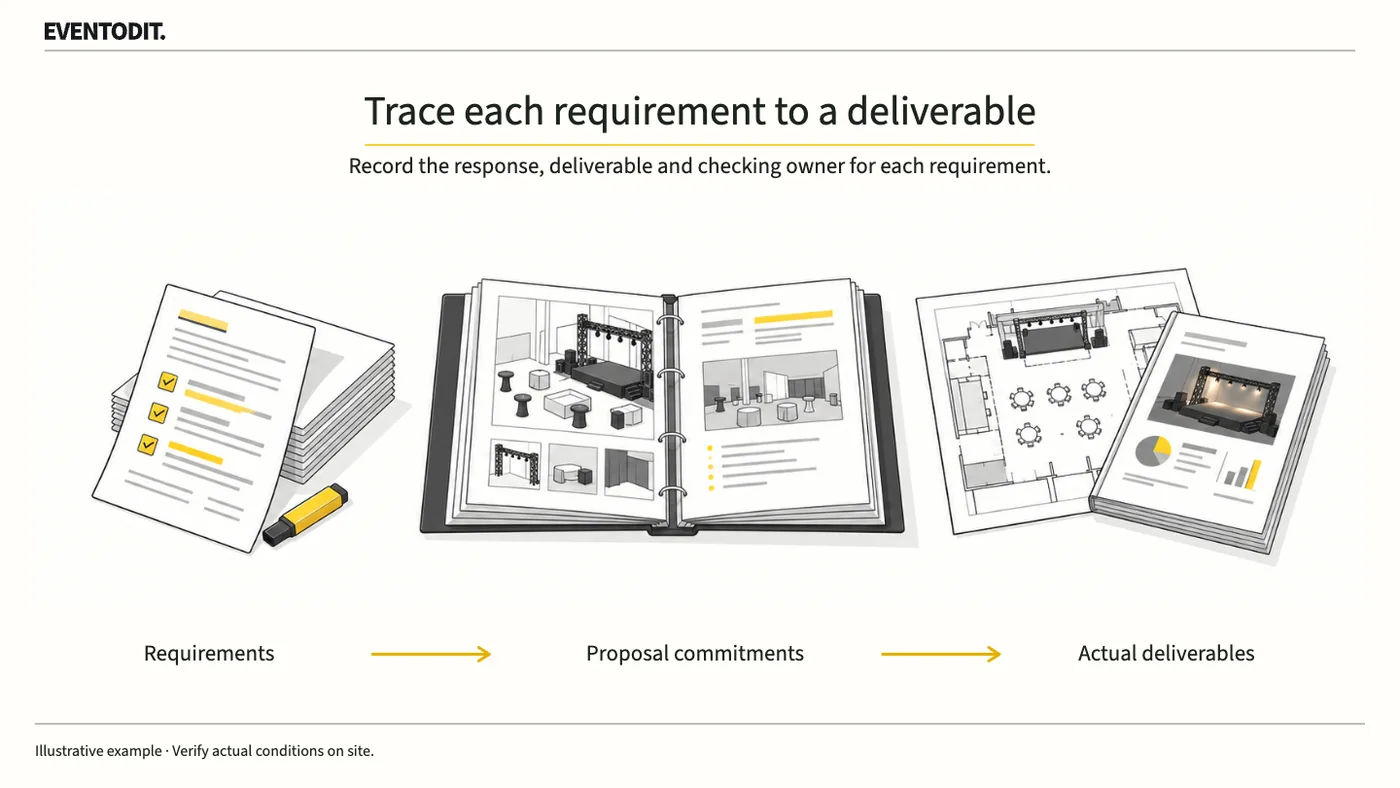
Event Proposal Requirements Traceability and Review
A promise of “smooth operations” does not tell the client what will be delivered or checked. For each requested task, identify the proposal response, output and person responsible for checking it.
Read guideHave a correction or additional evidence? Request a correction