Part 1. Planning and Business Lead
"Do not combine settlement figures and audience evaluations into a single score."
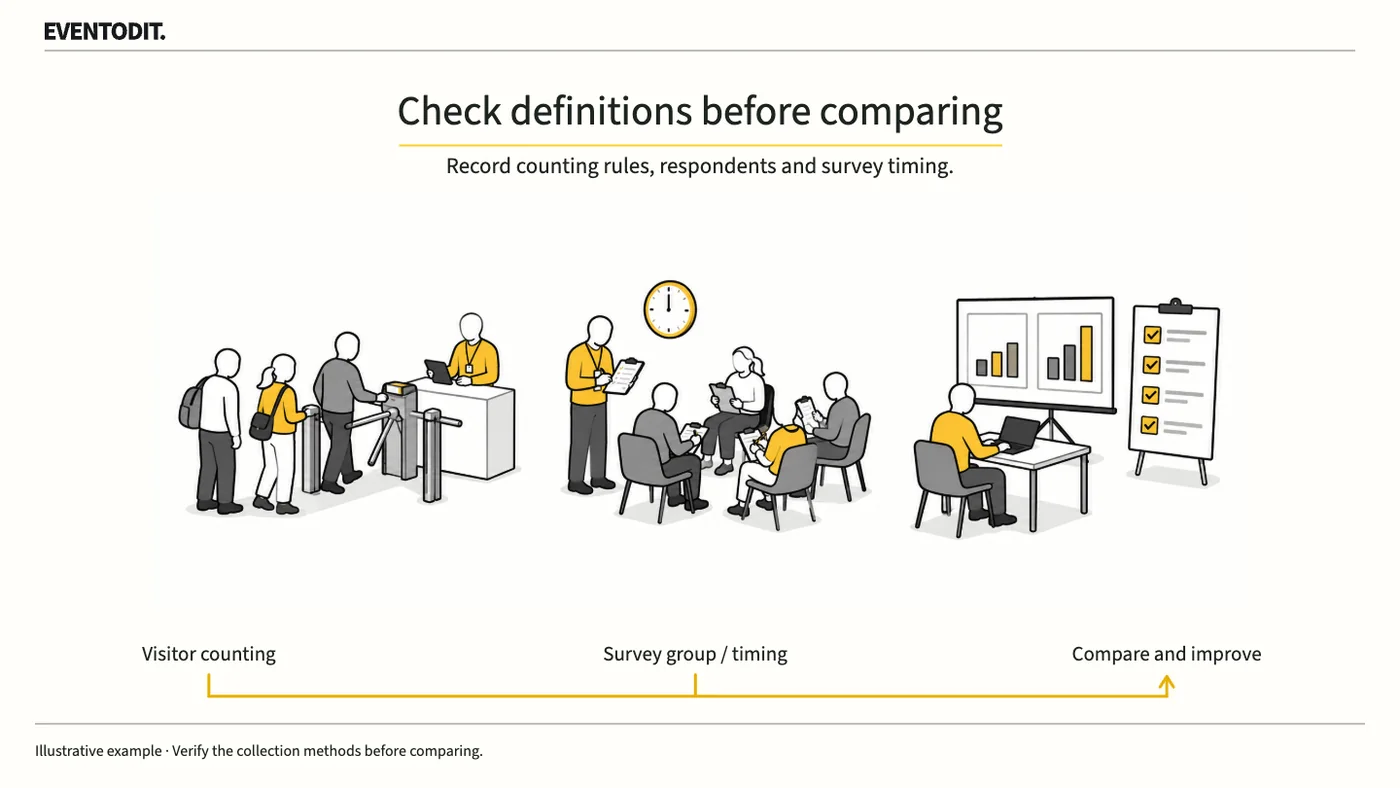
- Do not compare past data blindly: Do not calculate a change rate from last year's and this year's visitor counts alone. First check whether both events used identical counting rules, including whether free and ticketed areas were combined and how re-entry was handled.
- Select comparable items: Do not force a comparison with past data when collection methods or definitions have changed. Use the current result as a new baseline for future events where a definition has changed.
- Specify improvements for the next event: Do not leave operational problems discovered in the review as vague observations. Record what will change in the next event plan, who owns the action and when it will be checked, so that improvement can be verified.
Nordvall and Brown studied the credibility and use of evaluation at recurring public events in Sweden. Their survey method cannot automatically be applied to events of different sizes or in different locations.
Part 2. Evaluation and Data Lead
"Record who is in the denominator and when the question was asked."
- Define the visitor count clearly: Specify whether a figure represents gate passages, unique people with duplicates removed, or participation in a particular programme.
- Separate survey timing and population: Responses collected by on-site QR code during the event and by email after it ends reflect different stages of experience and may come from different samples. State the number of respondents, target population and survey timing alongside each satisfaction percentage.
- Disclose gaps in the data: Identify missing periods and groups who declined to respond instead of hiding them, so readers can understand whose views the collected results represent.
The OECD guide to measuring event impacts also emphasises designing indicators together with their purpose and data collection methods.
Part 3. On-site Operations and Counting
"Control on-site variables so they do not compromise the data."
- Collect on-site data consistently: Ensure all field staff understand the agreed counting method and prevent different gates from reporting figures under different definitions.
- Record site conditions alongside the data: If a system failure or crowding prevents normal satisfaction surveying or counting at a particular time, report the actual site conditions as the reason for the gap to prevent errors in analysis.
- Check whether collection is feasible: Record the data owner and collection period for each indicator, and check realistically whether the same method can be used to collect data at the next event.
- Define the indicatorPopulation, denominator, period and duplicate handling
- Record collection and gapsData owner and missing times or areas
- Assess comparabilityCompare trends only where definitions match
- Check improvementsLink actions and owners to the next event documents
Final check before use: Before preparing the event review and results report, cross-check whether the collection rules for visitor counts and satisfaction data have been clearly defined.
Conditions for applying this elsewhere
For interpreting attendance, participation, satisfaction and operating results after an event and applying findings to the next plan
Information not established
No event-specific attendance, satisfaction or economic impact is estimated. Interpretation depends on survey design and sample.
Reference material
After reading, complete the next task
Indicator definition, counting owner, period, denominator, gaps and comparability table
This article’s template
Event Results and Counting-rules Record
A record that lets another person reproduce reported figures from the source data.
Instructions, examples & downloadsRelated practical guides
Event Settlement and Operational Debrief
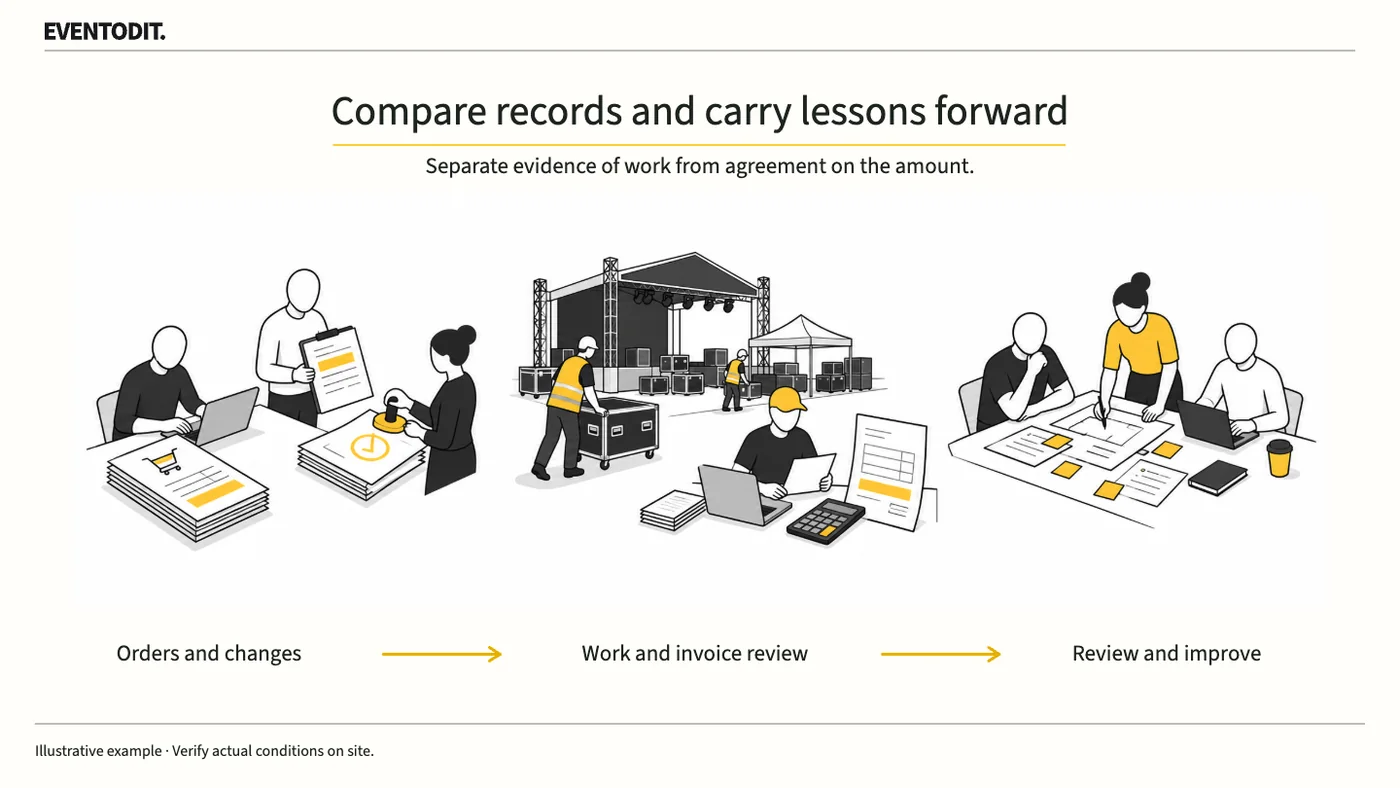
If a supplier’s bill has increased, establish what changed and who approved it. Compare delivery records with the charge, then record changes needed in the next brief as separate debrief actions.
Read guideHave a correction or additional evidence? Request a correction