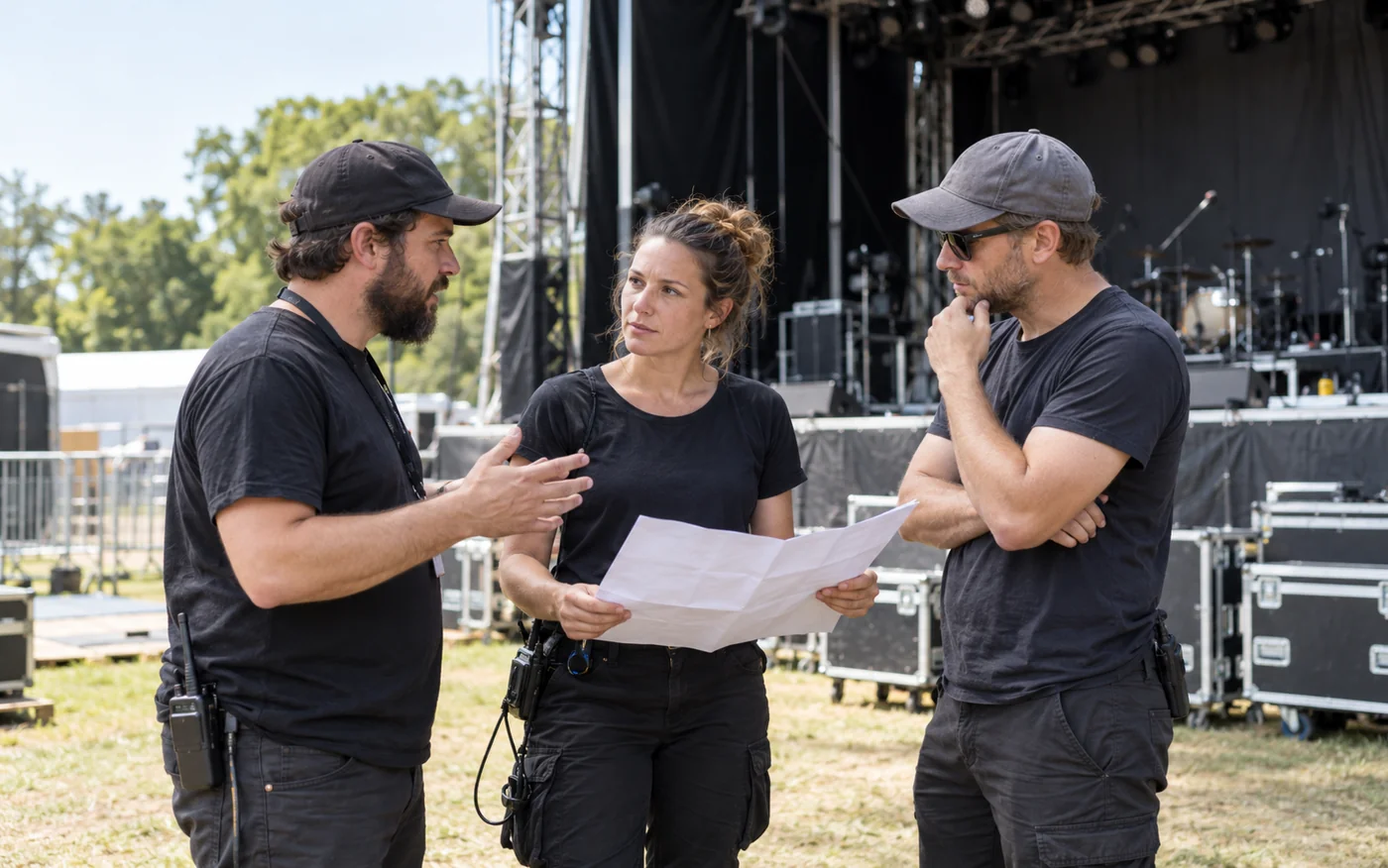
Tomorrowland 2025 in Belgium completed its event successfully after erecting a replacement structure within 48 hours, despite the devastating setback of a Mainstage fire. Observers praise this as a miraculous race against time in logistics. From an event planner’s perspective, however, the essence of this success lies in the meticulous handover of work areas behind the stage, rather than speed alone.
As the guidelines in the “Case Article Review” reference file also emphasise, rushing to unpack equipment and begin work is not the best response, particularly during an emergency recovery. Strict entry control and signal handovers between the structural, lighting, sound and video processes are needed to prevent major bottlenecks and secondary safety incidents.
1. Decoupling unloading and the commencement of work: the truck’s arrival is not the end
The fact that a truck has reached the venue’s loading dock does not mean staff can immediately go onto the stage.
- Allow time for physical preparation: According to lighting and rigging supplier PRG’s account, the first unloading began at 4 a.m., but the first work crew did not enter until 5 a.m. Time was needed beforehand for the crane to enter the site, take its position and allow the safety of the work to be assessed. An impatient planner who urges the team to “start hanging equipment immediately now that it is here” risks undermining order across the entire site. Completion of unloading and the actual start of construction need clearly separate positions on the timeline.
2. Discarding the original purchase order and resetting each team’s roles and responsibilities
A replacement stage whose original design has been lost to fire cannot be built using only the existing cue sheet or scope of work (SOW).
- Immediately reconfirm interfaces: Tomorrowland’s replacement stage brought together equipment from several companies at short notice: Stageco for structure, PRG for lighting, Phlippo for sound and Pixelscreen for video. In this situation, the technical directors (TDs) from each team need to meet on site, coordinate the changed structure’s load limits, power-supply capacity and signal routes again from a blank slate, and agree their sign-off before actual assembly begins.
3. Controlling circulation through entry sign-off
The tighter the deadline, the more likely several teams are to try to enter the stage at once, creating cross traffic.
- Apply a strict work-area handover principle: Lighting and video teams must not enter before the steel truss structure is fully secured and levelled. The lead responsible for the preceding process needs to send an unambiguous radio clearance: “Our work is complete, and the next team may enter.” Only after that approval has been relayed through the central operations desk should the next team be allowed into the work area. This requires firm control.
4. A four-stage protocol for emergency replacement-stage construction
When an unforeseen disaster requires the original design to be replaced urgently, the planning and production teams need the following four stages.
| Stage | Working standard |
|---|---|
| [Stage 1: Confirm the replacement scope] | Identify the physical limits of the available structure, then draw up a new plan confirming which production areas must be abandoned and which core performance elements must be retained. |
| [Stage 2: Activate sign-off for the preceding work area] | Even after replacement equipment arrives at the loading dock, strictly control other teams’ entry to the stage until the preceding structural assembly and crane setup are complete and confirmation of safe conditions has been received. |
| [Stage 3: Cross-check power and signal interfaces] | Bring the leads of each team together to cross-check whether the power consumption and signal-connection methods of the equipment assembled at short notice are compatible. |
| [Stage 4: Accept the stage after failover checks] | Even on a tight schedule, do not omit the emergency-power changeover test or run-through of the main cue sheet. The organiser formally accepts the stage only after these final checks are complete. |
Planner’s note: miraculous recovery comes from controlling the wait
When a stage has burned down and audience admission is imminent, delaying the instruction to begin work by an hour while equipment pours into the loading dock demands painful patience from the planner. Yet that hour of waiting prevents bottlenecks involving tonnes of equipment, gives the crane time to take its position safely and enables every member of staff to finish construction without harm.
The real strength that overcomes the worst crisis lies in the planner’s firm cut-off principle: maintaining the boundary without wavering until every team’s handover is complete, rather than shouting for everyone to go faster.
Conditions for applying this elsewhere
Use when the replacement differs from the original design, within the scope reviewed by qualified site personnel for structure, power and work conditions.
Information not established
Full restoration of the original design, omitted elements, recovery cost, total working hours, total staffing and approval documents were not verified in public material. Cost savings and audience satisfaction are not presented as established recovery outcomes. The proposed diagram does not reconstruct Tomorrowland’s internal approval process.
Reference material
- Tomorrowland, 29 July 2025: post-event account of the destroyed stage, replacement structure within 48 hours and completed event
- IQ, 24 July 2025: direct interview with PRG’s Bob Walpot on supplier responsibilities, crew checks, equipment lists, unloading and work starts
- Tomorrowland, 28 July 2025: final-day performances and confirmation of the two weekends and closing
Next tasks and related resources
Records of equipment arrival, work-area handover, team readiness and show start.
Related templates
Supplier Work Scope and Handover Sheet
A sheet for finding missing or duplicated work during installation, operation and strike.
Use this for: Alongside equipment quantities, record the start conditions and completed work for unloading, internal transport, connections, testing, storage and strike.
Instructions, examples & downloadsRelated practical guides
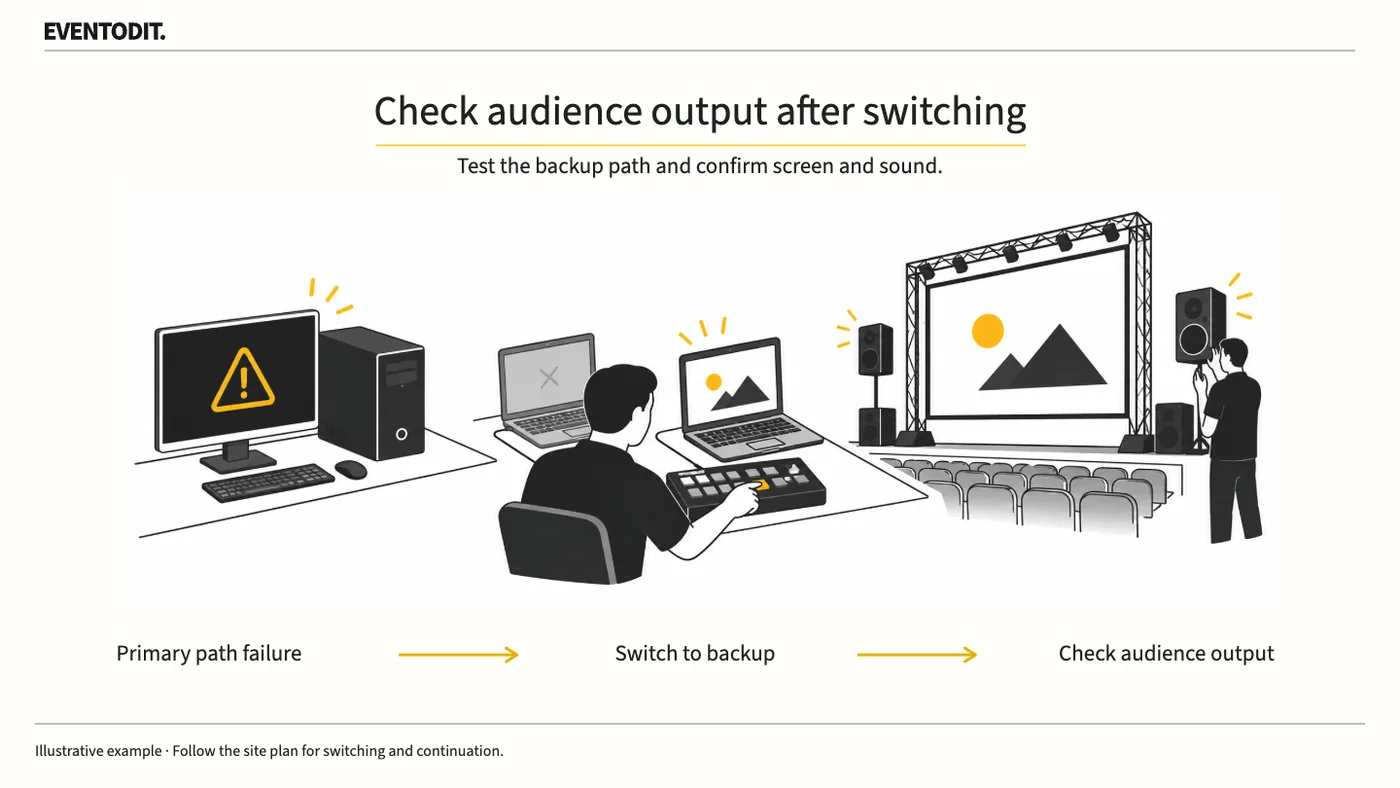
Event Technical Rehearsal and Failure Response
Separate picture, sound and lighting checks do not test the response to a fault during the show. Rehearse who calls the fault and who switches to backup equipment or holds the programme.
Read guide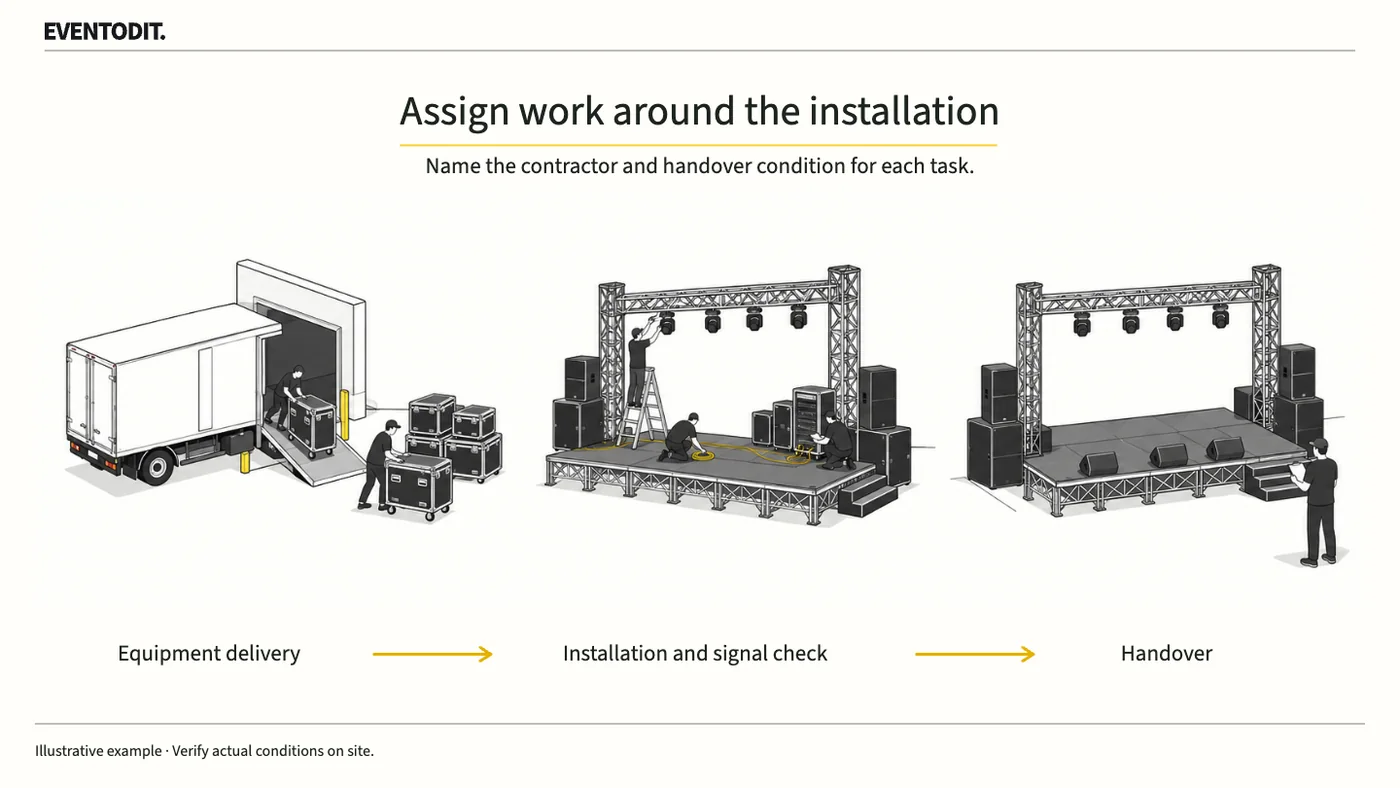
Event Equipment Procurement and Handover
“Equipment installation included” does not assign unloading, power connections, operation or removal. Name the contractor for each task and what they must hand to the next team to expose gaps and duplicate orders.
Read guideHave a correction or additional evidence? Request a correction