Part 1. Planning and Event Lead
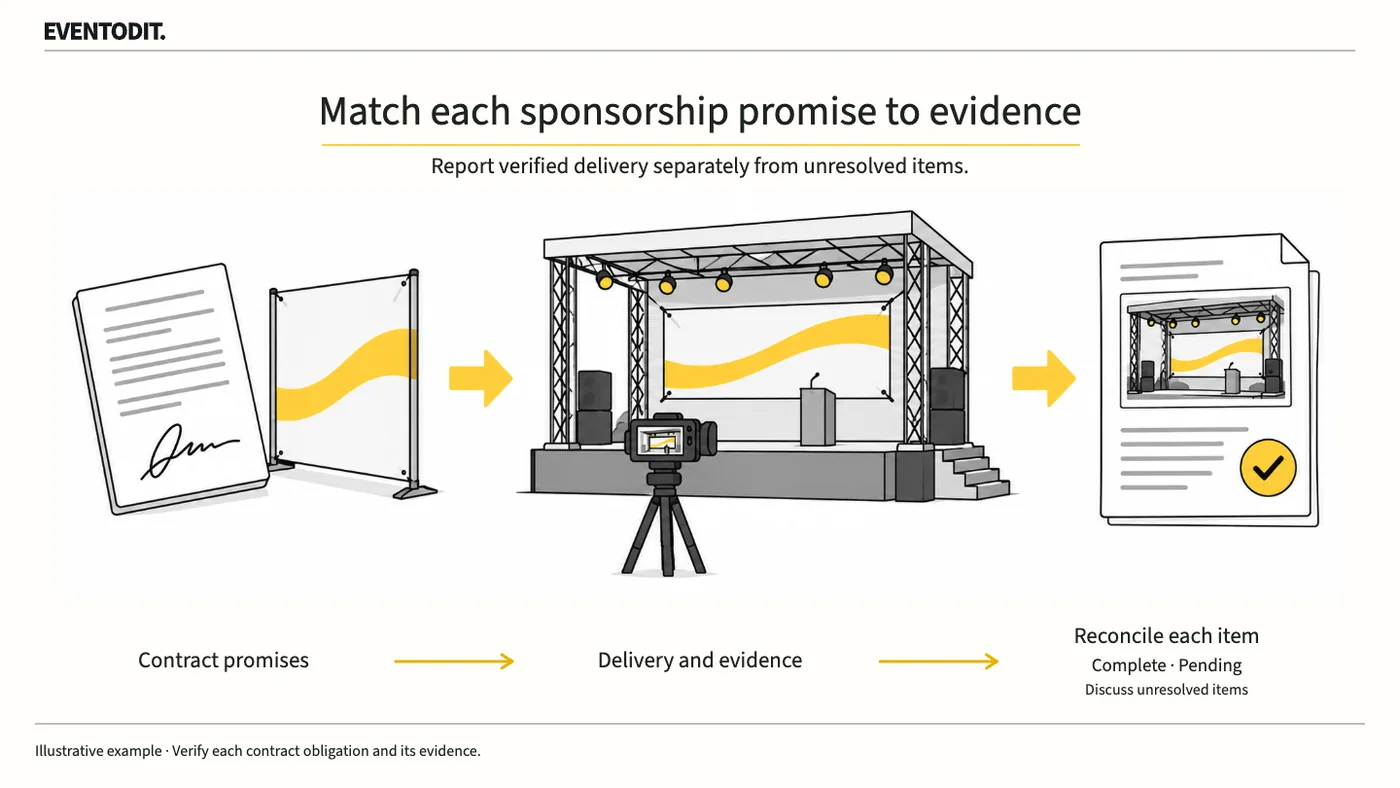
"Avoid reporting benefits only by tier. Compare each contractual promise with evidence of actual delivery one by one."
- Break commitments down against the contract: Do not report completion in a single line such as “Gold sponsorship benefits delivered.” Use the final signed contract, appendices and approved changes as the baseline rather than the initial proposal, and track website logos, programme advertisements, on-site banners, host mentions and registration passes separately.
- Distinguish proposals from delivery: As the ACM CHI and CUI examples show, a prospectus or sponsorship guide describes what organisers planned to sell or provide. The fact that an event has ended does not establish delivery or results.
- Report contractual delivery separately from publicity results: Evidence that a logo appeared in the promised place is different from evidence of publicity or purchasing impact. Report visits and views, enquiries and bookings, and sales separately from contractual delivery. Do not present total event attendance as contacts at one sponsor's booth.
- Check consent and permitted processing before sharing attendee lists: The CHI prospectus limits attendee-list provision to participants who consented. Do not treat personal data as a routine report attachment; before sharing, verify the contract, data-subject consent or any other applicable lawful basis for third-party disclosure, and the permitted scope of processing.
- Design terms for the next event in advance: Use the reconciliation to define evidence formats, sponsor-material deadlines for logos and advertising, and the handling of sponsor-caused delays in the next contract.
The ACM CHI 2026 prospectus distinguishes website, app and on-site media, registration pass quantities and link activation periods. CUI 2026 likewise separates media, passes, introductions and mentions by tier. They show proposed offerings, not actual delivery or results. The CHI prospectus also limits attendee-list provision to consenting participants.
Part 2. Sponsorship Operations
"Do not confirm delivery from a planned cue sheet or order alone. Link records proving what was actually provided."
- Compare evidence for each promise one by one: Record actual delivery and its evidence beside each contract item. A planned cue sheet, production order or design proof alone does not establish what happened on site.
- Document website logos: Retain the website URL, capture date and actual display, and check how much of the entire promised publication period the evidence covers instead of relying on one check.
- Document on-site exposure and banners: Link the promised location, specification, photographs and operating records. Distinguish production completion from actual installation and display at the event.
- Document registration-pass issue and use: Retain issue records and confirmation of delivery to the sponsor, separating delivery from actual registration and check-in.
- Document host mentions: Compare actual stage execution logs or timecodes in the official recording rather than relying on the planned cue sheet or script.
- Check the scope and explain differences: If medium, location, quantity or display period differs from the promise, record the difference and cause and compare them with approved changes.
- Put insufficiently evidenced items on hold: Even when staff say the benefit was delivered, do not mark it complete without objective evidence; classify it as confirmation pending.
| Reporting item | Delivery evidence | Keep separate |
|---|---|---|
| Website logo | URL, screen and check date | How much of the promised publication period was verified |
| On-site exposure | Location, specification and operating record | Production completion versus actual installation |
| Registration passes | Issue records and receipt confirmation | Actual use or check-in |
| Host mention | Execution log or recording segment | Script or planned cue sheet |
Scroll sideways if needed to read every column.
Part 3. Settlement and Contract Review
"Do not treat receipt of a file as agreement. Separate completed and unresolved items for discussion."
- Separate completed and unresolved items in the report: Clearly distinguish items whose evidence matches the promise from unresolved items with differences or insufficient evidence that have not yet been agreed.
- Do not decide remedies for non-delivery unilaterally: Do not internally settle on a next-event benefit or fee adjustment and simply notify the sponsor. Review the contract, formally consult the parties, and document the approved remedy and delivery deadline.
- Distinguish receipt from settlement or dispute closure: Do not interpret acknowledgment of the report file as agreement to settlement or to close a dispute. Record the exact items and scope the sponsor formally approved in writing.
- Manage unresolved items through a documented process: Record differences, missing evidence, the remedial owner and the discussion deadline; discuss the items separately and update the reconciliation according to the parties' formal approvals.
- Do not overextend academic models: Sponsorship evaluation research such as O’Reilly and Madill's reviews a proposed process and a pilot application. Do not treat detailed models or effect sizes as universal success conditions or definitive validation of this event's reconciliation sheet.
The abstract of O’Reilly and Madill's 2012 study describes reviewing a proposed evaluation process through interviews with 14 experts and a case pilot. The full text was not obtained, so the study is not extended into a detailed model, effect size or validation of this reconciliation sheet.
- Find evidence for each promiseSponsor lead: place delivery records and evidence beside each contractual item
- Check matching scopeCompare medium, location, quantity, period and evidence coverage
Mismatch or missing evidence
Match confirmed
- Report confirmed itemsRecord what the sponsor confirmed; keep remaining discussions open
Proposals, production orders and plans do not replace execution evidence, and remedies for non-delivery must not be decided unilaterally.
Final check before use: Before submitting the sponsor report and completing settlement, check that every contractual promise has been reconciled with actual delivery and supporting evidence.
Conditions for applying this elsewhere
For sponsorships with final contracts, appendices and change approvals available. Judge performance and personal-data provision against that contract and actual evidence.
Information not established
CHI and CUI sponsorship documents alone do not verify delivery, exposure or sales. Only the evaluation study's abstract was reviewed; no universal success conditions are proposed.
Reference material
- ACM CHI 2026 official sponsorship prospectus — Proposed media, quantities, periods and attendee-consent conditions, not actual delivery results. PDF checked 2026.10.23.
- ACM CUI 2026 — Sponsorship: proposed benefits by tier, not actual execution results. Checked 2026.10.23.
- O'Reilly and Madill (2012) — Sponsorship evaluation process research: publisher abstract and bibliographic record only; full text not read. DOI 10.1002/cjas.194.
- Human Resources Development Service of Korea PDMS — Competency-unit list for a 2026 convention-planning course covering budgets, suppliers, risk, sponsorship, follow-up and promotion. A particular course plan, not a universal certification textbook.
- Korean Law Information Center — Personal Information Protection Act, Article 17: legal bases for disclosure to third parties.
After reading, complete the next task
Sponsorship benefit, delivery and evidence reconciliation
This article’s template
Sponsor Promises, Delivery and Evidence Check
Evidence for the sponsor report, with a separate list of promises still to fulfil.
Instructions, examples & downloadsRelated practical guides
Event Review and Data Evaluation
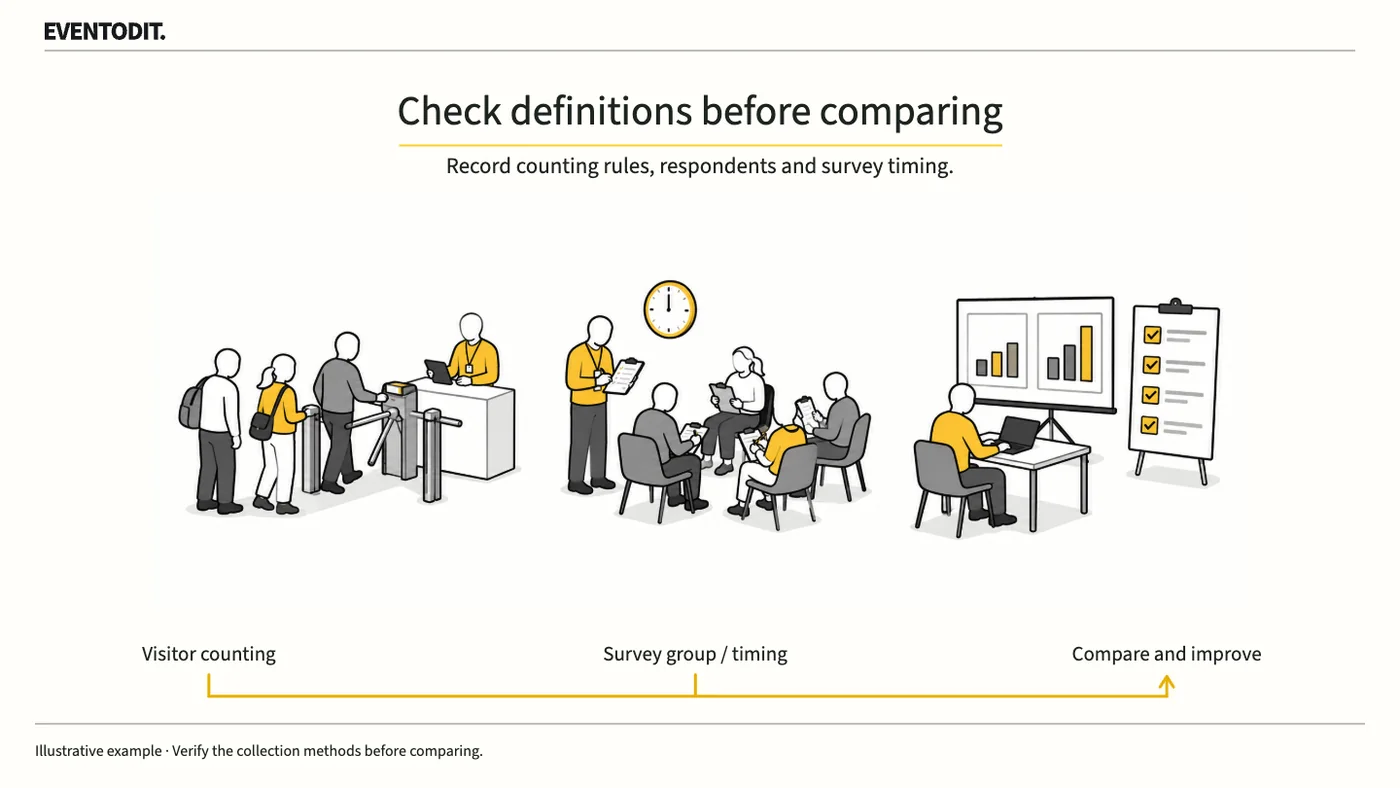
This year’s attendance and last year’s may not be comparable if the method changed. Establish who was counted or surveyed, when and how, and what is missing before interpreting the result.
Read guide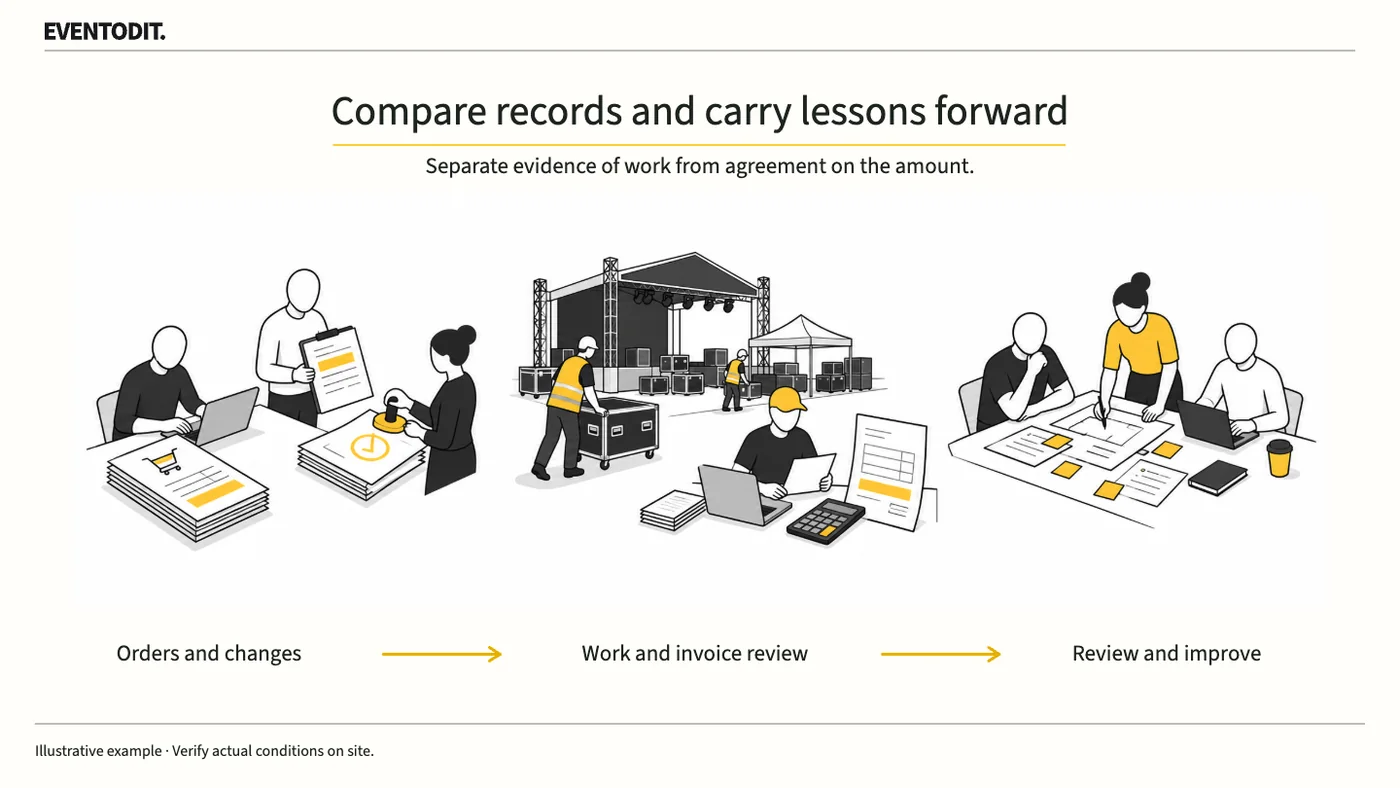
Event Settlement and Operational Debrief
If a supplier’s bill has increased, establish what changed and who approved it. Compare delivery records with the charge, then record changes needed in the next brief as separate debrief actions.
Read guideHave a correction or additional evidence? Request a correction